


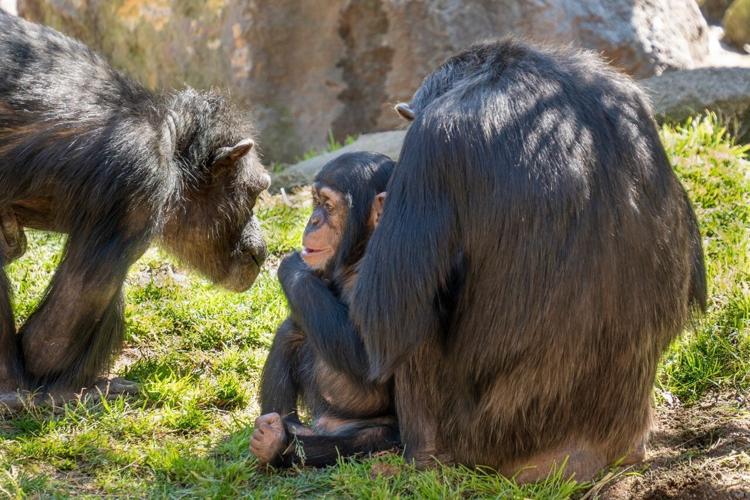

(Photo by Emilio Sánchez Hernández via Pexels)
By Stephen Beech
Chimps have accents too, reveals a new study.
Researchers found that chimpanzees develop dialect as youngsters.
They discovered that the primates develop distinct "population-specific vocal patterns" as they mature.
The British-based research team says their findings challenge the long-held assumption that chimps' calls are inflexible and determined solely by genetics.
Scentists from Queen Mary University of London (QMUL) and the University of Portsmouth compared the vocalizations of infant and juvenile chimpanzees from two geographically separate populations.
By analyzing grunts, whimpers and laughter, the team discovered that differences between the groups became more pronounced as the animals grew older.

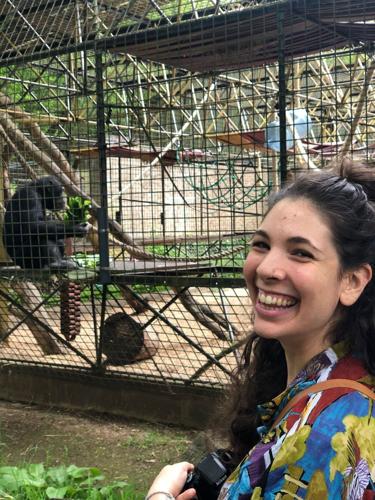
Study leader Kassandra Giragosian pictured alongside a chimpanzee. (Kassandra Giragosian via SWNS)
They say that suggests that vocal behavior continues to develop throughout early life.
The researchers also found that young chimps from different communities produced "subtly different" vocal patterns too.


They discovered that some population-specific vocal characteristics were already present in infancy, while others emerged during the juvenile years.
Study leader Kassandra Giragosian said the developmental pattern suggests that social interactions, environmental conditions and other non-genetic influences may all contribute to shaping how young chimps communicate.
The findings, published in the journal PLOS One, provide the first evidence that population-specific vocal differences become increasingly distinct during chimpanzee development.
By focusing on how communication changes over time, rather than simply comparing adults from different populations, the study offers a new perspective on the processes that shape vocal behavior in other species.

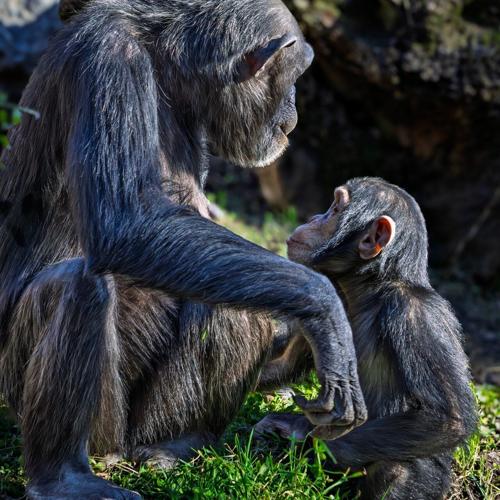
(Photo by Guerrero De la Luz via SWNS)
Giragosian, a doctoral researcher at QMUL, said: "Understanding how communication develops during early life is fundamental to understanding animal behavior.
"Our findings show that chimpanzee vocalizations are not simply fixed from birth but continue to develop as young animals interact with their social and ecological environments."
She said the study contributes to a growing body of evidence that primate communication is more flexible and dynamic than previously recognized.
Giragosian added: "The study provides a valuable framework for investigating how communication systems emerge and diversify within animal populations.
"Although the study does not suggest that chimpanzees possess language or human-like speech – a process that involves agreed grammar and lexicon, for instance – but it convincingly demonstrates that their vocal development is influenced by more than genetics alone.
"By showing that population-specific vocal patterns emerge and become more pronounced during development, the research provides new insight into the biological and environmental factors that shape communication in primates and offers a fresh perspective on the evolution of complex communication systems."


(0) comments
Welcome to the discussion.
Log In
Keep it Clean. Please avoid obscene, vulgar, lewd, racist or sexually-oriented language.
PLEASE TURN OFF YOUR CAPS LOCK.
Don't Threaten. Threats of harming another person will not be tolerated.
Be Truthful. Don't knowingly lie about anyone or anything.
Be Nice. No racism, sexism or any sort of -ism that is degrading to another person.
Be Proactive. Use the 'Report' link on each comment to let us know of abusive posts.
Share with Us. We'd love to hear eyewitness accounts, the history behind an article.