



(NASA/Frank Michaux via SWNS)
By Dean Murray
Astronauts will once again try to blast off to the Moon after earlier problems.
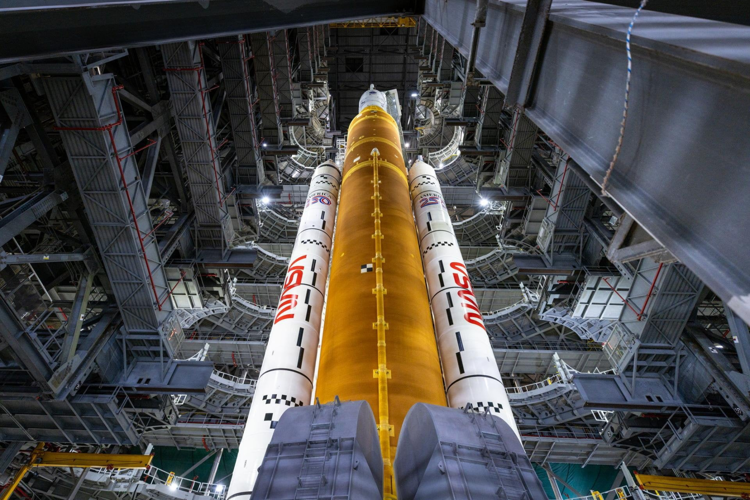
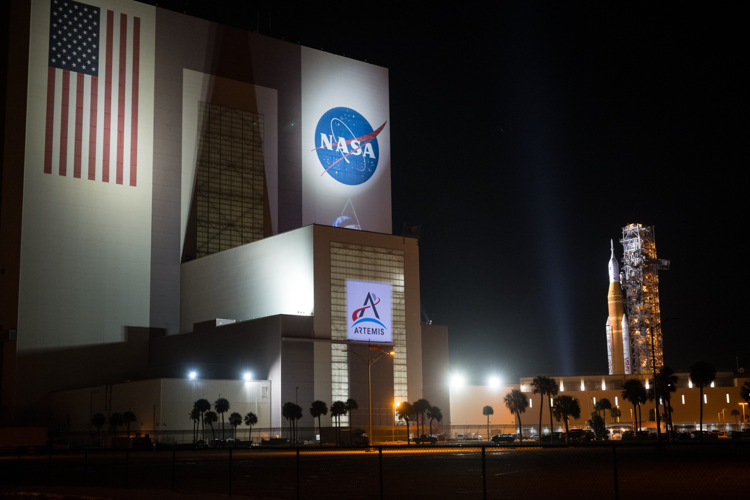
NASA’s Artemis II rocket has began its second journey to the launch pad on Friday, March 20, ahead of the first crewed mission to fly around the Moon.
The SLS (Space Launch System) rocketâ¯andâ¯Orion spacecraftâ¯slated to send four astronauts around the Moon began rolling to Launch Pad 39B at 12:20 a.m. EDT.
Rollout operations at the agency’s Kennedy Space Center in Florida were delayed earlier in the day due to high winds in the area.


The trek to the pad is expected to take up to 12 hours, as NASA’s crawler-transporter 2 carefully carries the rocket on top of the mobile launcher approximately 4 miles along the crawlerway.

(NASA/Aubrey Gemignani via SWNS)
The first rollout occurred on January 17, but following a successful wet dress rehearsal on February 21, teams identified an issue preventing heliumâ¯from flowing to the rocket’s upper stage, prompting a return to the Vehicle Assembly Building (VAB) where the issue was repaired.
While the rocket and spacecraft were in the VAB, engineers also refreshed and retested several systems on the rocket.
Artemis II will send NASA astronauts Reid Wiseman, Victor Glover, and Christina Koch, along with CSA (Canadian Space Agency) astronaut Jeremy Hansen, on an approximately 10-day mission around the Moon and back, marking the first crewed flight of the Artemis programme.
The launch is a precursor to future missions that will enable humans to live on the Moon and mount crewed voyages to Mars.




(0) comments
Welcome to the discussion.
Log In
Keep it Clean. Please avoid obscene, vulgar, lewd, racist or sexually-oriented language.
PLEASE TURN OFF YOUR CAPS LOCK.
Don't Threaten. Threats of harming another person will not be tolerated.
Be Truthful. Don't knowingly lie about anyone or anything.
Be Nice. No racism, sexism or any sort of -ism that is degrading to another person.
Be Proactive. Use the 'Report' link on each comment to let us know of abusive posts.
Share with Us. We'd love to hear eyewitness accounts, the history behind an article.