




Umanoide
By Stephen Beech
A new type of breath test can spot potentially deadly bacterial infections in just 10 minutes, say scientists.
It could enable doctors to diagnose infections such as pneumonia much quicker - without the need for invasive blood tests, according to a new study.
Infectious diseases are a major cause of death worldwide, but diagnosing bacterial infections remains a challenge in medicine.
The need for reliable diagnosis has become more urgent given the increasing frequency of antibiotic resistance.
Now new research, published in the journal ACS Central Science shows breath-based tests may be the way forward.
Initial experiments demonstrated the approach in animals with pneumonia and infections in the bloodstream, muscles and bones.
Study corresponding author Professor David Wilson said: “In designing this study, we were motivated by a developing trend in clinical practice, whereby patients and providers want answers right away that will inform treatment decisions.

CDC
“If a patient visits the Emergency Room or Acute Care clinic, we hope that he or she can be diagnosed with an acute bacterial infection as efficiently as possible."
He explained that doctors currently rely on blood tests, imaging, cultures and molecular diagnostics to identify the cause of infections.
But those methods are limited because they are slow, non-specific or expensive.
Wilson said: "The start to a potential solution could be the long-used breath test for Helicobacter pylori, a bacterium that causes a common stomach infection.


"The original test works when a person drinks a liquid containing traceable substances metabolized by H. pylori.
"Then the person exhales into a device that measures labelled carbon dioxide in their breath, indicating the infection is present."
Inspired by this test, Wilson and his colleagues at the University of California, San Francisco, in the United States set out to expand the technology’s capabilities to detect a broader range of bacterial infections.
For their prototype, the team tested sugar and sugar alcohols tagged with carbon-13, a traceable form of carbon that bacteria metabolize but human cells largely ignore.

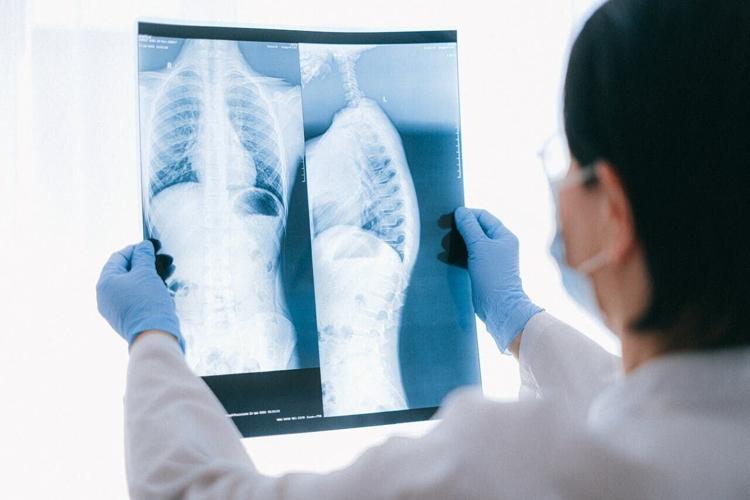
(Photo by Anna Shvets via Pexels)
The researchers identified several of the compounds that bacteria convert into carbon-13-labeled carbon dioxide during lab experiments.
The team then analyzed the labelled gas using a simple technique called "nondispersive infrared spectroscopy".
Wilson said: "When mice with infections such as pneumonia and bone, muscle, or blood infections received intravenous injections of these tagged compounds, the animals’ breath quickly showed elevated levels of the labelled carbon dioxide."
The researchers typically saw elevated carbon-13-labeled breath signals in infected animals within the first 10 minutes of metabolite administration and breath sampling.
In contrast, the breath of healthy mice showed little to no carbon-13.
In one infection model for E. coli, the amount of labelled carbon dioxide in the breath decreased during antibiotic treatment as bacterial levels went down, suggesting the method could also be used to monitor how well treatments are working.
Wilson said: "Because breath-test instruments are portable and breath signals appear within minutes after the traceable carbon-13 is administered, the test could potentially deliver results faster than current methods."
He added: "In addition, the sugar and sugar alcohols used are considered safe for humans."


(0) comments
Welcome to the discussion.
Log In
Keep it Clean. Please avoid obscene, vulgar, lewd, racist or sexually-oriented language.
PLEASE TURN OFF YOUR CAPS LOCK.
Don't Threaten. Threats of harming another person will not be tolerated.
Be Truthful. Don't knowingly lie about anyone or anything.
Be Nice. No racism, sexism or any sort of -ism that is degrading to another person.
Be Proactive. Use the 'Report' link on each comment to let us know of abusive posts.
Share with Us. We'd love to hear eyewitness accounts, the history behind an article.