




(Oxford Cotswold Archaeology via SWNS)
By Dean Murray
Archaeologists have uncovered a nationally significant Anglo-Saxon burial ground during excavations for the Sizewell C nuclear power station in Suffolk.
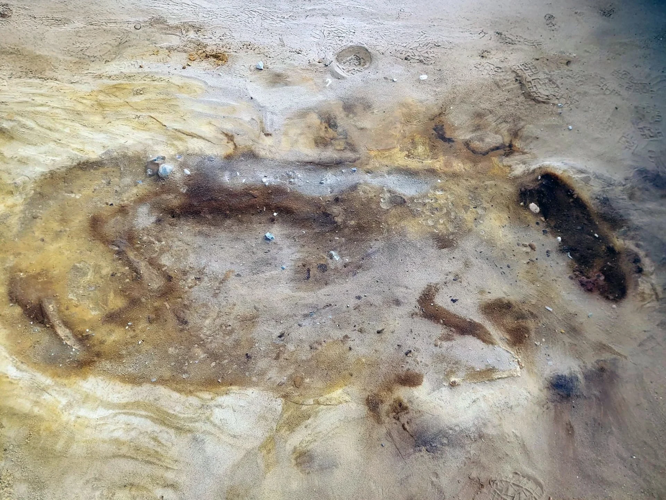
Among the most remarkable discoveries is a high-status grave containing two individuals buried alongside a fully harnessed horse, weapons, and personal items.
These finds, dating to the 7th century, suggest the individuals were elite members of Anglo-Saxon society and reflect their complex burial traditions.
The team from Oxford Cotswold Archaeology (OCA), working on behalf of Sizewell C, identified at least 11 burial mounds, known as barrows, along with cremation and inhumation burials. All had been carefully arranged across a prominent point in the landscape near Theberton in Suffolk.
Despite poor bone preservation caused by the local sandy soils, detailed excavation and recording have preserved valuable information about burial practices and social status in early medieval Suffolk.
Details of the discovery will feature in an episode of Digging for Britain on BBC Two on Wednesday, Jan. 14.
Across 70 sites, about 200 OCA archaeologists are excavating roughly 2 million square metres – making Sizewell C the largest and most complex dig of a generation.

(Oxford Cotswold Archaeology via SWNS)
Len Middleton, OCA’s Project Officer leading the site, said: "Excavating a section of the Sizewell Link Road has been an exciting experience for me and the team. The site is an early Anglo-Saxon barrow cemetery dating from the 6th to 7th centuries, with both inhumation and cremation burials, many furnished with weapons, jewelry, and vessels. Soil conditions have resulted in little preservation – we are instead left with striking sand silhouettes that capture the outlines of the bodies in remarkable detail.
“One barrow, containing a horse and two individuals buried with weapons and personal items, stands out as a ‘princely’ burial – part of the same elite tradition seen at Sutton Hoo, Snape and Prittlewell. Discoveries like this are of national importance because they deepen our understanding of power, belief, and identity in early medieval England, and how those ideas were expressed along the East Anglian coast.”


Other significant finds from recent Sizewell C excavations include evidence of Roman industrial activity, such as a well-preserved pottery kiln discovered in Middleton, and an extremely rare Iron Age oak ladder found at the same site.
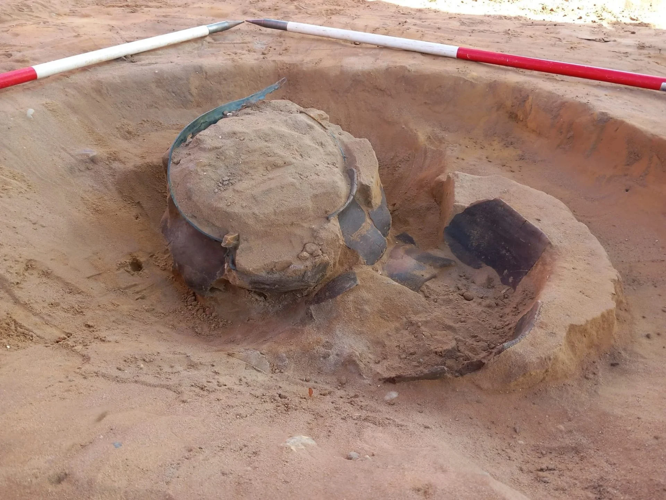
Excavations at Goose Hill, north of Sizewell, reveal a long history shaped by its coastal setting – from Early Bronze Age farming to Roman salt production and Second World War coastal defense. Archaeologists also uncovered Beaker-period activity, including a well-preserved cremation urn.
Nigel Cann, Chief Executive Officer, Sizewell C, said: "The Anglo-Saxon burial ground uncovered during preparatory works for our 6.5km Sizewell Link Road offers a fascinating glimpse into Suffolk’s rich heritage and the lives of its early communities. Working closely with OCA, we have ensured these finds are carefully recorded and preserved for future study. This project demonstrates how major infrastructure developments can contribute to understanding our past while building for the future.”
The construction of Sizewell C, which began in January 2024, has revealed an extensive and unparalleled view into life along the Suffolk coast.
(Oxford Cotswold Archaeology via SWNS)
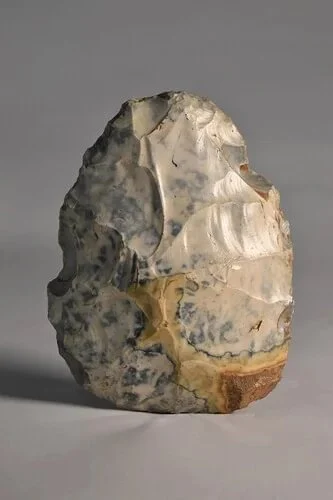
In 2023, OCA archaeologists working near the site of the future power station discovered a remarkable hoard of over three hundred 11th-century silver coins encased in lead and cloth.
Affectionately nicknamed ‘the pasty’ – due to its resemblance to a Cornish pasty – the hoard is believed to have been a savings pot buried by a local figure as a precaution during a time of significant social and political unrest in the 11th century.
Last year, the collection was donated to Suffolk County Council’s Archaeological Service to be curated in Suffolk. It’s also being made available for academic research.
Archaeologists have also uncovered evidence of prehistoric settlements dating back to the Bronze Age, and the remains of numerous medieval ovens and structures. Many of these artefacts have been showcased through community open days and public talks, helping to bring the region’s rich history to life.
Rosanna Price, Engagement Manager at Cotswold Archaeology, who hosts the Digging for Britain segment, said: "These excavations have been a labor of love for field archaeologists and specialist teams across the country. They’re revealing an astonishing 36,000 years of human occupation – from the early wandering of Neandertals to the graft of the first farmers 6,000 years ago, and from the rich culture of early medieval England to the tough training grounds of the Second World War.
“I grew up in Suffolk and cannot overstate the privilege of watching my county’s expansive and epic history be revealed through the hard work of everyone in the OCA team. What an honor to present Digging for Britain and share all this with the people of Suffolk as a positive outcome of the Sizewell C developments.”


(0) comments
Welcome to the discussion.
Log In
Keep it Clean. Please avoid obscene, vulgar, lewd, racist or sexually-oriented language.
PLEASE TURN OFF YOUR CAPS LOCK.
Don't Threaten. Threats of harming another person will not be tolerated.
Be Truthful. Don't knowingly lie about anyone or anything.
Be Nice. No racism, sexism or any sort of -ism that is degrading to another person.
Be Proactive. Use the 'Report' link on each comment to let us know of abusive posts.
Share with Us. We'd love to hear eyewitness accounts, the history behind an article.