


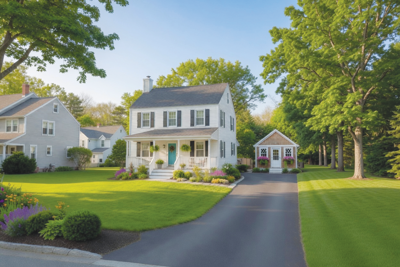
New Hampshire has been actively working to address its housing affordability crisis through legislation and policy changes. In 2025, the state passed significant updates requiring municipalities to allow accessory dwelling units by right in single-family zones, easing restrictions on multi-family housing near jobs and transit, and creating incentives for communities that update outdated zoning rules. Despite these supply-side efforts, home prices have continued their climb, leaving many families searching for practical, family-driven solutions.
The median sale price for a single-family home in New Hampshire stood at roughly $300,000 in 2019. By May 2026, it had surged to a record $575,000 — a jump of nearly 80% in just seven years, according to data from the New Hampshire Association of Realtors. Inventory remains painfully tight, hovering around two months of supply in many periods, well below the five-to-six months considered a balanced market.
For many Granite State families, these numbers have turned the American dream of homeownership into a serious challenge. In this environment, a housing model once more common in other parts of the country is quietly gaining attention here: multigenerational living.
Nationally, multigenerational homes accounted for 17% of all home purchases in 2024, an all-time high, before easing slightly to 14% in 2025, according to the National Association of Realtors. Gen X buyers, often caring for both children and aging parents, led the trend with 21% of their purchases falling into this category.
While New Hampshire has not seen the same scale of multigenerational development as Western states like California, local builders and homeowners are beginning to respond to the same economic pressures.
One of the clearest examples is Nadeau Village in Hudson. Developer Etchstone Properties built 15 dual-family homes on spacious 2-plus acre lots specifically marketed for multigenerational living. These properties, carrying price tags in the $1.2 million-plus range, have attracted strong buyer interest despite the premium.
Beyond new construction, changes in state law are making it easier for existing homeowners to create additional living space. In 2025, the Legislature passed updates that require municipalities to allow accessory dwelling units by right in single-family zoning districts. These can be attached or detached, up to 950 square feet, with independent living facilities. Locally, I’ve seen many neighbors and even some fellow real estate agents adding on to accommodate both parents and children as both rental prices and home prices continue to increase year over year.
Successful multigenerational properties typically feature private suites with separate entrances, dual kitchens or kitchenettes, flexible living spaces, and accessibility features like first-floor primary suites and wider hallways.
The benefits are significant. Cost savings are a major driver, as families share mortgages, utilities, and maintenance costs. Many cite caregiving for aging parents or helping adult children as primary reasons. Additional upsides include stronger family bonds, built-in childcare, and reduced loneliness for seniors.
However, there are real challenges too. Privacy concerns, household conflicts, and the need for clear financial and legal agreements can create stress. Upfront renovation costs can also be substantial, and not every family dynamic thrives in this arrangement.
New Hampshire’s high home prices and tight inventory create strong economic incentives for this model. While it has historically been less common here culturally, practicality appears to be winning out. Local realtors report growing interest, and new construction plus easier ADU rules suggest the trend is gaining momentum.
Multigenerational housing may not be a complete solution to New Hampshire’s housing challenges, but it is becoming an increasingly practical option for families looking to stay in the state they love.
•••
This article was written by Randy Miller, a Realtor at Roche Realty Group in Meredith, and can be reached at 603-279-7046. Visit rocherealty.com to learn more about the Lakes Region and its real estate market.


(0) comments
Welcome to the discussion.
Log In
Keep it Clean. Please avoid obscene, vulgar, lewd, racist or sexually-oriented language.
PLEASE TURN OFF YOUR CAPS LOCK.
Don't Threaten. Threats of harming another person will not be tolerated.
Be Truthful. Don't knowingly lie about anyone or anything.
Be Nice. No racism, sexism or any sort of -ism that is degrading to another person.
Be Proactive. Use the 'Report' link on each comment to let us know of abusive posts.
Share with Us. We'd love to hear eyewitness accounts, the history behind an article.