


(BOISE, IDAHO) On the evening of Oct. 11, just weeks before the 2026 midterm elections, a federal judge ordered the Trump administration to stop airing taxpayer-funded television advertisements praising President Donald Trump.
Yet two of the ads continued running past the court’s deadline, including during broadcasts of “60 Minutes” and “ABC World News Tonight.”
The commercials in question aired in violation of a decades-old congressional prohibition against using federal money for unauthorized publicity and propaganda. Yet Republican congressional leaders did little to stop the president’s ad spending. That left outside organizations and a political candidate to challenge them in federal court.
The episode illustrates a larger development in Trump’s second presidency. Across disputes involving federal spending, government agencies and military operations, the administration has asserted authority that is either restricted by law or that the legislative branch has reserved for itself.
But responsibility for enforcing those limits is increasingly falling to organizations, institutions and individuals outside of the legislative branch.
As a scholar of the American presidency and deliberative democracy, I pay close attention to how the nation’s chief executive exercises power and communicates with the public.
When presidents are allowed to break rules and disregard democratic norms without consequence, I worry that citizens will grow cynical and lose faith in the idea of self-government.
As this happens, citizens may come to see the law as something that applies selectively, depending on who holds power, and lose confidence in the institutions responsible for holding their leaders accountable.
They may also begin to accept the absence of accountability as a normal feature of political life, weakening the public expectations on which democratic government depends.
Practical immunity
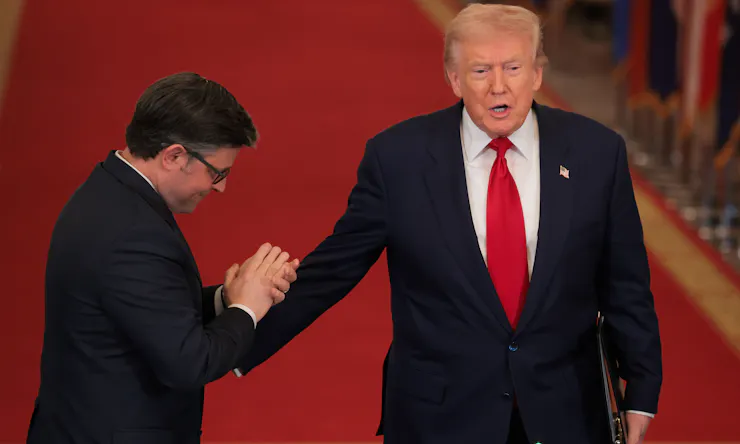
Congress is not the only branch of government demurring from holding the president accountable.
In July 2024, the Supreme Court provided presidents sweeping protection from criminal prosecution for actions taken in office under the “core constitutional powers” of the position.
In “Trump v. United States,” the court held that former presidents cannot be criminally prosecuted for actions taken under powers the Constitution gives exclusively to the president. Along with this “absolute immunity,” the justices also granted “at least presumptive immunity” for other official acts.
In their decision, the court’s conservative majority extended the meaning of official conduct to the “outer perimeter” of presidential responsibilities and prohibited courts from examining a president’s motives when determining whether an act was official.
The ruling only addressed criminal liability and did not curtail Congress’ constitutional authority to investigate presidential conduct, control federal spending, enact statutory restrictions and, in serious cases, pursue impeachment.
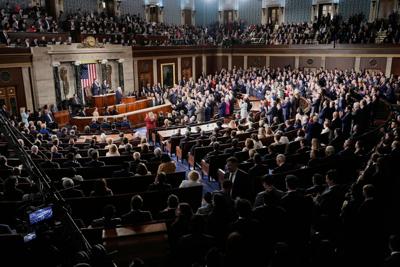
Yet the Republican majority in Congress has largely declined to exercise these powers against Trump, in areas ranging from declaring war to spending money.
Their acquiescence is helping create a new form of official protection, which I call “practical immunity.” In using this term, I am borrowing from the work of scholars who study abuse in the American penal system.
Those thinkers argue that legal obstacles, institutional hesitation and political incentives sometimes make it difficult to hold public officials accountable, even when the law suggests there has been illegal conduct.
That is what appears to be increasingly happening now with Congress, the courts and the president.
When Congress stops defending its laws


The television ads case illustrates the conundrum of practical immunity.
In opposing the temporary restraining order, the Trump administration’s attorneys did not contest the argument asserted by the plaintiffs – Common Cause and two unions – that the expenditures violated federal appropriations law. Instead, they said the plaintiffs lacked standing to sue. They also argued that the case was moot because the advertising campaign was ending.
Those arguments failed in court. Yet the administration’s defense demonstrated how elusive enforcing a law can be when Congress fails to assert its constitutionally granted role, even when the underlying legal restriction is clear. To win, a plaintiff must establish a concrete injury and persuade a judge to intervene. While this happens, the disputed conduct often continues.
In this case, the president went on spending public money in violation of the law. The GOP-led Congress, meanwhile, remained silent, even though its own role was being usurped.
Another boundary that Trump has repeatedly tested is the so-called “power of the purse”, which is among the legislative branch’s most important constitutional responsibilities. Presidents may spend federal money only for purposes Congress has authorized. The Impoundment Control Act of 1974 protects lawmakers’ decisions against presidential efforts to ignore congressional appropriations.
In September 2026, Trump’s administration canceled more than US$800 million in congressionally approved spending for immigrant services, climate change and civil rights for minority groups. The cancellation was done through a maneuver known as a pocket rescission. The administration timed its action to make it difficult for Congress to consider or stop the rescission. The Government Accountability Office – an independent agency that examines how taxpayer dollars are spent – said tactics like these violate federal law.
When this happened, a few members of Congress tried to intervene and stop the rescission, but the Republican majority blocked their efforts.
The collapse of institutional rivalry
The separation of powers divides authority among the legislative, executive and judicial branches of government to prevent too much power from becoming concentrated in any one place.
The architects of the Constitution anticipated that officials in different branches would compete to preserve their authority. In Federalist No. 51, James Madison argued that maintaining the balance established by the separation of powers depended on the ambitions of public officials coming into conflict. Members of Congress could be expected to resist presidential encroachments because those encroachments diminished their own power.
Fierce partisanship has complicated this arrangement.
Legal scholars Daryl Levinson and Richard Pildes have shown how political competition mostly now happens inside and between parties, rather than among branches of government. When one party controls Congress and the presidency, legislators may become more invested in advancing their party’s agenda than they are in defending their institution’s constitutional authority.
Trump’s influence over Republican voters intensifies these incentives. Lawmakers who oppose him risk public ridicule, primary challenges and diminished political support. Defending congressional authority may therefore carry greater immediate – and personal – political costs than allowing presidential power to expand.
The result is a political system in which a president can act in ways that may violate federal law, undermine democratic norms and encroach on Congress’ constitutional authority.
Madison’s constitutional design assumed that public officials would defend the powers entrusted to them. The danger to the American constitutional system emerging in Trump’s second term is that congressional leaders have begun to regard those powers as expendable, allowing the president to exercise authority under conditions of practical immunity. He faces little fear of meaningful institutional consequences.
This article is republished from The Conversation, a nonprofit, independent news organization bringing you facts and trustworthy analysis to help you make sense of our complex world. It was written by: Stephanie A. (Sam) Martin, Boise State University
Read more:
- Trump doesn’t own the government – even though he acts as if Congress is not his equal in constitutional power and authority
- I wrote a book on the politics of war powers, and Trump’s attack on Venezuela reflects Congress surrendering its decision‑making powers
- ‘Above the law’ in some cases: Supreme Court gives Trump − and future presidents − a special exception that will delay his prosecution
Stephanie A. (Sam) Martin does not work for, consult, own shares in or receive funding from any company or organization that would benefit from this article, and has disclosed no relevant affiliations beyond their academic appointment.


(0) comments
Welcome to the discussion.
Log In
Keep it Clean. Please avoid obscene, vulgar, lewd, racist or sexually-oriented language.
PLEASE TURN OFF YOUR CAPS LOCK.
Don't Threaten. Threats of harming another person will not be tolerated.
Be Truthful. Don't knowingly lie about anyone or anything.
Be Nice. No racism, sexism or any sort of -ism that is degrading to another person.
Be Proactive. Use the 'Report' link on each comment to let us know of abusive posts.
Share with Us. We'd love to hear eyewitness accounts, the history behind an article.