


A small bay on Squam Lake doesn’t have a lot in common with the Gulf of Mexico, but as of Monday they share at least one attribute: The U.S. Interior Department has changed their name.
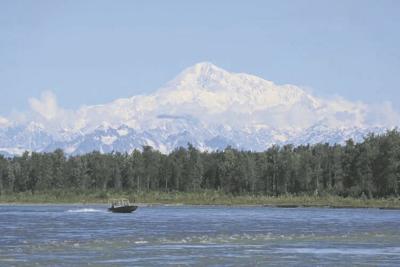
The Interior Department said Monday it has renamed the Gulf of Mexico to the Gulf of America and Mount Denali to Mount McKinley on official government sites “to honor the legacy of America’s greatness.”
That brings back memories for folks around Eastman Cove in Holderness, on the north side of Squam Lake. The little bay was called Squaw Cove until 2022 when a secretarial order from then-Interior Sec. Deb Haaland deemed the term “squaw” derogatory and ordered some 650 geographic entities around the U.S. to be renamed.
Eastman Cove, which echoes the name of the largest stream flowing into the bay, was the only such site in New Hampshire. It’s well known for its annual harvest of ice blocks that get used by summer residents at the nearby Rockywold-Deephaven Camp. Besides the cove, nine other sites were renamed in New England, including islands, hills and one swamp.
Last week President Donald Trump signed an executive order changing the Gulf of Mexico to Gulf of America, a name it has never officially carried, and reverted Denali back to Mount McKinley.
North America’s highest peak was named after President William McKinley until 2015, when the name was changed during the Obama Administration to the one given by local Native Americans, something that the state of Alaska had done back in 1975. McKinley had no connection to the mountain and was only a candidate for president when the name was first proposed.
Renaming landmarks by executive order is not the typical procedure. An established process exists to officially rename geographic landmarks, involving the U.S. Board on Geographic Names, part of the U.S. Geological Survey. It only deals with natural place names, not names of cities or buildings.

Usually the process bubbles up from the local or state level, often starting with suggestions placed on the board’s website, but it can be handed down from above by the Interior Department. Name changes within New Hampshire receive input from the Office of Planning and Development although the final decision is up to the federal Board of Geographic Names.
While such changes are often straightforward – such as removing the “k” from Lake Wicwas (not Wickwas) in Meredith, as was done in 2019 – it’s not unknown for controversy to arise. Notably, Republican state legislators wanted to rename Mount Clay in the White Mountains as Mount Reagan, after the 40th president, but the Board of Geographic Names declined.
In 2013, national attention was drawn to the town of Mont Vernon renamed a pond to Carleton Pond, after a local family. It had previously been known as Jew Pond for convoluted historical reasons.
•••
David Brooks can be reached at dbrooks@cmonitor.com.
These articles are being shared by partners in the Granite State News Collaborative. For more information, visit collaborativenh.org.






(0) comments
Welcome to the discussion.
Log In
Keep it Clean. Please avoid obscene, vulgar, lewd, racist or sexually-oriented language.
PLEASE TURN OFF YOUR CAPS LOCK.
Don't Threaten. Threats of harming another person will not be tolerated.
Be Truthful. Don't knowingly lie about anyone or anything.
Be Nice. No racism, sexism or any sort of -ism that is degrading to another person.
Be Proactive. Use the 'Report' link on each comment to let us know of abusive posts.
Share with Us. We'd love to hear eyewitness accounts, the history behind an article.