


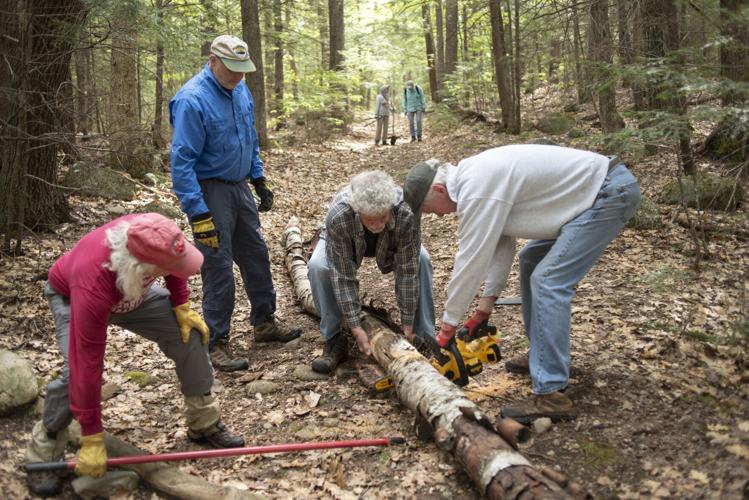
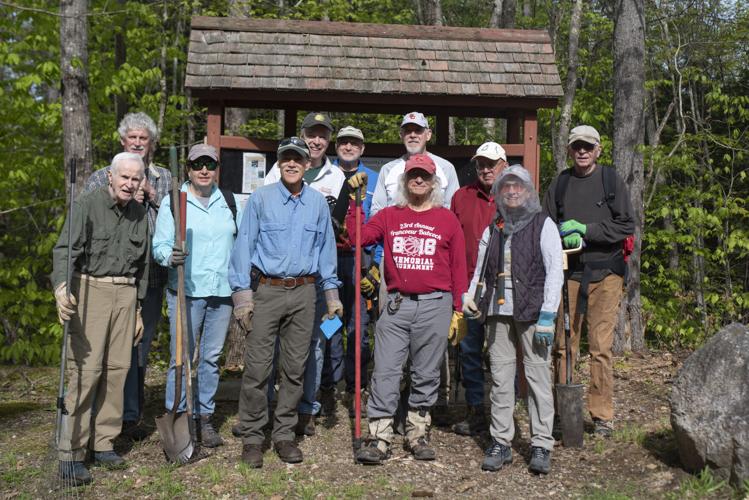
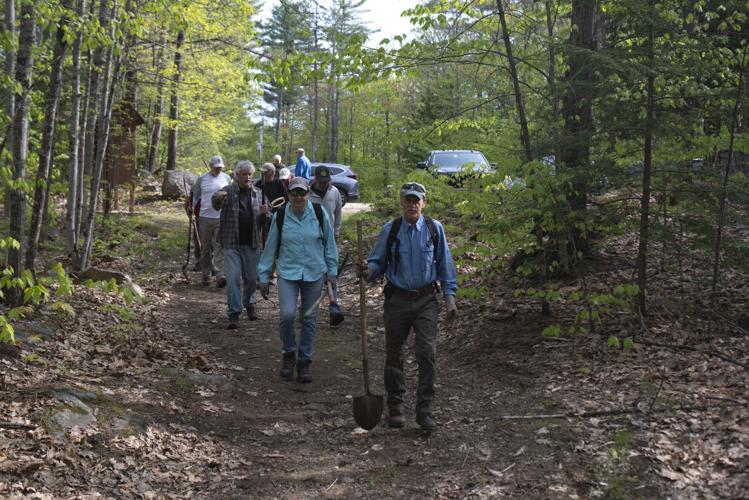
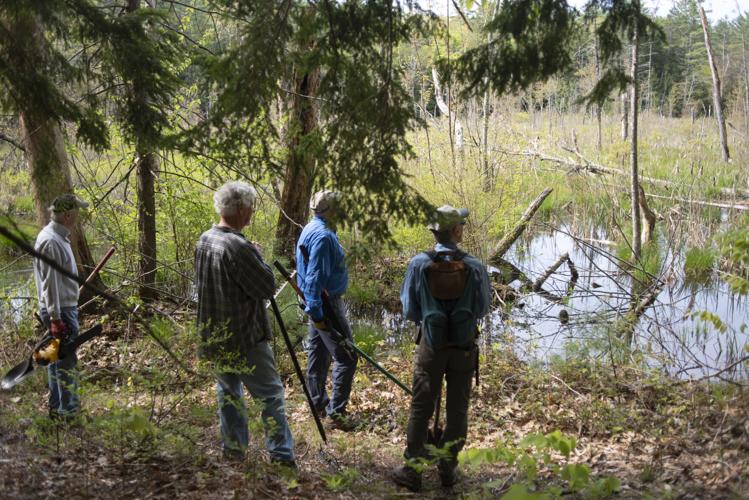
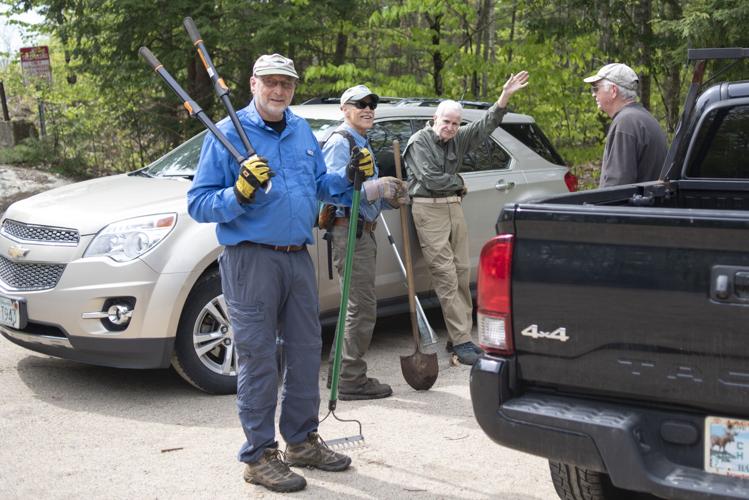
MEREDITH — For over 20 years, a volunteer group with the Conservation Commission has been maintaining local trails. Spring to fall, the group meets every Tuesday around 9 a.m., trimming branches, clearing trail debris, draining pooled water on the trail, and clearing invasive species. Last spring, the group cleared 35 trees from trails after the region experienced high winds.
From a mailing list of about 35 people, maybe a dozen people come to help each week.
“Most of them are just volunteers from around the community that use the trails, and offered to help out and want to participate,” Conservation Commission Chair Scott Powell said.
The volunteers maintain 19 trails properties that span up to 2400 acres.
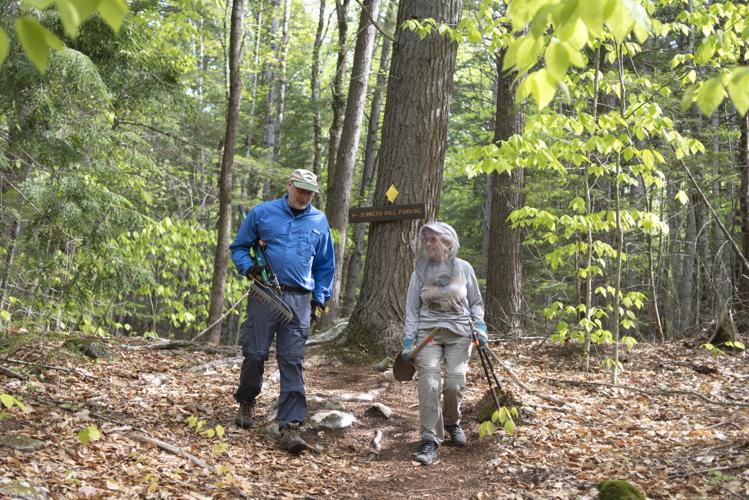
While the group is made up of people of all ages and backgrounds, many volunteers are retired. Phil Sanguedolce and his wife Janet are retired and have volunteered with the group for over five years. Looking for a way to fill their time, since they hike the trails, they liked the idea of maintaining them.
“We could have volunteered to do a bunch of different things,” Phil said. “We like being outside.”
During the winter, the trails are covered in snow, so maintenance is difficult. But when spring comes around, and the snow starts to melt, the trails are exposed and work begins. Snowmelt floods the trails, leaving wet and muddy conditions making a trail unwalkable. And with the heavy rains of spring, drainage becomes a top priority.
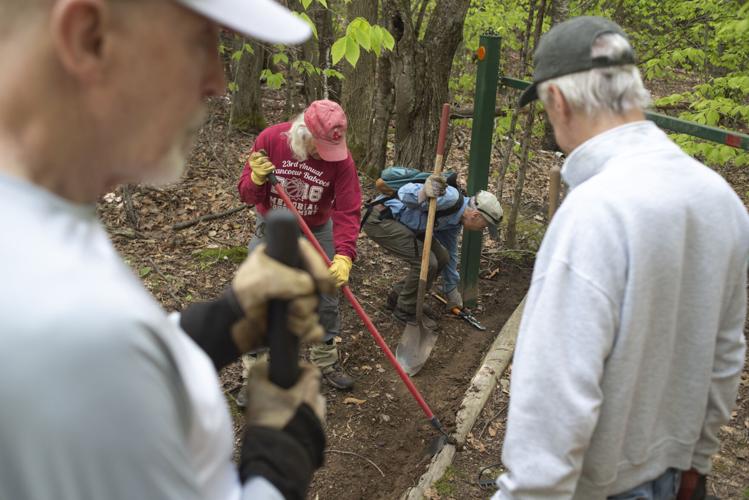
“The most important thing is getting water drainages cleared out before we get a lot of rain, like we had this past week,” Powell said. “We really tried to get out early in the spring to clear out drainages, so the water doesn't get backed up and make the trails muddy.”
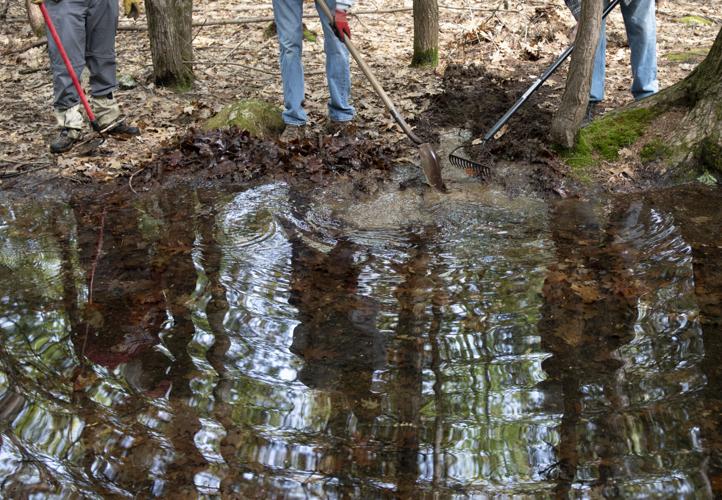
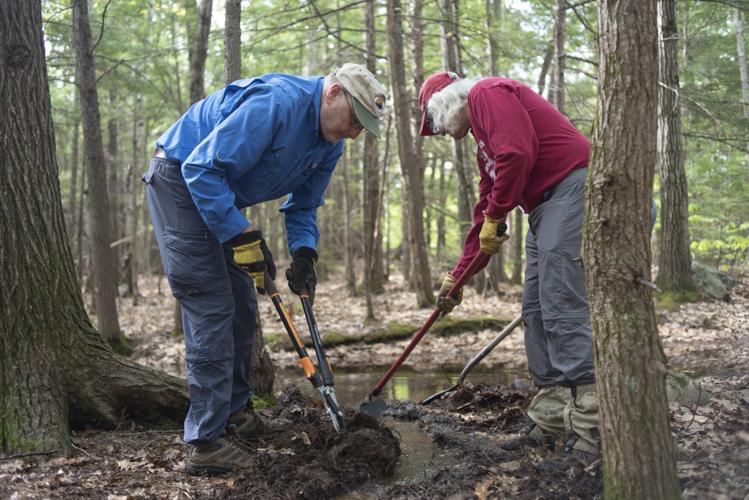
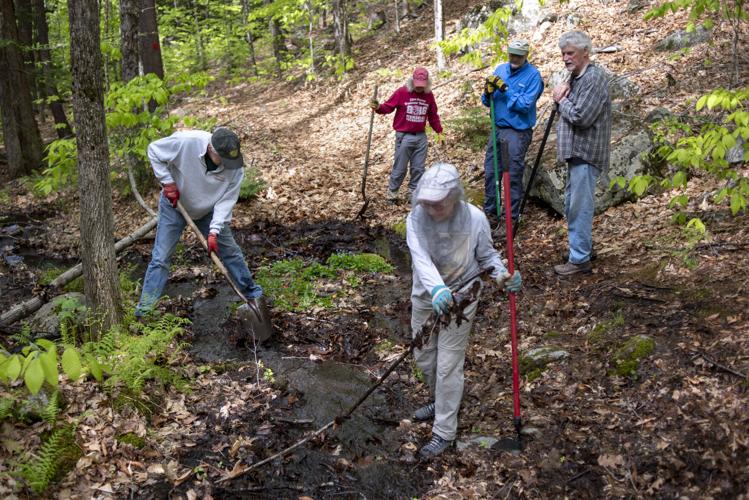
Eleven people came to work on the trail this week at Meredith Community Forest. And it only took a minute before they walked into a large, deep puddle that ate up the trail. Volunteers immediately got to work, shoveling mud from drainage ditches. Slowly but surely, water began flowing downstream, off the trail.
After encountering multiple muddy areas, Powell joked about the real reason people do trail work.
“This is really why we do this. We like to play in the mud,” he said. “We’re just kids who never grew up.”
Eytan Wulfsohn, another volunteer, explained why such groups are important.
“You don't maintain them, they deteriorate, and it's not something that the town wants to spend money on.”
Conservation commission volunteers are not the only group maintaining trails. The Meredith Pathways Committee also does work, primarily on the Laverack Nature Trail at Hawkins Brook. The town parks & recreation department also maintains trails in Swasey and Waukewan Highlands parks, with volunteers from the Greater Meredith Program. Each group is responsible for different sections of the town.
"Frankly, there's enough work there for everybody," Greater Meredith Program Vice President Wendell Rizzio said.
Parks and Recreation Director Vint Choiniere said the town relies on these volunteers.
“We simply do not have the maintenance staffing level that allow us to be able to accomplish all that work,” he said. “We greatly appreciate the efforts of those volunteers.”
While the group focuses on trail management, conservation comes first. Janet said they only do maintenance that doesn’t damage the natural environment.
“We have to be careful about what we do, because we’re not trying to take away from the habitat that lives here.”
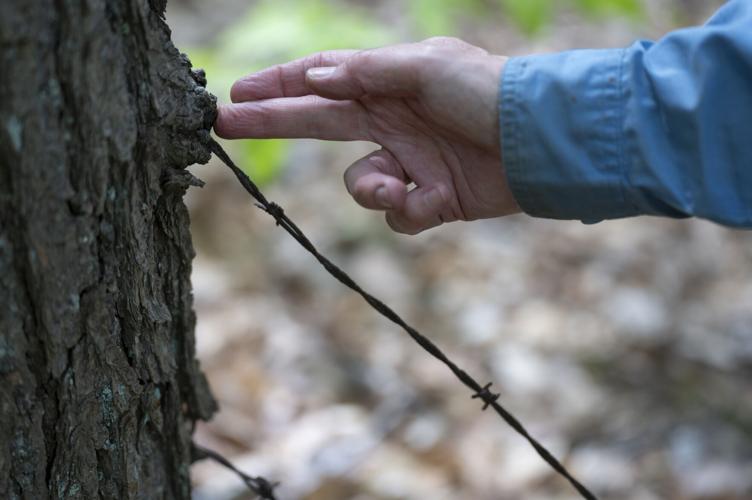
Natural conservation is only one component of the commission's work. Members are also responsible for historical buildings and artifacts along the trails. Any artifact over 50 years old is considered historic, and is not allowed to be removed. Along one of the trails in Meredith Community Forest is a stretch of barbed wire. Powell explained it used to be part of an old sheep farm, and is now so old that nearby trees, including a slow-growing hemlock around 100 years old, have overtaken the wire.
“We're not the trails committee, or Meredith Parks & Rec, we're conservation,” Powell said. “We can serve these historical things; the Conservation Commission does.”
Powell believes not only are trails good for physical and mental health by allowing people to experience green space and nature, but they can also be tools for proper conservation education.
“It also gives them an appreciation for why we need to protect green spaces,” he said. “They can see the wildlife, they can see the animals, they can see the birds, they can see the wetlands and all that they offer, to protect the environment and to protect the wildlife that lives in it that needs it.”


(0) comments
Welcome to the discussion.
Log In
Keep it Clean. Please avoid obscene, vulgar, lewd, racist or sexually-oriented language.
PLEASE TURN OFF YOUR CAPS LOCK.
Don't Threaten. Threats of harming another person will not be tolerated.
Be Truthful. Don't knowingly lie about anyone or anything.
Be Nice. No racism, sexism or any sort of -ism that is degrading to another person.
Be Proactive. Use the 'Report' link on each comment to let us know of abusive posts.
Share with Us. We'd love to hear eyewitness accounts, the history behind an article.