


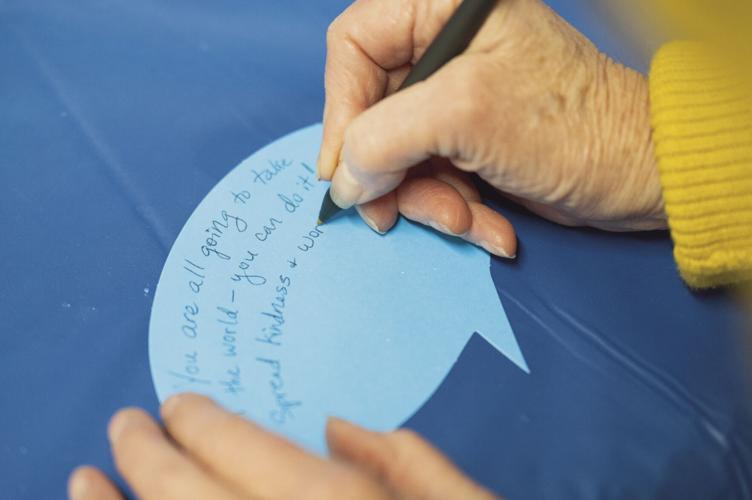
FRANKLIN — The Franklin School District Portrait of a Graduate is built on six characteristics, representing the district's vision for skills students need to succeed. This year's theme — humanity — was chosen based on the results of a recent youth survey.
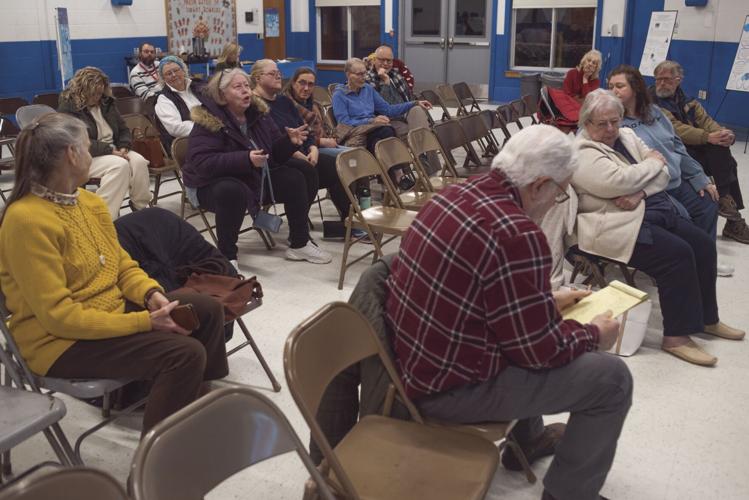
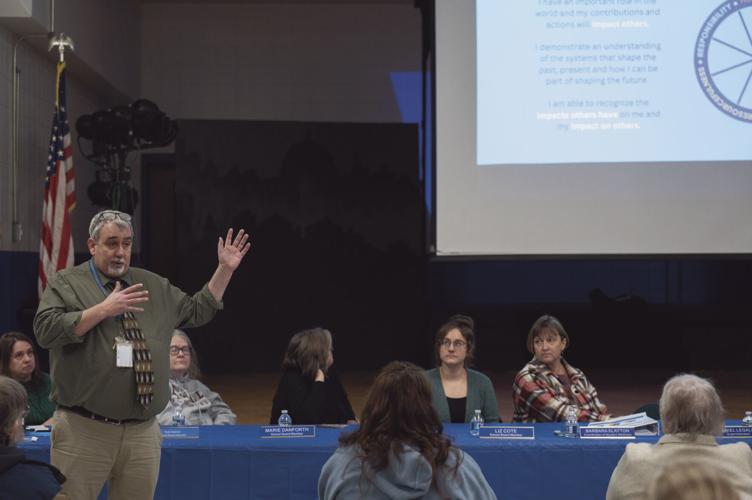
Parents, teachers, administrators and residents met at the middle school Thursday to discuss the Portrait of a Graduate program’s goal. Superintendent Daniel LeGallo opened with an overview of the night's presentation.
“We're going to talk about what our plan is to do something, about being very transparent, hopefully give you guys some time to talk to each other about what's working, what's not working, what the challenges are, so we can pave our path forward,” he said.
The Portrait of a Graduate's six characteristics are commitment to community, learning, resourcefulness, responsibility, wellness and humanity. The humanity theme was chosen based on results of the Youth Risk Behavior Survey answered by Franklin students. Statistics shared in the presentation show over 40% of students say they’ve been bullied at school within the past year, trending higher than the year before. The percentage of students who believe they help decide what happens in school went up to over 75%, but the number of students who believed they mattered to someone in the community trended down. There were also statistics concerning to school leadership on mental health. This made LeGallo realize the importance of humanity.
“That data is some of the discipline data that we've been dealing with, primarily at the middle school, led us to have some conversation about humanity, which is in the portrait,” he said.
“That's how we have come to the conclusion that that really needs to be our next goal.”
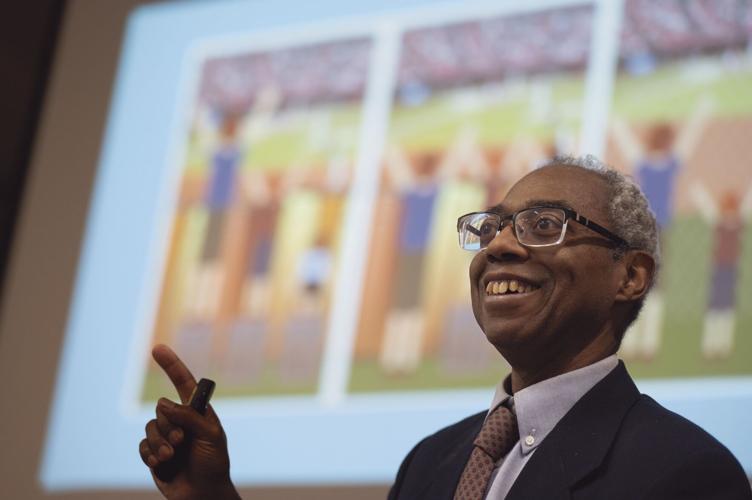
James McKim, a facilitator from Organizational Ignition, shared the ideas of equity, inclusion and understanding through cartoon images. One cartoon showed how making something available for all students allows for inclusion. Another cartoon highlighted the difference between equality and equity. McKim believes equal treatment does not mean everyone has equal access. Equity means assisting those who may need more help in proper access to opportunities. McKim said while sometimes this seems unfair for kids who don’t require help, it doesn’t mean they can’t receive help later.
“The truth is, and this is what we need to be able to share with people, is you didn't need help in this situation, but when you do need help, we're here to give it to you,” he said.
“That's the environment that we need to create.”
He also spoke to inclusion. Inclusion, to him, is not just allowing someone to be part of something; it means inviting them to do so. McKim invited the audience to talk about what inclusion is. City Councilor Ed Prive (Ward 3) spoke to what this means to him.
“As adults, we see it every day. We all herd around one another, but we exclude people that we particularly don't like for whatever reason,” he said.
“And if we're going to teach our young people, we all have to include in it, put the principle first, and the personality must stay away, and all care together.”
Melinda Steele St. Cyr, a special education teacher at the elementary school and the third grade case manager, emphasized the importance of not forcing inclusion.
“It is really, really, really important that you remember that inclusion is different for everybody. Forcing a child into an environment that they are not comfortable in, that they don't feel safe in, that they don't feel valued in, that they have been assaulted in, is not helpful for anybody,” she said.
“Not for the students, not for the staff, not for the administration. Not for the community.”
McKim said the administrators of the Manchester School District attempt to provide inclusion by providing culturally sensitive meals to students.
“A little thing like with the food being served, could go a long way to making someone feel like they're seen, recognized,” he said.
The audience was also asked to give examples of where they see humanity in their city. Answers included community events like Community Day, the local ski area and the food pantry. Presenters provided examples in schools, like the gaming club, FIRST Robotics and ukulele club.
There was discussion about how to make students feel part of their community. An example included the school hosting city elections, but Carisa Corrie, a facilitator from Educating for Good, said this also means allowing students to learn outside school.
“Learning doesn't take place only in the four walls with schools,” Corrie said
“Adults, we know that, and so how can we use that understanding and use the community as the campus?”
Portrait of a Graduate has been a part of Franklin’s vision since 2019, when Corrie wrote a grant for the program. She has written all grants since then, and continues to work with the schools on their goals. Corrie said the Barr Foundation, a nonprofit based in Boston focused on art reform and other things like art and environment, contributed about $750,000 for these grants.
LeGallo said the school is creating a committee to focus on this year's goal of humanity, to advise the administration. He is committed to the program.
“This is not a one hit wonder [and] we're going to snap our fingers and all these things are going to change. This is a concerted effort,” he said.
“We really try to attack these issues around how kids impact each other.”


(0) comments
Welcome to the discussion.
Log In
Keep it Clean. Please avoid obscene, vulgar, lewd, racist or sexually-oriented language.
PLEASE TURN OFF YOUR CAPS LOCK.
Don't Threaten. Threats of harming another person will not be tolerated.
Be Truthful. Don't knowingly lie about anyone or anything.
Be Nice. No racism, sexism or any sort of -ism that is degrading to another person.
Be Proactive. Use the 'Report' link on each comment to let us know of abusive posts.
Share with Us. We'd love to hear eyewitness accounts, the history behind an article.