


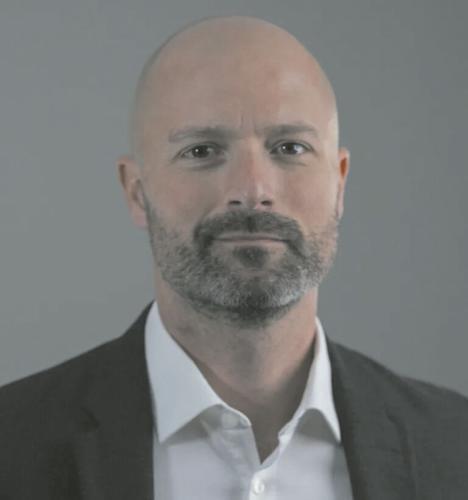
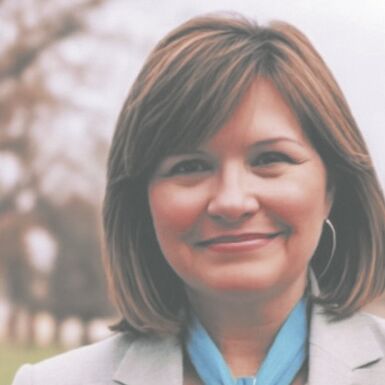
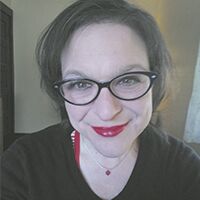

On this episode of “The Granite Beat,” Julie Hirshan Hart and Adam Drapcho talk with a group who came together to bolster local news coverage in New Hampshire. Justin Silverman of the New England First Amendment Coalition, Melanie Plenda of the Granite State News Collaborative and Laura Simoes of the Nackey S. Loeb School of Communications are partners in the Civic Documenters program, helping train community members to participate in reporting on local government. CivDoc, as the program is called, was first piloted in the Monadnock Region, and is currently expanding in the Lakes Region.
This article has been edited lightly for length and clarity.
Adam Drapcho: Can you tell me where this idea came from for Civic Documenters, and how do you explain it to someone in an elevator?
Melanie Plenda: I approached Laura because I had heard about similar kinds of programs or ideas in a group out of Chicago that has sort of a national program, called Documenters, and another program at the University of Vermont that was similar, where they use students to gather local news. Laura is regularly my partner in good ideas, or crime, whichever you want to say, and she loved the idea. We worked on an early iteration of it through the Nackey S. Loeb School. We kind of tweaked it and refined it over time.
Then we thought of bringing in Justin and the coalition because we thought that it would be a really great component to have, especially for folks who are going to be covering municipal meetings and really need to have that information.
How I describe it to folks is that it's as simple as it sounds. It's about training community members to better understand how their local governmental bodies and local school boards work, and then how to cover them as a reporter would, and then they work together with their local news outlet. It does two things really well. One, it helps local communities access their government and, two, helps out local newsrooms who are often short-staffed when it comes to covering every town and school in the state. There's like 221 municipalities in New Hampshire, and it's hard for outlets, particularly smaller ones, who are short-staffed to get that local municipal coverage.
Drapcho: Could you tell me how many community members took part in that first cohort? And what sort of backgrounds did they bring to the project? Also, what did you learn from that first pilot group?
Laura Simoes: So in the Monadnock Region, 11 documenters took part in the CivDoc program. They were really from all different backgrounds — some of them were already active community members. We had one former state representative from her community, others had served in elected or appointed office in their towns or cities in the past, and others were people who are typically drawn to this program — those who have a deep interest in democracy in knowing what's happening in their communities, and who want to be sure that local news is able to cover what's going on.
If we take it back a little bit further to the very beginning of this program, when Melanie and I teamed up along with Franklin Pierce University, to pilot a community journalism program that was inspired by Richard Watts at the Community News Service in Vermont. When Melanie and I did a debrief of these first four community journalism classes, we talked about how we could structure something that is less about being a journalist and doing the writing. Could we leave that to the professionals, and find a way for community members to be those eyes and ears in local meetings of the Conservation Commission, or the planning board or the school board?
That was the beginning of dreaming up something like CivDoc, which takes the deeper writing out of the equation. But using a templated form, a five-week training program, allows people the confidence to participate and to gather information. So that was probably the biggest learning so far, from the first round in the Monadnock Region to this round in the Lakes Region. We're certainly learning, but we're still in the middle of the Lakes Region so we'd be happy to come back and tell you more after that.
Julie Hirshan Hart: How does this program complement the work that you're doing at the New England First Amendment Coalition?
Justin Silverman: This program helps in a couple of ways, as we've already discussed. It's certainly supporting newsrooms in the area and making sure that there's much needed coverage of town and local affairs. But what was most appealing to us and why we got involved in this project was because not only are these newsrooms making sure that they have all the tools that they need to report local stories and to make sure that the coverage they need exists, but on the other side, it's also empowering citizens outside of newsrooms, to better engage in government.
The program is educating those communities about what open meeting laws are through obtaining public records, and how to get information about their government. So between the citizen empowerment part of this program and supporting newsrooms, those two aspects of the program are very complementary to our mission and what we're looking to accomplish as an organization.
I think that's what was so appealing, because not only are we supporting newsrooms in the area, but we're also empowering those in communities to better engage with their government, hold their government officials accountable, and to make sure that we're all informed about what's going on in our towns and cities.
Hirshan Hart: I'm going to ask each of you what advice you might have for someone who's interested in getting involved with CivDoc. What do community members need to know? What should community members keep in mind if they want to get started with an initiative like this?
Silverman: The very first thing they should do is visit nefac.org/civdoc to see what we're doing currently, what we've done with our first cohort, and get a better understanding of the program and the curriculum that we offer and the scheduling. Then my advice would simply be to get out there, start attending government meetings, get a better sense of how the government works, and what types of topics are handled by certain committees and engage with those that represent them and local government. Taking those first few steps will certainly position them very well for involvement in the program, when we hopefully launch a third, fourth or fifth and move on to many other cohorts.
Simoes: I encourage people to get out into their local communities to see what's happening in local government. One of the things that our participants are almost always surprised by in one of the assignments is to pull agendas from communities that you live in or near to see what's happening. Then they come back to class and say, “I had no idea that the planning board was discussing this,” or “I didn't know that the Conservation Commission had a cleanup day coming up, and I want to participate in that.” You don't have to be a Civic Documenter to take a stronger interest. It’s as simple as going to your town or city’s website and pulling down the agendas for upcoming meetings, and educating yourself about what's happening in your own community. Be in touch and let us know if there's something we can do to help bring CivDoc to your own community.
Plenda: I would say all of that, then I would just simply say it can be intimidating. Someone who might be curious about this or interested in it might feel nervous or scared. I would say, “Don't be shy. It's doable”. This can fit in your schedule. If you've been wanting to volunteer or give back to your community, but you haven't quite found the right thing or you think you don't have time, this is really flexible. It really is a great way to give back to an entire community who needs this information in order to make the best decisions that they can for themselves, their families and their community. Also, we're all really nice, we'll work with you — don’t be scared. We can all do this together, and I highly encourage people to reach out to us to talk to us and to sign up for the next iteration of this.
•••
“The Granite Beat” podcast is a project of The Laconia Daily Sun and the Granite State News Collaborative, of which Laconia is a partner. Each episode, Adam Drapcho and Julie Hirshan Hart explore with local reporters how they got some of the most impactful stories in New Hampshire and why they matter. This article is being shared with partners in the Granite State News Collaborative. For more information, visit collaborativenh.org.


(0) comments
Welcome to the discussion.
Log In
Keep it Clean. Please avoid obscene, vulgar, lewd, racist or sexually-oriented language.
PLEASE TURN OFF YOUR CAPS LOCK.
Don't Threaten. Threats of harming another person will not be tolerated.
Be Truthful. Don't knowingly lie about anyone or anything.
Be Nice. No racism, sexism or any sort of -ism that is degrading to another person.
Be Proactive. Use the 'Report' link on each comment to let us know of abusive posts.
Share with Us. We'd love to hear eyewitness accounts, the history behind an article.