



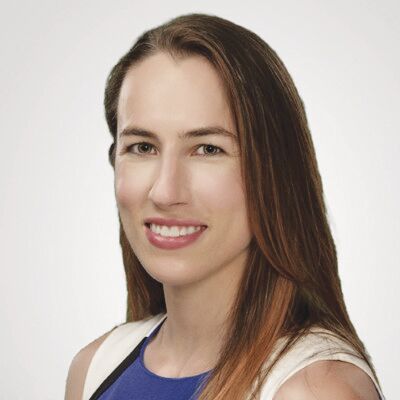
On this episode of The Granite Beat, Adam Drapcho and Julie Hirshan Hart talk with Anna Brown, executive director, and Mike Dunbar, content editor, for Citizens Count, a nonpartisan nonprofit organized to help Granite Staters make the most of their voting rights. They also host a podcast in the Granite State News Collaborative family, $100 Plus Mileage.
This article has been edited lightly for length and clarity.
Adam Drapcho: I began with the perception of Citizens Count as something adjacent to journalism. Your work is often in partnership with local news outlets, but that it is somehow distinct from journalism. However, the more I thought about it, the blurrier that line got for me, do you think of yourselves as journalists?
Anna Brown: That's a great question because it's something I've asked myself. Ultimately, I think unbiased information is essential for democracy, and that does look like journalism, local news. It does also look like the public having open access to government, where your local boards are putting their agendas online and welcoming public comment. It looks like neighbors talking to each other about what's going on in their town. And it looks like nonprofits like Citizens Count, where we are trying to provide unbiased information about issues and candidates in New Hampshire.
I think what sets us apart from journalists is this sheer volume of information that we are trying to translate for citizens — it becomes almost more encyclopedic than journalism. I think the trick with journalism is you are breaking it down, teasing out specific stories at a time. We do that with our podcast, $100 Plus Mileage, we do that with some of our other articles. But we also just have this website that has research for your 400 state representatives, 24 state senators and roughly 1,000 bills that are coming through every year. So I don't know, would you call Wikipedia journalists? I think we could get into a more existential conversation there.
Mike Dunbar: We provide tools that can be used by ordinary citizens, journalists — anybody looking to better understand the landscape in New Hampshire as far as politics and civics go, even teachers, we provide a lot of tools for them as well. So we're more about getting that transparency on what is going on at the state level in terms of legislation, in terms of candidates and things like that. And hopefully journalists and others can use those tools as they see fit.
Adam Drapcho: Could you tell us about each of your professional backgrounds and how you came into your current position?
Mike Dunbar: I have been a writer all my life, and I studied English and writing at Holy Cross in Worcester, Massachusetts. And then early on I took on various freelance writing projects. I am a musician as well by trade, so I got to do kind of an interesting grant project through the Mellon Foundation. It was one of my first acts in the real world as a writer, going on a six-week trip across the country, studying the musical heritages of various famous music meccas in the country. Eventually, as I grew as a writer, I got to start working for Citizens Count. I've always had a fascination with politics. I kind of come from a political family. And that turned into my work here at Citizens Count, first just writing content and then eventually getting the opportunity to become the content editor here.
Anna Brown: I'm definitely more on the hardcore political wonk side. I have a background in political science. I got a master's in justice studies and at that time in my life, I wasn't sure if I wanted to become a lawyer; I was thinking about law enforcement. But ultimately, I was really interested in getting involved at the state level, because I feel like so much important policy happens at that level. I actually wrote to Citizens Count, which was then the Live Free or Die Alliance — We changed our name so we wouldn't get confused with libertarian organizations that also have “live for your die” or “liberty” in their name, no offense to what they're doing. But obviously, we are trying to stay completely unbiased — I wrote them a letter because I was just a recent graduate, and I was interested in what they were doing. So I actually started as a contract writer with them as well. I was able to grow with the organization over time, had a lot of opportunities for professional development, learning about everything — you know, that political wonk stuff, to SEO which is very much about having a website in the modern era. So yeah, here I am, to this day.
Julie Hirshan Hart: Could you tell us what role Citizens Count played during the election?
Mike Dunbar: As I mentioned before, Citizens Count is all about providing tools for voters and everyday citizens. One of the ways that we do that for elections is by profiling every candidate for state and federal office. citizenscount.org is a platform where you can go online, free of charge, and you just put in where you live. It will tell you who is going to be on your ballot on the state and federal level. You'll see almost like Facebook profiles or social media profiles, you'll see all of the different faces and names of people who will be on your ballot. Then you can click on any one of those and you can find out where they stand on a wide variety of issues that face New Hampshire, and federally.
One of the ways that we gather this information is we issue surveys in every election to the candidates. We get a pretty strong response rate from them. As we've grown, our name recognition has grown, obviously. These candidates get tons of these surveys, but we do send them out every election. Then we enter them into the website so that people can just go on and see very clearly “thumbs up,” “thumbs down” on various issues. Obviously, it's hard to break it down as simply as that sometimes. So we do also provide the context of those answers — the candidates can sort of fill in the description of what they mean when they say, “I'm in favor or against or maybe I'm somewhere in between,” but with all sorts of issues, people can see where they stand. And by profiling those candidates, average voters can see who's going to be on their ballot before they head to the voting booth. And so that's what we did this past year.
Adam Drapcho: How does a bill come to your attention? And why do you choose to highlight it?
Anna Brown: We come together as a team every week that we're doing the podcast and look at those bills that are coming up and ask ourselves, “OK, do we know what this is?” There are some bills out there where I just get curious. There's a bill this year — I don't know if we're gonna get to cover it — but it's about metal detecting on sports fields. Because evidently, you currently have the right to go on school grounds and sport fields and all sorts of places in New Hampshire with a metal detector. It seems like maybe there's a problem with people digging up holes, and then student athletes falling into them, I'm not really clear. So sometimes there's bills like that, where I'm just like, “Oh, my goodness, there's got to be an interesting story here.”
But other times, we're trying to find those bills where there actually does seem to be a gap in the journalism coverage. I think that there's a lot of demand in journalism to cover, of course, those really hot-button, high-level topics — you know, we're talking about abortion, gender-related issues, gun laws, everything that was happening during COVID-19, which are extremely important. But there's so many debates that happen just below that level, right? We're talking 1,000 bills. And so we're trying to pick those out and elevate them.
Mike Dunbar: I think it is sort of the beauty of the nonprofit model, going back to one of your previous questions compared to traditional journalism, where those questions about what is getting the most clicks can be a source of interest for us. And it helps to guide us a little bit, but it doesn't have the same profit necessity that traditional journalism might, in terms of getting those clicks on every single article that we do, or every single podcast. The podcast is sort of fun, because it allows us to step into that a little bit and think like, "Well, what am I interested in hearing about just from the title of it?"
So with every bill, you know that there's going to be a story behind it. Oftentimes, for a bill to be written, there has to be either a group in New Hampshire or some sort of advocating cause behind it. So that's always an interesting part of any story, too, to find out, “Well, where did this come from? Was this just a legislator who had this idea themselves? Or did a constituency come to them?”
Julie Hirshan Hart: Since you've been with Citizens Count, have you observed any changes to the tone of New Hampshire politics?
Anna Brown: Yes, absolutely. As I said, I've had the opportunity to grow with the organization over the past decade or so. One thing I will say is, just mathematically, there are ways to calculate partisanship in voting behavior. First of all, we know for a fact that there are now more partisan votes — there are more votes where a majority of one side is drawing a line in the sand, and the majority of the other side is across it — as opposed to votes where you have most people from both parties agreeing or saying no. So that right there is indicative. But I've also seen, for example, on our social media, on the emails that we get from people, that there is not only an escalation in the tone and the words they're using to describe opponents, but also a lack of trust, a real lack of trust.
And I think that a lot of times these days when people in the democracy space, in the journalism space talk about how we live in a post-truth society, what's actually going on is a post-trust society. For example, during COVID-19, the vast, vast majority of us were not doctors or epidemiologists or virologists. But all of us took one side, or certain institutions that we say, “I trust them, those are the facts.” So it's not like we were coming from a place even at Citizens Count where we're saying, “Well, we're virologists, and we know what's up now.” No, there were certain institutions and leaders where we were pulling from to put information on the website — and that was the trust.
I think that that lack of trust is probably the biggest theme that I have seen going forward. I also think that you see that when we're looking at how people talk about elections. You're seeing that when we talk about ascribing certain motives to leaders in either party in New Hampshire.
If you don't have that trust in a civil society, how are you going to operate? The whole function of a democracy, the way it works is that you are entrusting a lot of these decisions to elected officials, and in the case of the executive branch, bureaucrats. So when we're talking about how do we rebuild that trust, I think you have to start at the community level, you have to start local. And I always encourage people — reach out to your state representatives, send them an email, have a phone call, see them at an Old Home Day event, because you run into these people at Market Basket and Dunkin’ Donuts way more than you realize. Four hundred is a lot for a small state. It's roughly one representative per about 3,000 people, I think. So you will see the vast majority of people doing this are not doing it for personal gain or some strange party conspiracy. They really care. They really care about New Hampshire — ditto your local poll workers, just volunteers going out there doing their thing. So that was a very long answer to your question about the change of tone. But like I said, I've seen it mathematically and I've also just seen it anecdotally in how I hear people talk to each other and elected officials talking to us.
•••
This article is part of The Granite Beat, a project of The Laconia Daily Sun and the Granite State News Collaborative, of which The Sun is a partner. Each episode, Adam Drapcho and Julie Hirshan Hart will explore with local reporters how they got some of the most impactful stories in our state and why they matter. This project is being shared with partners in the Granite State News Collaborative.


(0) comments
Welcome to the discussion.
Log In
Keep it Clean. Please avoid obscene, vulgar, lewd, racist or sexually-oriented language.
PLEASE TURN OFF YOUR CAPS LOCK.
Don't Threaten. Threats of harming another person will not be tolerated.
Be Truthful. Don't knowingly lie about anyone or anything.
Be Nice. No racism, sexism or any sort of -ism that is degrading to another person.
Be Proactive. Use the 'Report' link on each comment to let us know of abusive posts.
Share with Us. We'd love to hear eyewitness accounts, the history behind an article.