


LACONIA — Rodents of all varieties are in extreme abundance this year in New Hampshire, and more seem to be finding their way into homes.
Tom Boucher, owner of Alpha Omega Wildlife and Pest Control, said his “phone has been ringing off the hook.”
“We are out straight,” he said. “It’s crazy.
“We had the worst summer mouse population that we’ve seen in 18 years of doing this. The summer activity was unbelievable.”
Biologists say the rodent population goes up when there are an abundance of tree nuts.
This year, this food source was not particularly prevalent, although it was in great supply the three preceding years.
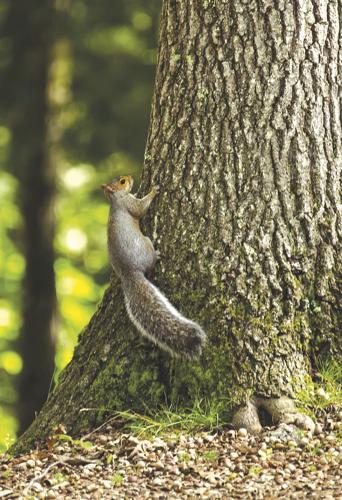
With the population up and available food down, rodents are seemingly everywhere looking for something to eat. Motorists often see squirrels as roadkill and some boaters have even seen them swimming in the lake.
Farmers have had their fill, too.
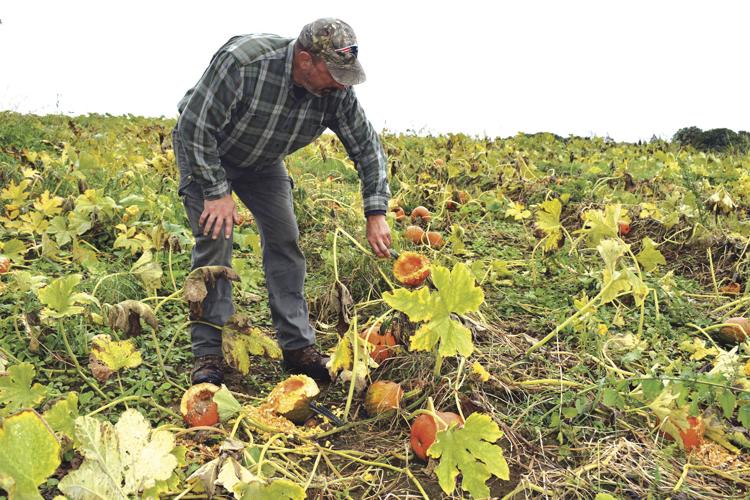
“It’s unreal what those little rodents can do to you,” said Joe Rolfe of Stone Mountain Farm in Belmont, where he and his wife Cindy grow apples and pumpkins. The squirrels have shown a particular fondness for pumpkins, he said. “They are just vicious...they just chew and get into the seeds and they eat the whole insides right out of it.”
At Stone Brook Hill Farm in Gilford, owners Tom and Mary Balsamo said they’ve taken to saying the pumpkins they had set up for people to be photographed with have been “kissed by a squirrel,” but the critters have also gone after apples.
“Sometimes they’ll eat half an apple that’s still attached to a tree,” Mary said. “That kind of threw us off a little because I didn’t know what kind of damage it was. All of a sudden I realized after seeing what they did to the pumpkins, there was no other explanation for it.”
Boucher, meanwhile, said people spot more rodents indoors in the fall.
“They nest in insulation,” he said. “It’s a protected area for them.”
Mice can get through small spaces along a roofline, a dormer or a chimney. They can get in through the siding of a home, along the foundation or places where pipes enter a structure.
“It’s almost impossible to seal up a house for mice,” he said.
Some homeowners make the mistake of not being aggressive enough in trying to eradicate the invaders.
“People put out a couple traps and think they’re done, or they wait until the problem is too heavy,” Boucher said.
Squirrels can damage an attic, including chewing through electrical lines. They can nest and give birth to young.
Mice, which are prolific breeders, can also carry the bacteria responsible for Lyme disease and provide the first blood meals for blacklegged ticks, which can transmit the disease to humans.
New Hampshire Fish and Game biologist Kris Rines, who works in New Hampton, said some rodent poison can have deadly effects on predators such as hawks, owl, fox and even house cats.
“We recommend traps,” she said. “It’s the old wintertime chore. For squirrels, you’ll need larger rat traps secured to a board they can’t draw away.”
There are also non-lethal traps.
Flying squirrels can be a particular problem for homeowners.
“They are communal nesters, Rines said. “It’s the entire family. You can have a lot of flying squirrels in your attic.”
As populous as rodents appear now, many are also dying in great number amid a lack of food and their overall population is sure to decline.
“People are calling us because they see so many dead squirrels on the road,” she said. “It’s not that they are running out there committing suicide. They are just looking for food.”


(0) comments
Welcome to the discussion.
Log In
Keep it Clean. Please avoid obscene, vulgar, lewd, racist or sexually-oriented language.
PLEASE TURN OFF YOUR CAPS LOCK.
Don't Threaten. Threats of harming another person will not be tolerated.
Be Truthful. Don't knowingly lie about anyone or anything.
Be Nice. No racism, sexism or any sort of -ism that is degrading to another person.
Be Proactive. Use the 'Report' link on each comment to let us know of abusive posts.
Share with Us. We'd love to hear eyewitness accounts, the history behind an article.