


A rainy spring day might ruin plans to enjoy the warm weather. But on rainy spring nights, thousands of amphibians embark on a short journey to a vernal pool, to breed and lay their eggs. As human development, cars and chemical runoff affect amphibian populations, efforts are being made to conserve them locally. This year, the Sandwich Conservation Commission started a crossing brigade, a group to assist amphibians in crossing roads to their watery destinations.
“It's actually very cool to be out there — in the rain, of course — watching these frogs just kind of cruising across the roads,” Commission Chair Nancy Walser said.
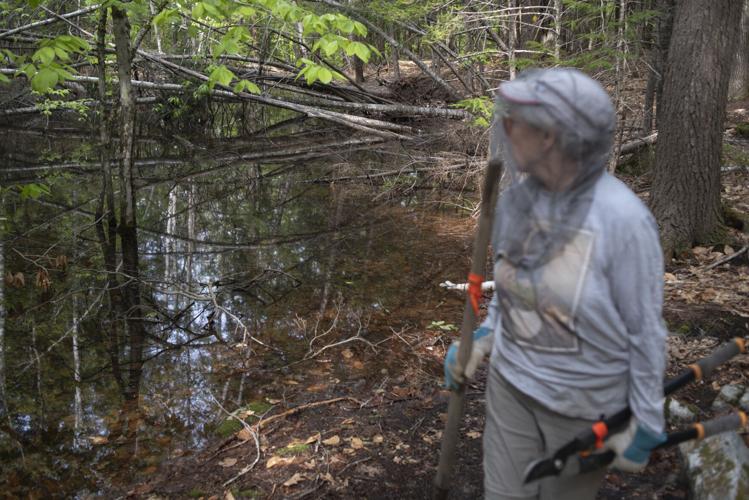
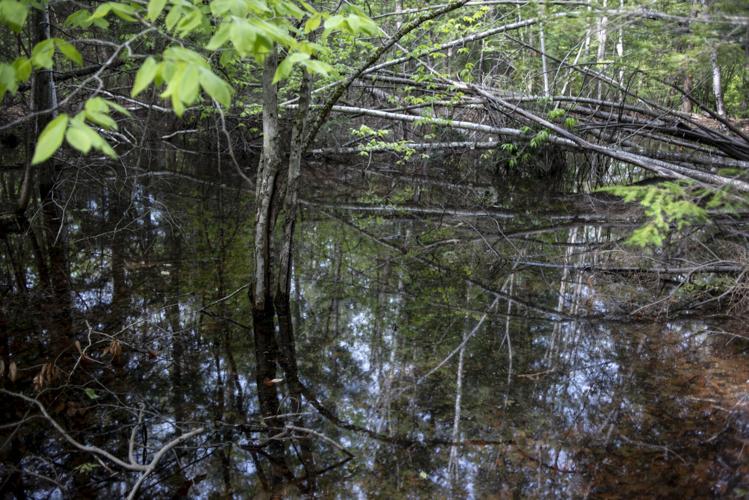
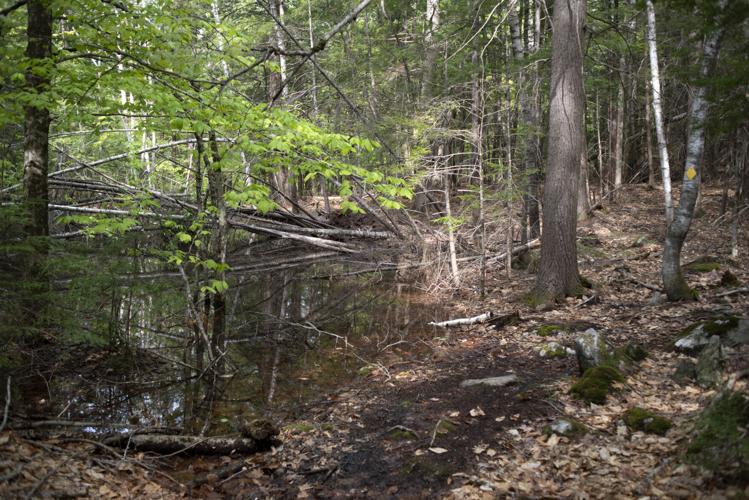
A vernal pool is a pocket of water that can be found almost anywhere — in forests, fields, shrub swamps, marshes or even gravel pits. Sizes range from smaller than 0.1 acres to more than 2 acres. The water that fills these pools exists in a seasonal cycle of flooding and drying, filling with snow in the winter, melting into water in the spring, then drying up in the summer, then repeating. These isolated wetlands are essential for amphibians to breed, as the temporary pools are unable to sustain fish, amphibians' main predators in other water bodies.
Laconia Conservation Commission Chair Dean Anson said there are about a dozen identified vernal pools in the city. Amphibians go to the same vernal pool year after year, and don’t have a backup, so preservation is important.
Runoff from vernal pools becomes groundwater, and amphibians help keep insect populations down.
With so few of these pools, and their importance for amphibians, the city designates a 100-foot buffer around them to prevent development, compared to wetlands, which receive a 50-foot buffer.
Sometimes developers might not be aware of a nearby vernal pool. That's where the Laconia Conservation Commission comes in.
“Our role is, when somebody wants to do development and they're going to impact wetlands, they have to come and get approval from the Conservation Commission, and suggestions on how to reduce the impacts of that development,” Anson said.
Anson also tries to ensure pools stay clear of any chemical runoff that can harm amphibians and their eggs.
“They're a critical habitat that is not very prevalent, and very sensitive to man's manipulation of them, either by having salt runoff or other chemicals, fertilizers and herbicides and pesticides that wind up in the water,” he said. “They will kill off the amphibians in particular.”
One such pool is on Lafayette Street, found on a city-owned parcel last year. The city council voted unanimously to designate the parcel as conservation land in May 2025. Anson said local residents brought it to the attention of the Conservation Commission after seeing salamanders and toads in their yards, some of which were 500 feet from the pool.
The Lafayette Street pool is near Woodland Heights Elementary School. Education is often the best tool for conservation, and Anson hopes due to its proximity, the pool can be used to teach kids about the amphibian life cycle.
“We thought that this would be a really good opportunity for teachers to show their students what a vernal pool was like,” he said.
The Harris Center for Conservation Education, in Hancock, was the first to start a crossing brigade in New Hampshire in 2007; now there are six others. The focus is on preventing amphibian road mortality associated with spring migrations between March and May. Science Director Brett Amy Thelen explained how “roadkill” is a growing conservation concern.
“On these migration nights, which are sometimes called Big Nights, there can be hundreds or even thousands of frogs and salamanders on the road in the course of just a few hours,” she said. “When you have that many critters on the road, it doesn't take a lot of cars to do a lot of damage.”
A group of volunteers are always on call, and when the weather forecast predicts rain, they rush out to help. In the process of moving them, volunteers also count the amphibians, including those that make it, and those that don’t, documenting long-term species data. But Amy Thelen emphasized volunteers are not crossing guards stopping traffic. They simply move the amphibians faster than they might move themselves.
Harris Center volunteers have garnered enough support from the City of Keene that on Big Nights, two roads with busy amphibian traffic get shut down to allow for safe crossing.
“It's the only place in New Hampshire right now that is doing that,” she said. “It's the first, but we hope it won't be the last.”
An alternative method is a tunnel system that goes under roads, with fence that guides the little critters along. Monkton, Vermont, has implemented such a system, and over 2,000 amphibians use it each year.
Even after the spring breeding season, amphibians come out to look for food on warm rainy nights through the summer. Amy Thelen emphasized that the Lakes Region in particular is a busy place for amphibians, particularly frogs, due to the large numbers of shallow spots in lakes and ponds. And with the many roads which line the water, she advises people use caution driving on rainy nights, or just stay off the roads.
“If it's warm and raining on a spring or summer night, and you can save your errand for the next day, you could save many frog lives without even realizing it, just by staying home or walking.”




(0) comments
Welcome to the discussion.
Log In
Keep it Clean. Please avoid obscene, vulgar, lewd, racist or sexually-oriented language.
PLEASE TURN OFF YOUR CAPS LOCK.
Don't Threaten. Threats of harming another person will not be tolerated.
Be Truthful. Don't knowingly lie about anyone or anything.
Be Nice. No racism, sexism or any sort of -ism that is degrading to another person.
Be Proactive. Use the 'Report' link on each comment to let us know of abusive posts.
Share with Us. We'd love to hear eyewitness accounts, the history behind an article.