


MEREDITH — More than 50 years ago, Granite Staters saw fewer loons swimming on their lakes. With no system in place to monitor the species, the dramatic decline of New Hampshire's beloved bird was not accurately documented.
When the Loon Preservation Committee was founded in 1975, there were only 74 territorial pairs of common loons in the state. Thanks to aggressive conservation efforts, in 2022, a census counted 345 pairs. One solution to combat population decline is manmade floating raft nests, which provide a safe, effective way to help loons hatch their eggs.
The first nest on Lake Winnisquam began its use in 1989, and has provided a safe space for loons ever since.
“Back in 1989, that was the only pair of loons on Winnisquam, but now there are three nesting pairs,” Caroline Hughes, outreach biologist for LPC, said. “And actually, [there’s] a fourth pair that has not nested yet, but seems like maybe they want to.”
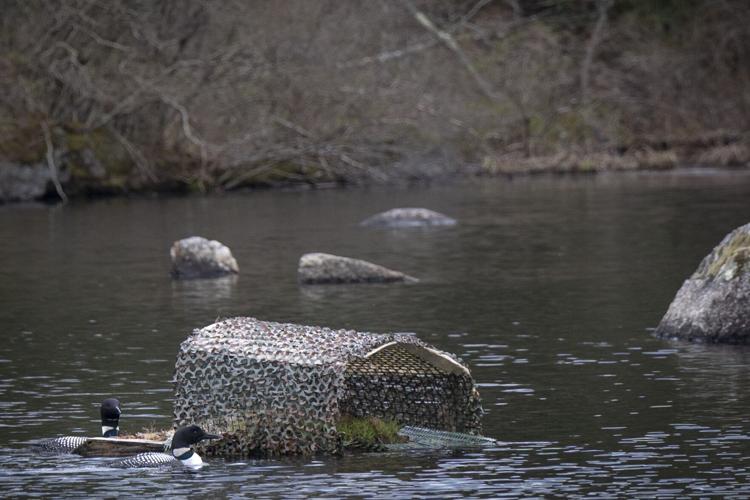
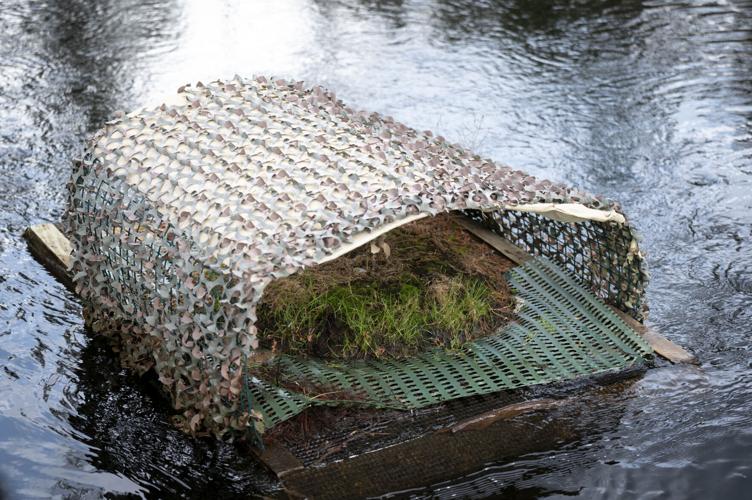
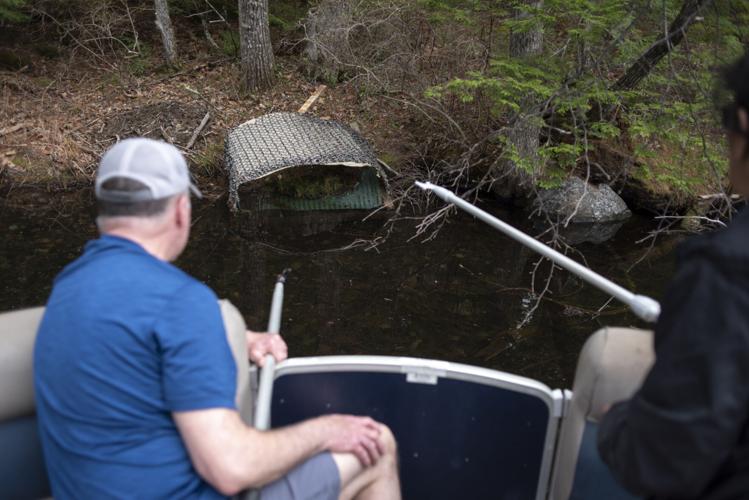
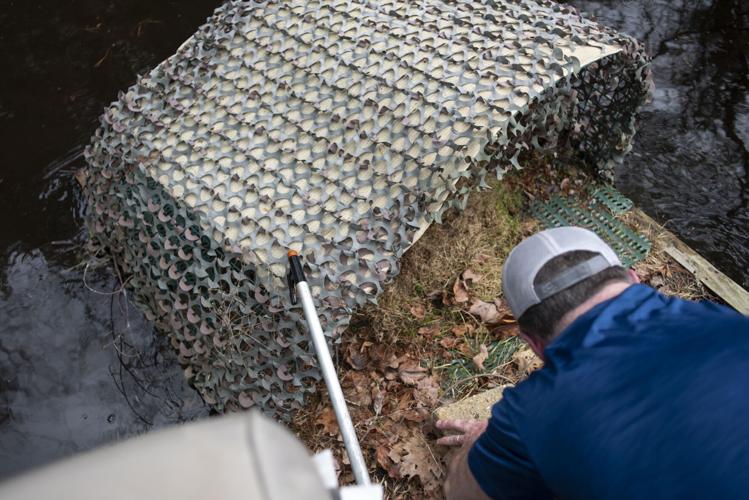
Winnisquam Watershed Network volunteers Dick Tracy and Ed Stephenson are responsible for putting out the raft nest. Tracy has been putting the nest out for 10 years, and Stephenson, even longer, for 15. The nest is on a 4-by-6-foot raft made of PVC pipe, covered with a leaf camouflage netting. The design previously used wood, but was too heavy.
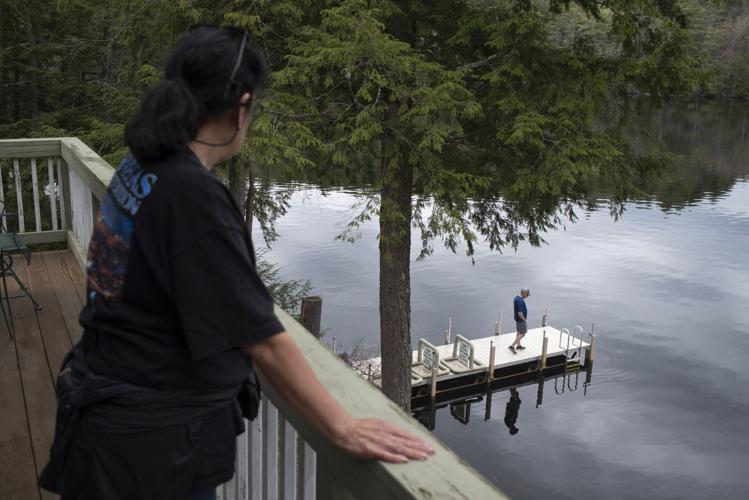
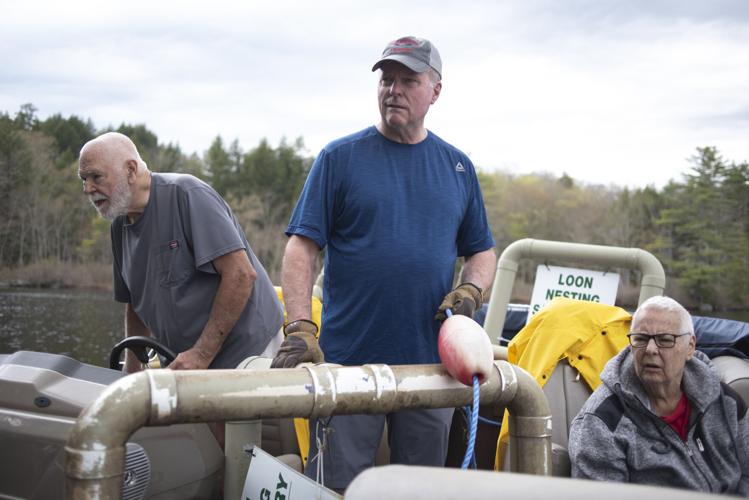
Tracy lives on the northern tip of the lake near the cove. He meets up with Stephenson, who drives his boat from Belmont, and together they put the nest in the water. On the afternoon of May 3, it was rinse, wash and repeat.
“In the fall, we took the nest out of the water, because we don't want it to get damaged when the lake freezes. So, we take it out, we put it up on land,” Tracy said. “Now, today, we're going to go get it, we're going to put it in the water," he said Saturday.
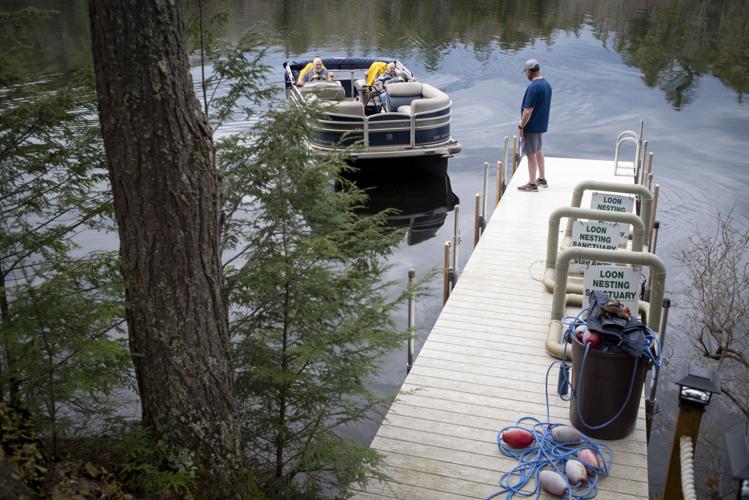
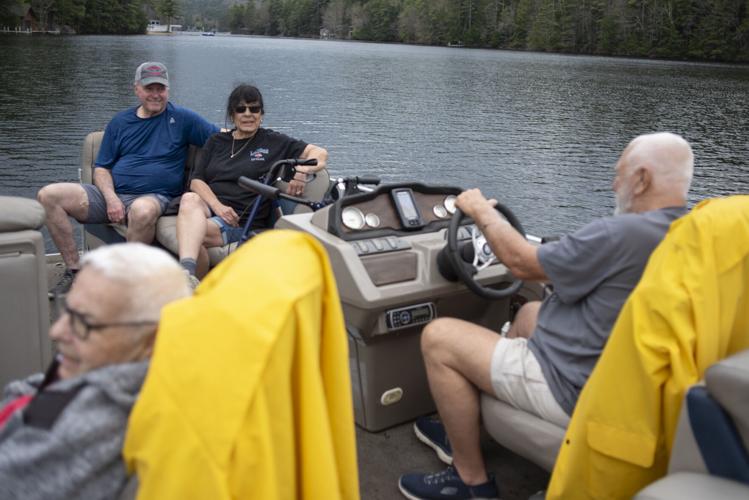
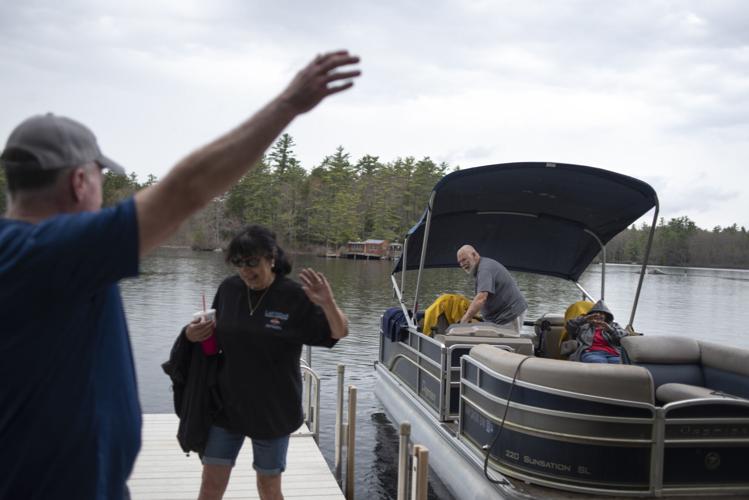
On Saturday, Tracy was joined by his wife Maggie, and Stephenson, by his wife Louanne. The four cruised around slowly, evading rocks in shallow water. The group pulled the nest off the shoreline, and towed it to the same area in the water as they do every year, anchor it, then run a rope across, with signs attached warning boaters to stay away from the loon sanctuary. On the way, Dick told stories about how the loon pair seems to eagerly await their nest.
“They were circling here a lot, waiting for us to get it in the water,” he said. “Sometimes they'll come and they'll just swim right around this area.
"[We] almost think that they're ... yelling out to us to get that nest in.”
This year was no different. Minutes after the nest went in the water, loons appeared. They slowly approached the nest, and eventually circled around it, giving it a proper investigation. Ed feels fulfilled in his role each year.
“It does feel nice, though, putting out the nest, and the loons are there checking it out.”
This nest is one of 156 across the 350 lakes the Loon Preservation Committee monitors across the state. Last summer, 60 of those rafts were used, and 27% of chicks hatched statewide came from a raft.
While the nest is a helpful tool in rebounding the loon population, Hughes said natural nests are preferred. She said misconceptions about raft nests are that they are meant to attract loons to a lake, or provide better outcomes than a natural nest.
“Neither of those things are true. We really want loons, if they can, to nest naturally,” she said. “We put the rafts out when the loons have been trying to nest, but failing for years in a row due to a problem that a raft can solve.”
There is cause for concern if a loon cannot hatch an egg for three years in a row. Conservationists agree that even if a loon pair is successful one out of three years, that is sufficient. This is because loons have long lifespans, living on average between 20 and 30 years, meaning they have more time to hatch an egg. The maximum lifespan of the loon is still undetermined. The monitoring practice of banding birds only started in the late '80s. The oldest known loon in New Hampshire was banded as an adult in 1993, and is now 38 years old.
Ultimately, if a loon uses the raft nest, then begins to hatch successfully with their own natural nests, Hughes said the team might consider pulling the raft. But so far, the loons at the north end of Winnisquam still seem to need it.
With three nesting pairs, Winnisquam has been a prime example of the success of the conservation efforts.
“It's a really cool lake, because we've been able to see the population rebounding,” she said. “The other two pairs are nesting naturally.”
Dick recently moved to Meredith, and spoke to what it’s like to live on the water.
“We’re originally from Manchester, and we we’re used to city noise. And then we came here, and it's really quiet,” he said. “But then when the loons call out — if you've heard a loon before — it's got that kind of eerie tone to it.”
Not all nesting pairs produce chicks. A loon egg might not hatch due to predators like raccoons, eagles, or crows, and water fluctuation can also disturb nests. But human disturbances have been the biggest factor to the species decline. Getting too close to a nest can cause distress for the birds, flushing the loon off its nest, which makes the egg vulnerable to predators. A distressed loon might accidentally kick an egg into the water, or a hot day can cook an exposed egg, making it inviable. But the No. 1 threat facing loons is lead poisoning of adults after ingesting lead fishing tackle.
Since 1989, 37% of adult loons which have died in New Hampshire were attributed to ingesting lead tackle. Because of this, the Loon Preservation Committee operates a lead tackle buyback program at 13 stores across the state, where people can get a $20 voucher to the participating store in exchange for their old weights. For more information, visit loon.org.
The sale and freshwater use of lead sinkers and headed jigs of 1 ounce or less — the size which poses the biggest threat to loons — is illegal in New Hampshire.
Hughes emphasized the actions community members take to help loons also protect other species living on the lake. And they're in humans’ best interests, as well.
“People love loons. And, I think, always learning to be part of the ecosystem, and to not harm the ecosystem, is good for us as humans.”


(0) comments
Welcome to the discussion.
Log In
Keep it Clean. Please avoid obscene, vulgar, lewd, racist or sexually-oriented language.
PLEASE TURN OFF YOUR CAPS LOCK.
Don't Threaten. Threats of harming another person will not be tolerated.
Be Truthful. Don't knowingly lie about anyone or anything.
Be Nice. No racism, sexism or any sort of -ism that is degrading to another person.
Be Proactive. Use the 'Report' link on each comment to let us know of abusive posts.
Share with Us. We'd love to hear eyewitness accounts, the history behind an article.