


LACONIA — A small child witnessing a parent taken away in handcuffs, seeing a mom or dad overdose or, worse yet, die from an overdose, can be a traumatic event.
But child-care experts in the Lakes Region have been thinking long and hard about such situations for years and they believe they have come up with a way to provide critical support for children in the days and weeks following such childhood traumas.
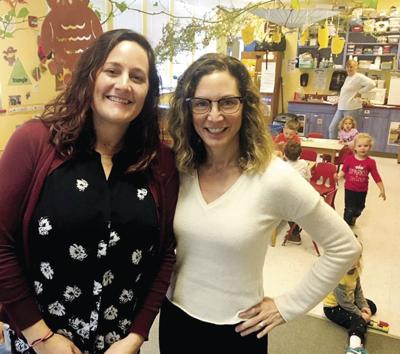
Impressed by the success of an outreach program that began in Manchester three years ago, Marty Ilg, executive director of Lakes Region Child Care, and Erin Pettengill, director of the Family Resource Center, will unveil on Wednesday, Nov. 28, plans to establish such a program for the area.
The meeting to explain the workings and philosophy behind the Adverse Childhood Experiences Response Team — ACERT — will take place from 10-11:30 a.m. at the Lakes Region Community Services headquarters at 719 North Main St., in Laconia.
The memory of traumas during childhood “impact children for a lifetime and especially impact all learning, behaviors and health issues that follow,” Ilg said.
According to a two-year survey conducted and released last year by the Resource Center for Child & Adolescent Health, 23.4 percent of New Hampshire children have been impacted by one traumatic event — called an adverse childhood experience, or ACE — and 18.5 percent of children statewide have been affected by two ACEs.
“After three or four ACE incidents, you start to see an impact,” Pettengill said.
ACEs can have serious, long-term impacts on a child’s health and well-being by contributing to high levels of toxic stress that derail healthy physical, social, emotional, and cognitive development. Research shows that ACEs increase the long-term risk for smoking, alcoholism, depression, heart and liver diseases, and dozens of other illnesses and unhealthy behaviors. The new data show that 33 percent of children with two or more ACEs have a chronic health condition involving a special health care need, compared to 13.6 percent of children who have not experienced ACEs.
The new response team would be comprised of a police officer, a social worker and a family support specialist who would make a visit to a residence where a child had been present at a police event. The team would meet with the child’s parent or primary caregiver and the child, to explain to the adult what services the child could receive to help mitigate the impacts of the trauma the child has been through.
“If you’re not a trained person,” Ilg said, “you do not know how to help a child through trauma.”
As Ilg and Pettengill see it, ACERT is a way to fill a gap that exists in early childhood services in the greater Laconia area.
“ACERT addresses those needs at an earlier age,” Pettengill said.
While police are sensitive to the plight of the children they see at these domestic/criminal events, Ilg noted they are not especially well-equipped to handle and follow through with referrals to human service professionals. “That’s not what they do,” she said.
The way things work now, social workers and childcare service providers often don’t get brought in until they are notified by the state Department of Child and Family Services or a school counselor.
For Ilg and Pettengill, the goal is to get help to the children before they enter school, so that when they become pupils their education will be more productive.
As they see it, the growing years are when children accumulate knowledge, much of it from their environment. They compare it to water being poured into a bucket.
“Trauma pokes holes in the bottom of the bucket,” said Ilg, “so the experience lessons don’t all stay in.”
They see ACERT as an investment in the future of the affected children, as well as the community at large.
“The earlier that investment, the better,” Ilg said. “This is a long game,” she continued. “Once they get to school ready to learn, that means a better chance at a fulfilling life.”
Ilg and Pettengill reached out to those involved in Manchester’s ACERT program not long after it got underway. “They’ve had tremendous success,” she said. Manchester team members will be on hand at the Nov. 28 meeting to share their experiences. Officials from the Laconia Police Department, the school system and local human services providers are also expected to attend.
Ilg and Pettengill hope that community, business and civic leaders will also show up.
“We’re hoping to see people who can help make this happen,” Ilg said. “Decision-makers,” Pettengill interjected.
“This isn’t about talking,” Ilg added referring to the meeting. “This is about action.”
The two said that many of the social services required to make the program successful are already in place. However, a full-time director will be needed to coordinate the program.
Ilg said conversations she and Pettengill have had with Laconia Police officials have been encouraging – the police like the program. But at the same time they made clear there is not enough money in the department budget to pay for an ACERT officer.
“Fortunately we have funders who are interested,” Ilg said.
Ilg related a personal experience she had in her work at Lakes Region Child Care which illustrates the benefits of an ACERT program.
She recalled getting a call from a woman who was traveling in her car with two children, ages 2 and 3. The woman was homeless with no place to live. She drove to the Child Care center on Strafford Street, where Ilg and her staff arranged to put the mother and her children in a shelter and to get child-care services for the two toddlers. The mother is now living on her own and her two children are with her and attending school. But they are receiving needed special education services.
“If this type of program had been in place early on where this mother and her children were (before they came to Laconia), the outcome would have been a lot better,” said Ilg.
While Ilg acknowledged that one of the traumas that far too many children are exposed to is drug abuse, she is quick to point out that ACERT is not being proposed in response to the state’s opioid epidemic.
“The opioid crisis has presented some unique circumstances,” she said. “But in general there have always been families who struggle.”


(0) comments
Welcome to the discussion.
Log In
Keep it Clean. Please avoid obscene, vulgar, lewd, racist or sexually-oriented language.
PLEASE TURN OFF YOUR CAPS LOCK.
Don't Threaten. Threats of harming another person will not be tolerated.
Be Truthful. Don't knowingly lie about anyone or anything.
Be Nice. No racism, sexism or any sort of -ism that is degrading to another person.
Be Proactive. Use the 'Report' link on each comment to let us know of abusive posts.
Share with Us. We'd love to hear eyewitness accounts, the history behind an article.