


LACONIA — With the first storm of the season visiting New England this weekend, safety is at top of mind for most drivers. Bad weather and poor road conditions account for nearly 500,000 motor vehicle accidents and more than 2,000 deaths every winter, according to the AAA Foundation for Traffic Safety. Experts offer reminders of how to stay safe on the roads this winter.
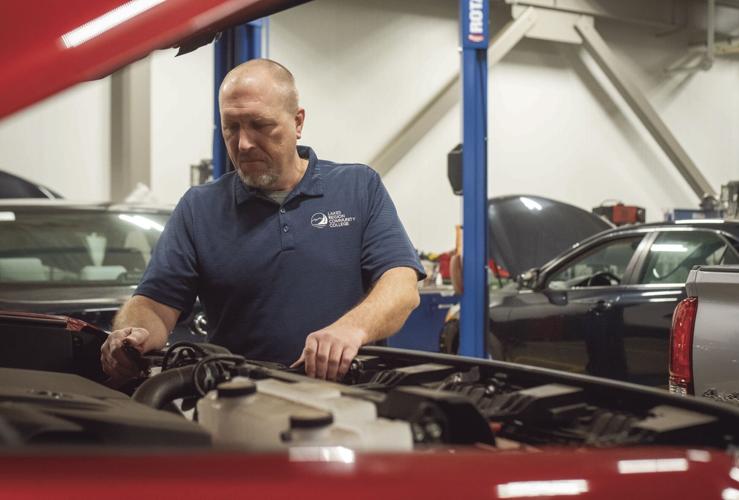
The first thing people usually think about in terms of driving safety in the winter is the use of all wheel or four wheel drive. These systems allow the car to send power to all four wheels, which allows for better traction and can help with getting out of deep snow. Jaime Decato, automotive technology professor and department chair at Lakes Region Community College, said modern cars have traction control systems to aid in road contact as well. While these certainly help, they can only do so much in terms of staying safe on the road.
“People tend to have a little bit of a false sense of security. ‘Well, I've got all wheel drive, or I've got four wheel drive and I can go out in the snow and do whatever I want,’” Decato said. “It's not going to help you stop any better, so you have to get that out of your mind that four wheel drive is going to help you stop in a situation. ... You can't overcome the laws of physics. You have to still drive cautiously and be aware of how the systems interact.”
Proper snow tires can make driving a lot safer, creating better grip and making a car less likely to slide or skid. They can also allow for better acceleration and stopping. While all-season tires can be good when driving on cleared roads after a storm, they generally have difficulty gripping the road in snowy and icy conditions. Mechanic Steven Cray from Bayside Service gave a good analogy.
“I look at all-season tires just like a cross-training shoe,” he said. “You can do many sports with a cross-training shoe, but if you like to play golf and you have a golf shoe, it makes a big difference. It's snow tire versus an all-season tire.”
Safety laws
Another important step to ensure safe driving is proper visibility. A New Hampshire state law passed in 2002 called “Jessica’s Law” requires drivers to properly clear their car of any snow and ice before driving. The law came about after 20-year-old Jessica Smith was killed when ice flew off the top of the truck, which hit another truck that then collided with Smith’s car. Police Chief Matt Canfield said officers take this law seriously.
“It is a violation to not clear the snow off your windshield or off the top of your car,” he said. “It can be very dangerous especially as it gets more solid and turns to ice.”
Decato also noted he has seen drivers try to find loopholes and do less work before getting behind the wheel.
“You'll always see these people that will clean off this one little spot on the glass and try to drive down the road,” Decato said. “And that's really not a safe situation for anybody.”
Canfield reminded drivers of the city's winter parking ban. Between Nov. 1 and May 1, there's no overnight parking on any city street, especially during periods of snow removal. If a car is blocking the snowplow’s ability to clear the streets, the car can be towed.
Preventative maintenance
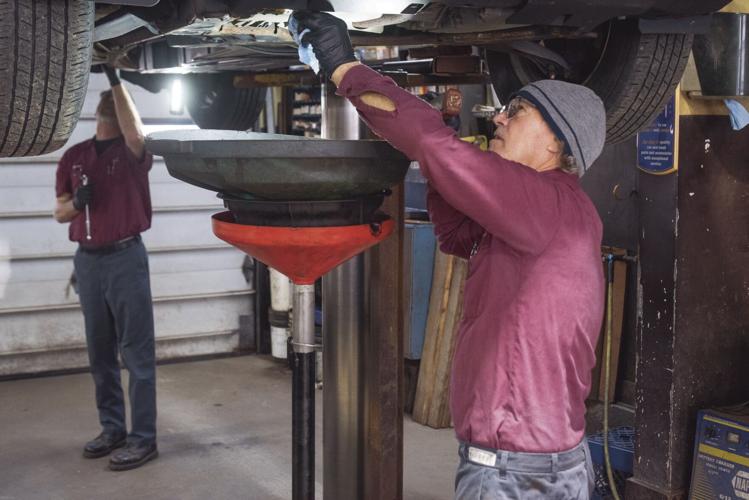
As snowplows clear the streets and spread salt, the saltwater mixture is known to corrode and rust the bottoms of cars. While the rust doesn’t happen in the short-term, letting salt sit on the car over extended periods of time can be damaging. Bayside Service mechanic Greg Parker recommended getting the underside of the car cleaned occasionally to prevent corrosion.
“That could help if you did it a couple of times a year, at least to get some of the salt mixture that collects under the car off,” Parker said. “You can go do the under-car wash, but only if it looks like you're going to have three or four days above normal temperatures. You don't want to go through the under carwash and have it get down to 10 degrees overnight, and then the next day your brakes are frozen up and you can't get in your doors.”
Another solution is to have a protective coating placed under the car, like a wax or oil. This is not a permanent solution, though, as the coating only slows down the rusting process, but doesn't stop it.
“There's different products for different needs, depending on the type of vehicle you have and the environment that you're running in. But that's just slowing down that process,” Decato said. “So, keeping the car clean is going to be a key to that survival.”
Planning ahead
AAA offers tips like keeping a bundle of cold-weather gear in the car, such as extra food and water, warm clothing, a flashlight, a scraper, blankets and medications; making sure your tires are properly inflated; keep at least half a tank of fuel in your vehicle at all times in case of getting stranded or delayed due to the weather in order to keep warm; no to warm up a vehicle in an enclosed area, such as a garage, which can cause carbon monoxide poisoning due to gas emissions; and not to use cruise control when driving on slippery surfaces like ice and snow. Additional AAA driving tips can be found at AAA.com.
Decato also emphasized how important planning ahead is when driving during the winter.
“Letting people know where you're going and that you've reached the destination is pretty critical,” he said. “Having a plan, choosing a route, looking at traffic ahead of time, if you can, will certainly help you to get where you’re going safely.”
Due to the unseasonably warm weather, Canfield is worried people won’t be prepared for the shift to winter driving. With the storm coming this weekend, Canfield reminded everyone to be ready and safe.
“This is only our second snowfall for the winter season and certainly probably the biggest one yet. And we see people having a hard time to readjust or re-acclimate to winter driving,” Canfield said. “When we reenter the winter season, we see people continue their normal driving habits and not necessarily think of reducing speed, and that causes a loss of traction and can contribute to a number of accidents. We would definitely encourage people to slow down and take the time and not travel if they don't have to.”


(0) comments
Welcome to the discussion.
Log In
Keep it Clean. Please avoid obscene, vulgar, lewd, racist or sexually-oriented language.
PLEASE TURN OFF YOUR CAPS LOCK.
Don't Threaten. Threats of harming another person will not be tolerated.
Be Truthful. Don't knowingly lie about anyone or anything.
Be Nice. No racism, sexism or any sort of -ism that is degrading to another person.
Be Proactive. Use the 'Report' link on each comment to let us know of abusive posts.
Share with Us. We'd love to hear eyewitness accounts, the history behind an article.