


MEREDITH — The article published by a local outlet about a news event might come out a day or two later, but that intervening time allows the reporter to check facts and provide important context, and have it reviewed by an editor. The problem, Ed Twaddell said at Twin Barns Brewing Co. on Oct. 15, is the social media scuttlebutt has already been flying for hours.
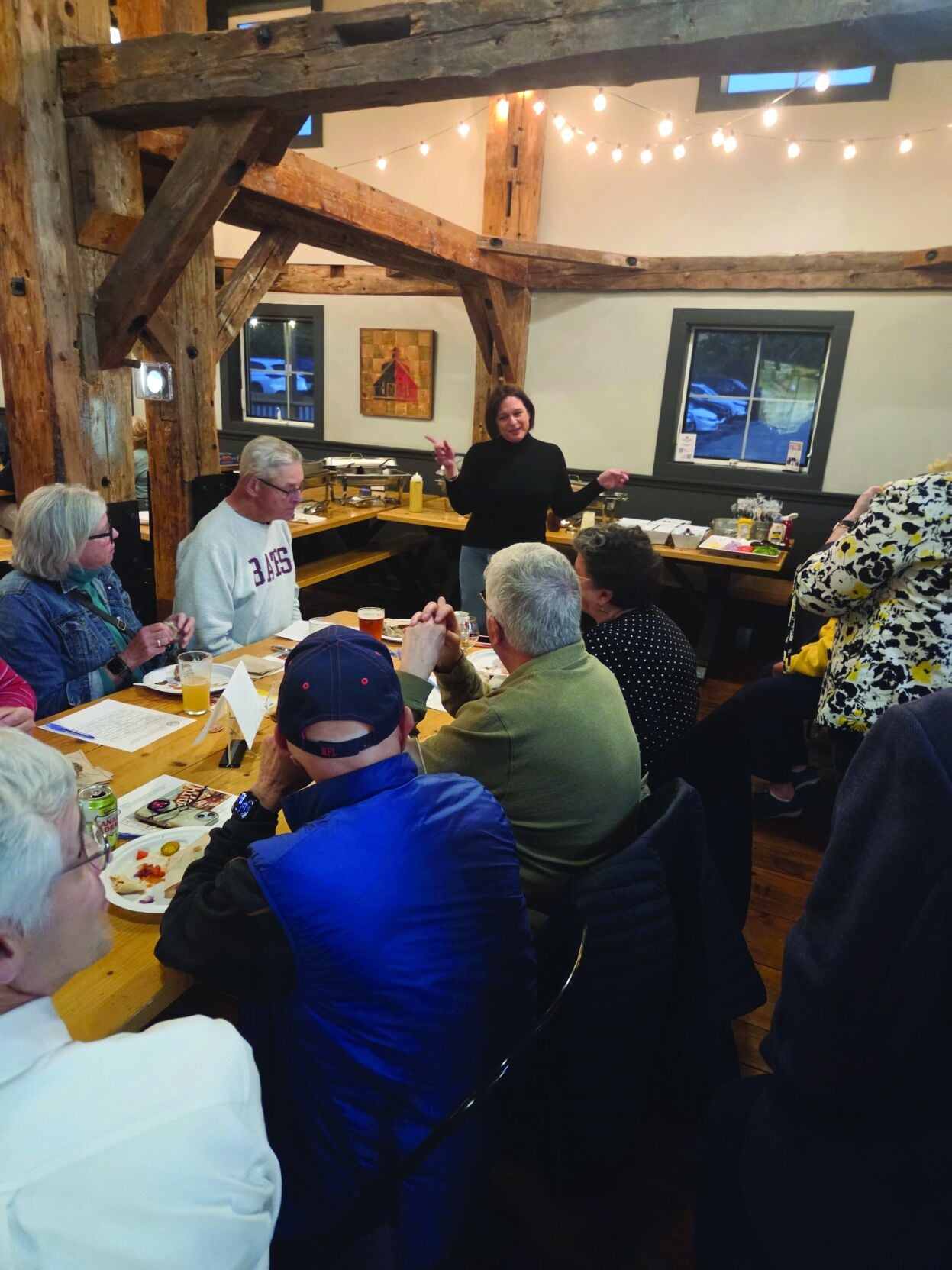
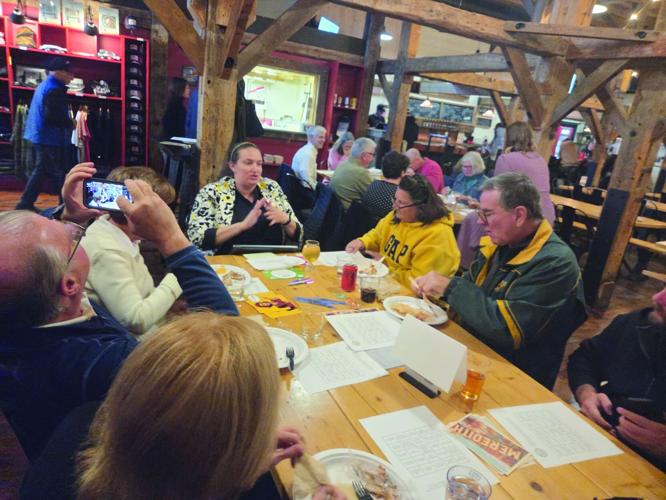
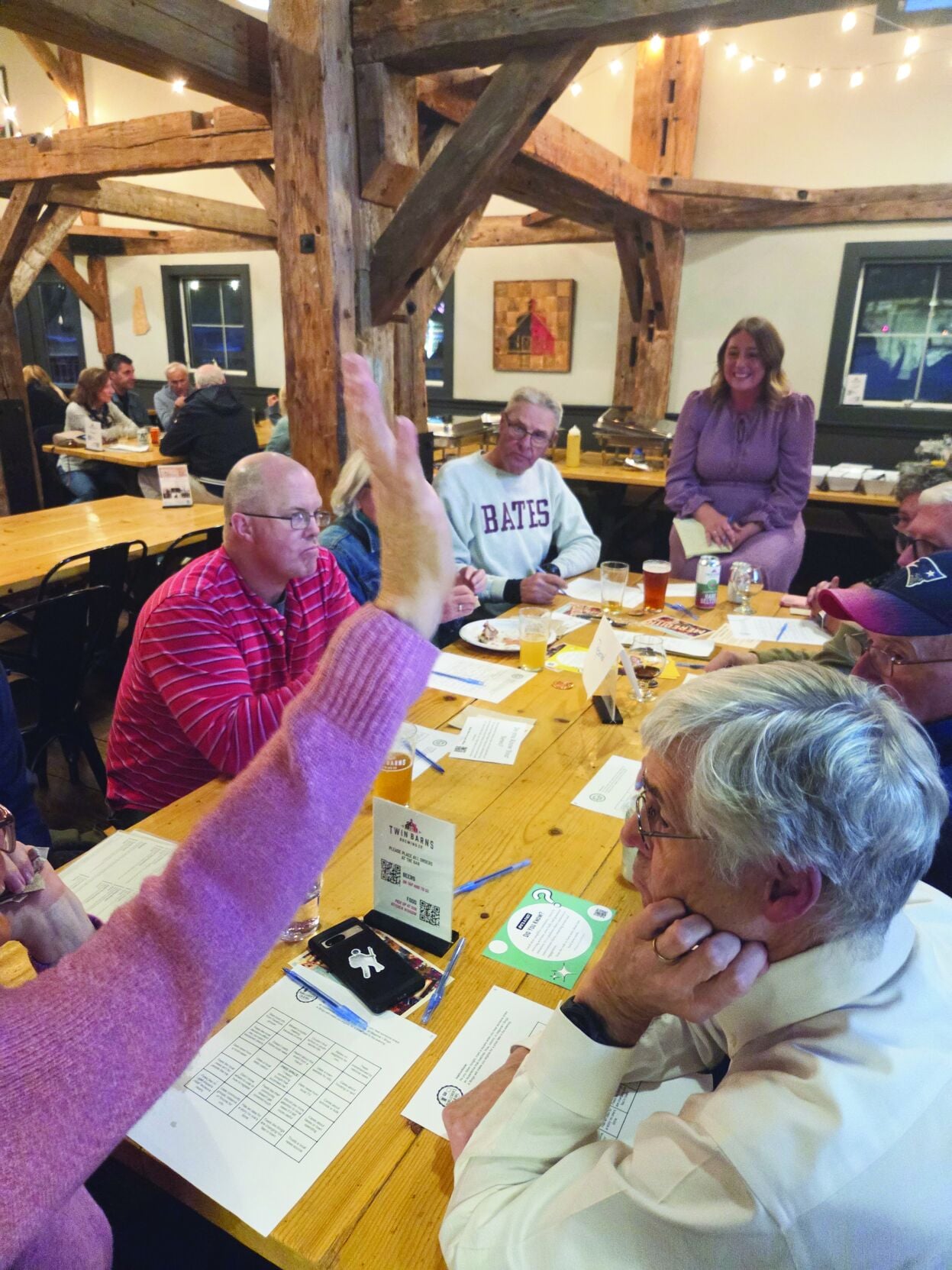
Twaddell was among 18 who visited the brewpub to participate in the Meredith stop of the Publisher’s Crawl, a series of facilitated conversations about the strengths, weaknesses and absences of local media. The series is organized by the Granite State News Collaborative, and Melanie Plenda, executive director, said the Meredith stop was the sixth of seven planned conversations — although she might add a couple more in response to requests from Hillsborough and Wolfeboro.
The Twin Barns event was co-hosted by The Laconia Daily Sun, with Julie Hirshan Hart, editor, and deputy editor Katlyn Proctor leading group discussions.
Twaddell, a member of the Inter-Lakes School Board, which governs schools in Meredith, told his group he’s seen constituents reach a conclusion about his comments at a board meeting based solely on gleanings from social media.
“The algorithm is going to show him the comment about how screwed up I am before they see The Laconia Daily Sun,” Twaddell said.
Despite their acknowledgements of its shortcomings, most attendees reported social media, along with The Laconia Daily Sun, NHPR, commercial radio, NH PBS and WMUR, was among their sources of local news. Twaddell said he uses social media to see what stories are trending, then clicks through to read a news story about the issue.
The crowd was mostly of retirement age, and several noted how local newspapers didn’t always include elements they used to, such as police logs and exhaustive coverage of high school sports. On the other hand, The Laconia Daily Sun drew praise for its tradition of highlighting graduates of local high schools, and of profiling candidates for local office.
Another attendee, Howard Lowe, said his community doesn’t have much coverage of any kind.
“In Wolfeboro, we’re in a news desert,” Lowe said. He appreciates when The Conway Daily Sun sends a reporter to his town, but it’s otherwise difficult to stay informed. Most residents turn to the local public access television station, which has a team of volunteers who record municipal meetings for broadcast.
“You don’t get any interpretation or reporting on it, but you can get the raw footage,” Lowe said. “There’s a tremendous thirst for local news, especially if it’s reported objectively, not slanted or biased, which is what you get on social media.”
It wasn’t just social media, though, which was seen as part of the problem.
“You certainly can’t rely on the government, and you can’t rely on the larger papers who don’t cover Laconia,” said Drew Gillett, a reader from Laconia.
Bill Aucoin, of Laconia, said national television programs often come with a discernible bias.
“I don’t remember it being that way when I was younger, but it definitely is now,” Aucoin said. His wife, Renee, agreed. “But you don’t get that with newspapers. The TV news is just trying to rile you up.”
Plenda said after the Meredith stop, the tour would continue with a visit to Ledge Brewing & Taco Bar, in Intervale, on Thursday, Nov. 12. The event is free but registration is requested. To register, visit collaborativenh.org/pubcrawl.
Plenda said the information gathered from the events will help local news organizations to better serve their communities. One change has already occurred: The news collaborative has created a fact-checking hub, where members of the public can submit claims seen on social media, campaign ads or heard at public events, and have them verified or contextualized by a journalist.
As the conversation at Twin Barns concluded, Plenda said there were further steps attendees could make to enrich their local news landscape. She invited them to consider the collaborative’s Civic Documenters Program, a six-week online course that trains members of the public to cover local meetings.
If that’s too much of a commitment, Plenda said they can do their part to make social media a little more reflective of reality.
“One thing you can do, when you see these arguments on social media, share those local news stories,” Plenda said, which will both encourage a fact-based exchange while also boosting the reach of the outlet that published it. “Let’s flood the zone, see if we can turn the tide.”


(0) comments
Welcome to the discussion.
Log In
Keep it Clean. Please avoid obscene, vulgar, lewd, racist or sexually-oriented language.
PLEASE TURN OFF YOUR CAPS LOCK.
Don't Threaten. Threats of harming another person will not be tolerated.
Be Truthful. Don't knowingly lie about anyone or anything.
Be Nice. No racism, sexism or any sort of -ism that is degrading to another person.
Be Proactive. Use the 'Report' link on each comment to let us know of abusive posts.
Share with Us. We'd love to hear eyewitness accounts, the history behind an article.