


LACONIA — On the heels of a successful exercise in Franklin earlier this year, hospital and emergency response officials implemented lessons learned and ironed out a few kinks while they conducted an armed intruder drill at Concord Hospital-Laconia Wednesday morning.
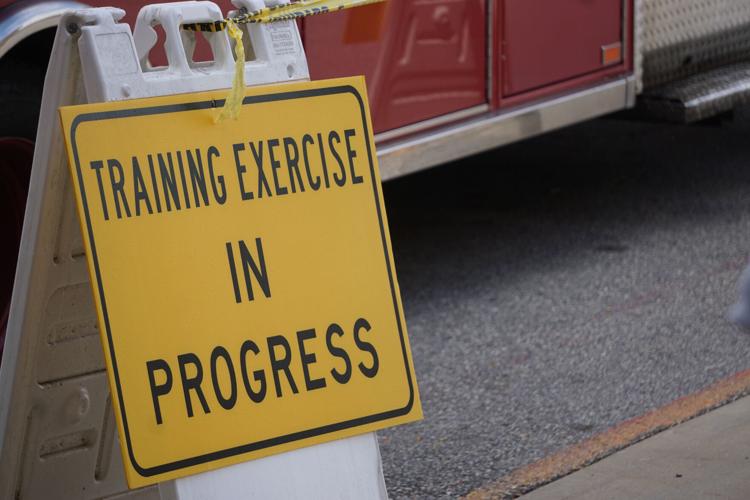
Coordinated by the Homeland Security & Emergency Management division of the New Hampshire Department of Safety, city firefighters, police officers, paramedics, doctors, nurses and others gathered to run through an emergency test of their protocols in responding to an armed threat at the hospital.
“The whole point is not law enforcement response, it’s what is going on" inside the emergency department,” said Robert Christensen, chief of training, exercises and development for state Homeland Security & Emergency Management said. “What’s going on in here, are we rerouting people? Are people just kind of walking in like normal, even though it’s a hostage situation? What’s happening?”
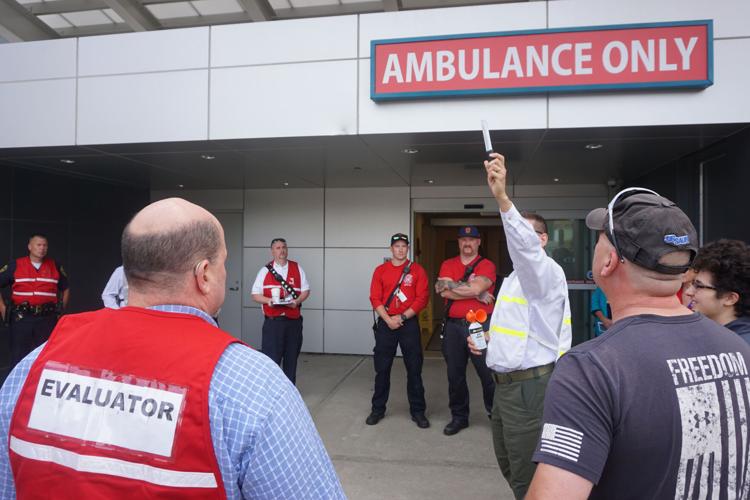
The scenario, which lasted about 30 minutes, supposed a victim of domestic violence was transported to the hospital for treatment, followed in quick succession by the assailant, who frantically confronted paramedics outside the emergency department and who was armed with a rubber knife, looking for his victim before taking a paramedic hostage inside an ambulance.
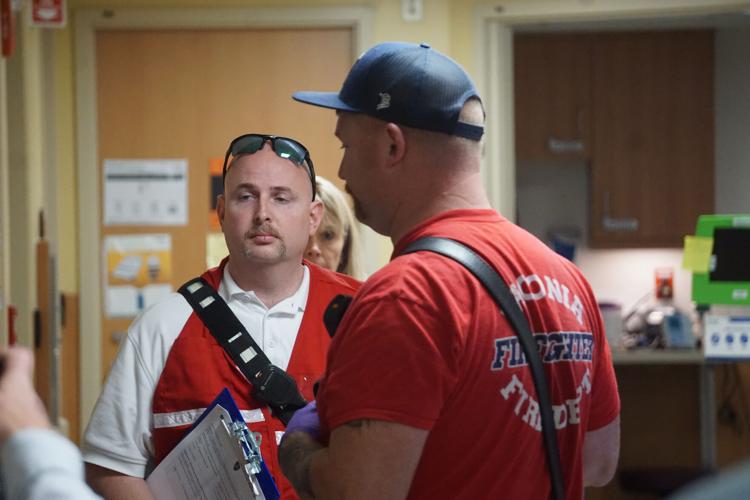
In the drill, police arrived on the scene and negotiated with the assailant while hospital staff inside the emergency department worked to barricade themselves and the assault victim behind the locked door of a bathroom. Security personnel and emergency department staff concurrently tested their internal communication strategies.
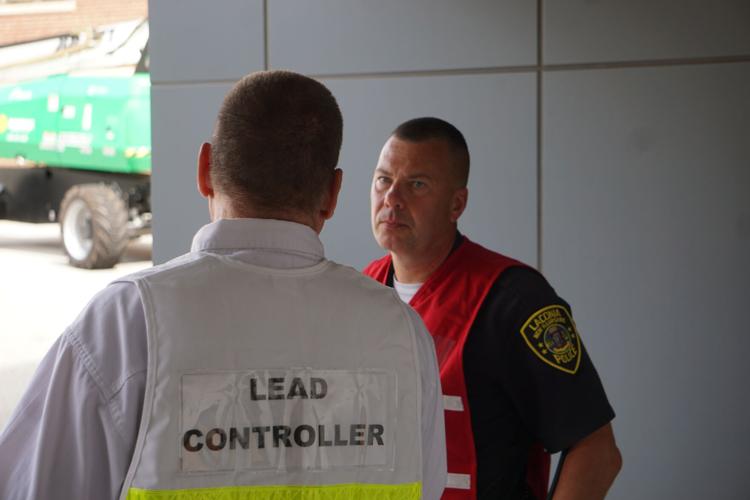
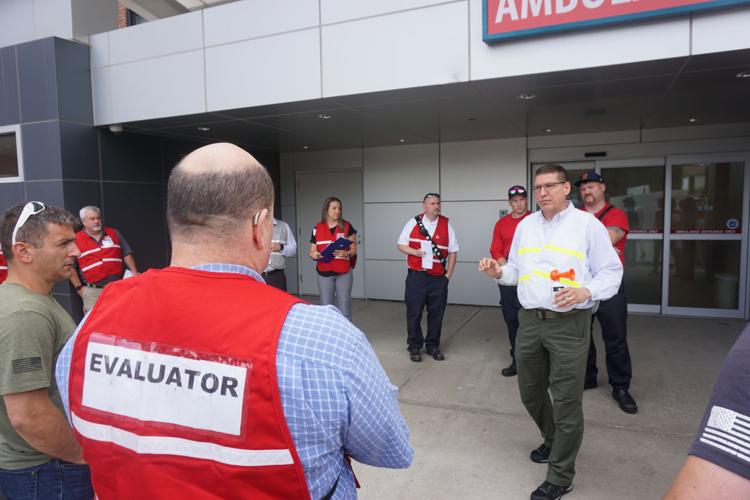
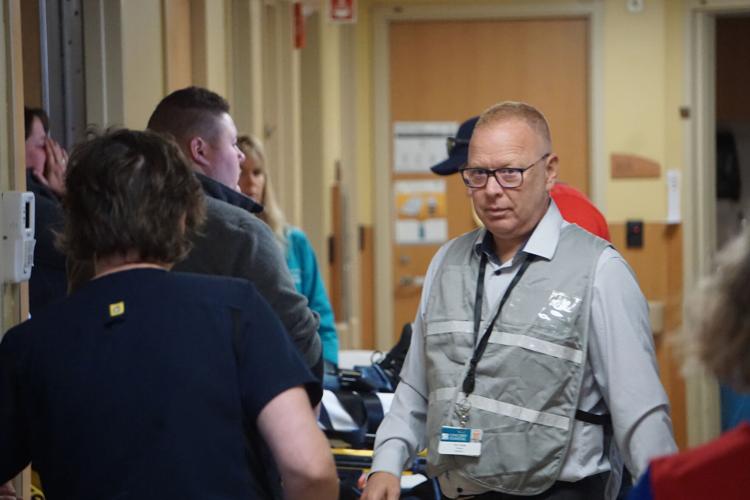
While hospital staff and local police and firefighters walked through the motions they would take if such a scenario were to take place, safety officers in yellow vests monitored developments and policy evaluators in red and green vests took note of potential gaps in the hospital’s armed intruder response.
The drill was limited to the administration area, ambulance bay and emergency department at the hospital. Normal hospital operations continued throughout the drill.
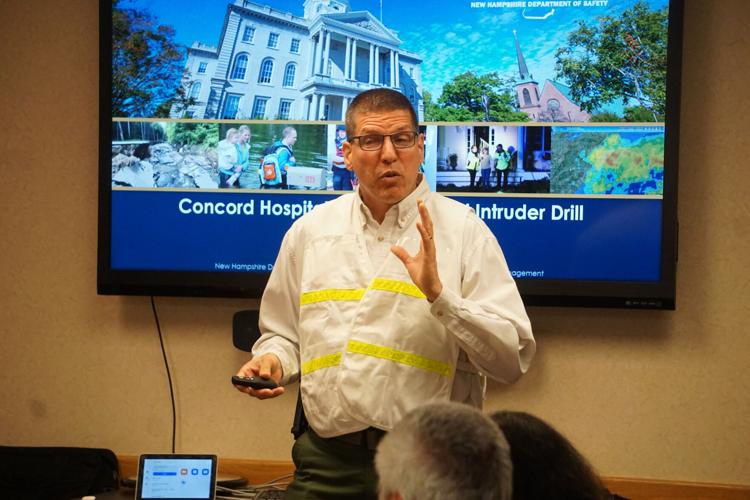
“This is a crawl, walk, run,” Christensen told participants in a meeting before the exercise began. “If we’re running through something we’re not thinking something through.”
Nearly 40 participants and observers packed an administrative room on an upper floor of the hospital Wednesday where Christensen asked hospital staff and first responders to walk them through the successes and failures of the drill in order to find gaps in existing protocols.
Nurses told the crowd the door barricade worked in this instance, but wondered what they would do if they found themselves in a room without a lock. The emergency department does not always have a security guard posted there, depending on scheduling, and some wondered if having security there permanently would reduce risks associated with an armed intruder.
“A hide room means the door locks, but what if it doesn’t lock?” Security Program Manager Eric Crane wondered, noting slamming something solid against the inside of a door to create a barricade is the best course of action to be taken.
And Laconia firefighters said in such a scenario, they would notify emergency dispatch they were involved in a “signal 24”, which means a severe emergency had taken place and they need all available first responders to come to their aid. That signal was not widely understood by emergency personnel outside the fire department. When asked whether he knew the meaning of “signal 24,” Police Chief Matt Canfield told the room he’d learned it on the morning of the drill.
“Signal 24 means ‘Everybody monitor our channel,'” firefighter Pete Latucky said. “I don’t care, I need help, bring as many people as you can — something bad is happening.”
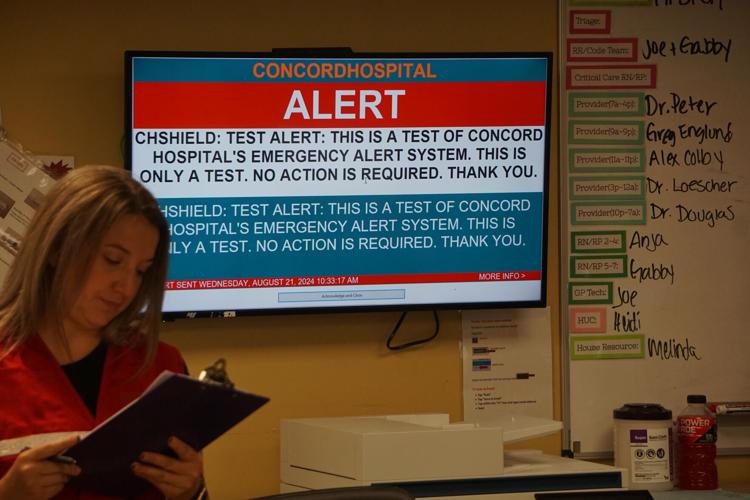
In terms of communication, hospital protocols mostly went off without a hitch. An alert system called CHSHIELD, which broadcasts emergency messages on all computers and television screens, succeeded without any caveat. Text message forwarding was 95% effective — some hospital staff had their landlines listed for text forwarding instead of their cell phones — and hospital staff said they’d implore those individuals to change the forwarding address to their mobile numbers.
Alerts were sent to hospital staff through text, email and their internal messaging system which displays on screens positioned throughout the hospital.
Crane noted during the drill, he observed an employee of the pharmacy walking into the emergency department, seemingly unaware of the armed intruder drill underway.
“You think about it and you go, 'We’re doing a whole drill, does this person know what we’re doing or are they just doing their own thing?'” Crane wondered. “So it’s notification, it’s education and it’s does everybody know what’s going on. We’ll do rounds in the next couple of days to ask folks, 'Did you hear the overhead announcement?' We know that if you were in a patient room, you didn’t hear it.”
Christensen noted the average law enforcement response time in the United States is just 3 minutes, and reminded hospital staff that from the moment they call 911, they need to focus on remaining out of harm's way for at least that amount of time.
“Avoid, deny, defend,” Christensen said, reciting a mantra for civilian response to active shooter scenarios. “What am I going to do for 3 minutes to hold out?”
Those 3 minutes are the most stressful in the event of an armed intruder and employees must be well-prepared emotionally to deal with them, Crane said.
“The idea, to take a staff member and make them run down a hallway and hide in a room for even 10 minutes,” Crane said. “We learned when we did this in Franklin, that was the most stressful part, being in that room locked in there with your friends.”





(0) comments
Welcome to the discussion.
Log In
Keep it Clean. Please avoid obscene, vulgar, lewd, racist or sexually-oriented language.
PLEASE TURN OFF YOUR CAPS LOCK.
Don't Threaten. Threats of harming another person will not be tolerated.
Be Truthful. Don't knowingly lie about anyone or anything.
Be Nice. No racism, sexism or any sort of -ism that is degrading to another person.
Be Proactive. Use the 'Report' link on each comment to let us know of abusive posts.
Share with Us. We'd love to hear eyewitness accounts, the history behind an article.