



Congress is where the rubber meets the road when it comes to federal funding, and Rep. Chris Pappas (D-NH) says it's his job to grease the wheels.
“There are obviously the big challenges of the day, including how government is funded, how we meet our obligations. But what you have to always remember is the title that I have, ‘representative’, is also the job description,” Pappas said in the parking lot of the Belmont Police Department on April 1. “I’ve got to go to bat for communities like Belmont, like Laconia, and make sure that they have the resources they need.”
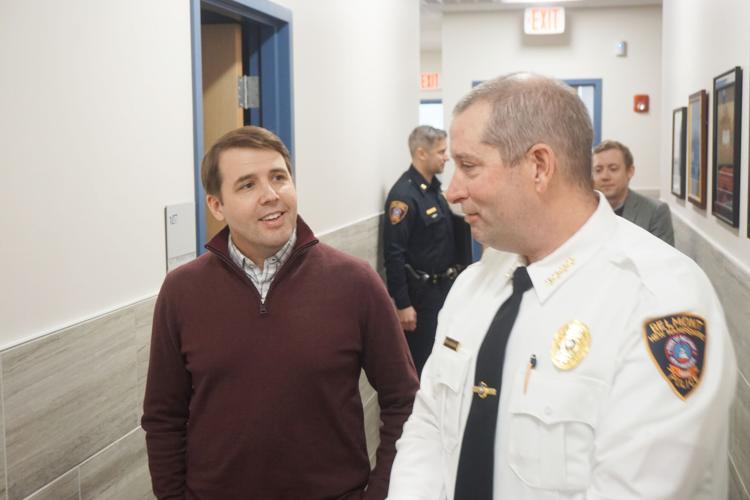
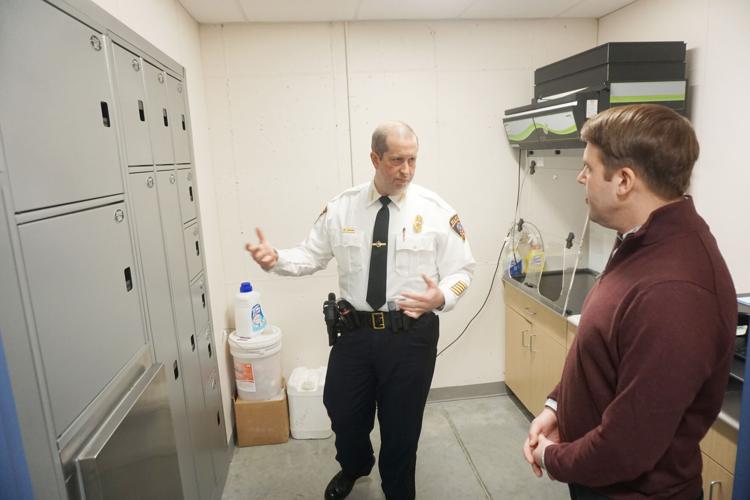
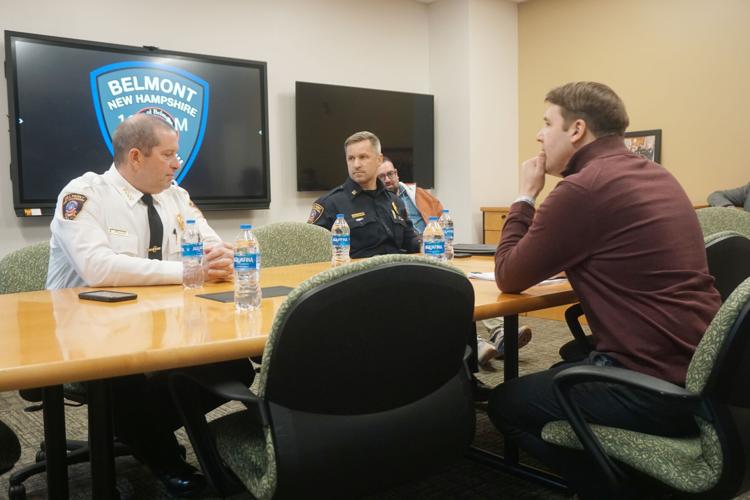
He met with Chief Stephen Akerstrom, Capt. Evan Boulanger and others to discuss funding opportunities to get the department much-needed technology and equipment.
“We work closely with local law enforcement, with local leaders in New Hampshire, on grant requests, on whatever we can get out of Washington to make their work better, and to ensure the people of New Hampshire have what they need,” Pappas said. “Whether that’s a program like [the Special Supplemental Nutrition Program for Women, Infants and Children] that supports new moms and kids, or law enforcement, that often time struggles to afford the tools they need to upgrade and to implement best practices.”
Pappas, who has represented New Hampshire’s First Congressional District since 2019, is running for U.S. Senate. Sen. Jeanne Shaheen (D-NH) shared in March 2025 her intention to retire, leaving a vacant seat in the congressional delegation. Pappas talked publicly about his intention to seek election to that seat on April 3, 2025, nearly exactly one year before his visit to the Lakes Region last week.
The state Primary Election is Tuesday, Sept. 8.
The purpose of his visit was ostensibly to meet with leaders of Community Action Program Belknap-Merrimack Counties, who operate Head Start and WIC programs, and discuss the technology needs of Belmont Police — like portable radios and software — and challenges and opportunities of maintaining law enforcement accreditation. Later that day, he was scheduled to meet with leaders in Sandwich, as the Carroll County town is working to expand broadband internet service.
“Even in a divided Washington, there are ways that you can really reflect what your district wants, and go to bat for them, and actually deliver,” Pappas said. “I’m not interested in the food fight in Washington, I’m interested in actually getting some things done and making peoples’ lives better.”
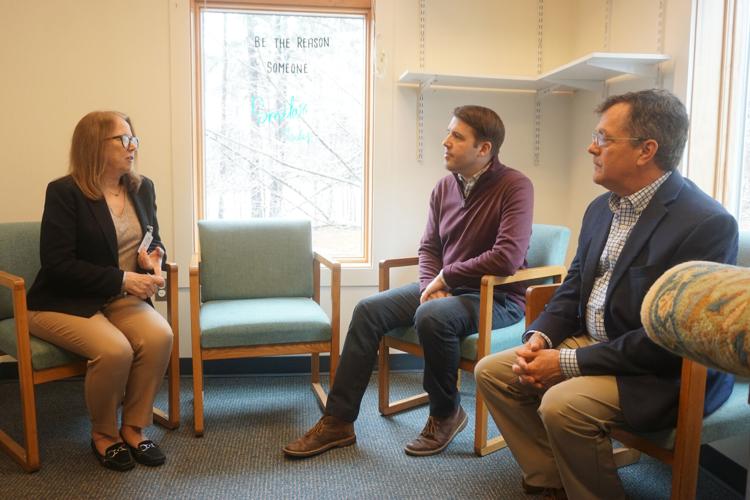
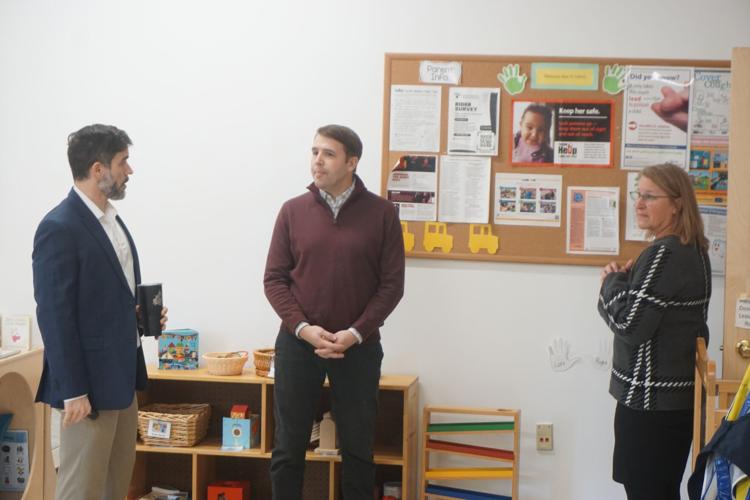
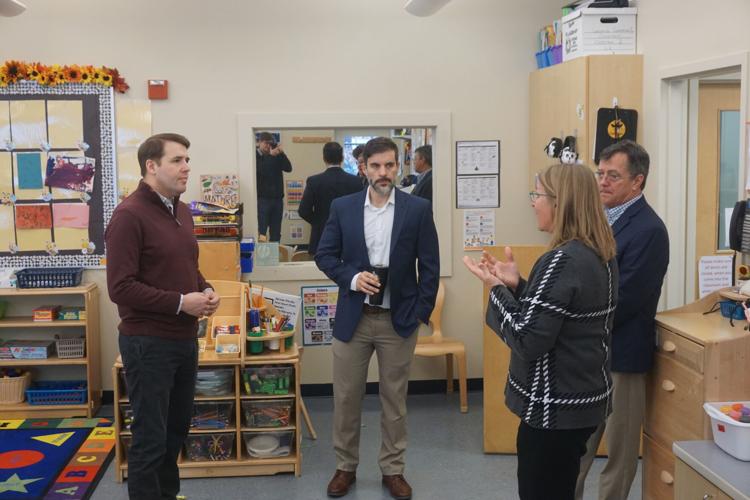
At Laconia’s Head Start, Pappas met with program administrators and teachers, and even socialized with the children. He learned CAP struggles to recruit employees, which can make their work harder, funding constraints aside.
“We’re really struggling to get teachers,” said Anya Twarog, disabilities and mental health specialist for CAP.
Head Start serves children ages 3 through 5, and is free of cost to families, though eligibility is limited to those at 100% of federal poverty guidelines. Foster children, families experiencing homelessness and families who receive support from the Supplemental Nutrition Assistance Program are eligible regardless of income. It’s meant to provide support to families, and promote school readiness and child development.
But the job isn’t easy — administrators last week said staff experience burnout, particularly during the COVID pandemic. They’re working to facilitate interest in the profession through partnerships with the state’s community college system. They operate a program through which parents involved in Head Start can earn credentials, and even provide tuition funds for one required college course.
“We actually have parents that we’ve turned into teachers,” Twarog said.
Michael Tabory, chief operating officer of CAP, said pay isn’t the barrier to recruiting, and they “are very competitive for our field.”
“We always think about funding, and what we can do to support CAP, to support Head Start,” Pappas said.
Upstairs at WIC, Susan Wnuk, director of community health and nutrition services, told Pappas her office is recruiting for two nutritionists, and has been for 18 months.
“We rarely get applications.”
In Belmont, at the police station, they’ve got a different set of challenges. At present, they need radios — officers referred to them as “portables” — which are exceedingly expensive. Boulanger told Pappas individual units run north of $6,000, and the department has budgeted less than $20,000 for supplies. The budget in Belmont is a tricky subject; voters there approved the first budget in three years during Town Meeting in March.
Pappas told Akerstrom and Boulanger the congressional appropriations process is challenging, but there could be money available for local needs later this year. He emphasized the importance of supplementing local funding by leveraging federal resources.
But the politics of Washington don’t always flow the same direction as the needs of individual communities, or even those elected to represent them. When asked if he feels optimistic his colleagues will collaborate to assist towns like Belmont across the country, Pappas provided a cautious "yes".
“Some of them are not really in touch with people back home, they don’t go home on the weekend and spend time with their constituents, they’re not out there enough. Washington, D.C. continues to need a reality check,” Pappas said. “That just doesn’t come through elections, but it comes through the kind of connection that people need with their elected representatives. I think we have something special here in New Hampshire.”


(0) comments
Welcome to the discussion.
Log In
Keep it Clean. Please avoid obscene, vulgar, lewd, racist or sexually-oriented language.
PLEASE TURN OFF YOUR CAPS LOCK.
Don't Threaten. Threats of harming another person will not be tolerated.
Be Truthful. Don't knowingly lie about anyone or anything.
Be Nice. No racism, sexism or any sort of -ism that is degrading to another person.
Be Proactive. Use the 'Report' link on each comment to let us know of abusive posts.
Share with Us. We'd love to hear eyewitness accounts, the history behind an article.