


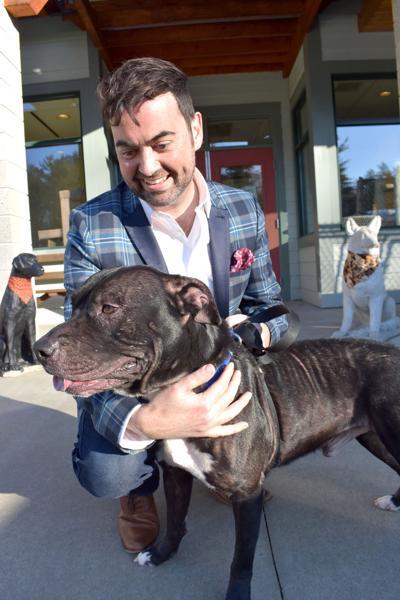
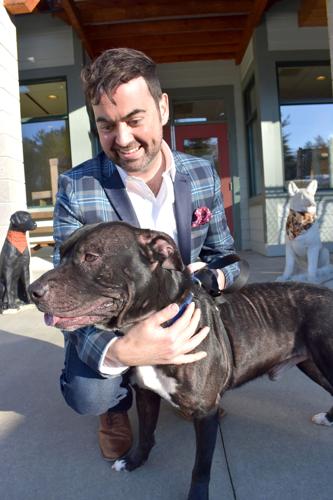
Q and A with Charles Stanton, executive director of the NH Humane Society in Laconia.
1. How many dogs and cats do you have on hand and is it harder to adopt them out now that many people are staying close to home and maybe not wanting to visit the Humane Society?
Inquiries and requests to adopt have actually stayed quite consistent. We have worked hard to remind people that there are no findings that show animals can transmit COVID-19. We adopted out or fostered quite a few pets two weekends ago. We intentionally reduced the animal population so we could simultaneously reduce the number of staff required in the facility. We reduced to an emergency-level staff with only one person working per zone per day in order to minimize risk to one another and to any community members who might be coming in for scheduled adoption appointments. Those, too, we are keeping at a controlled minimum. With the reduced number of animals, we are able to manage with that small number of people providing care. To keep the in-facility staff head count low, staff who are able to work remotely from home are currently doing so. A top priority is making sure the animals consistently receive the same high-quality care.
We are allowing visitors by appointment only and we are requesting that visitors fill out an adoption application in advance to minimize excessive time and the number of people in the facility at one time. Anyone interested can email adoptions at NHhumane.org
3. Do you have many new pets that are being brought there for adoption, and if so, and if fewer people are adopting, will you be in an overpopulation situation? Where do most of the animals come from?
Thanks for asking. We currently have seen no change in intake and we haven’t had any increase at all in owners surrendering their pets. We have also implemented a program offering complementary pet food for families experiencing hardship and we always offer to counsel individuals considering surrendering a pet. That work continues. Our animals come from a variety of sources including local strays in the community through animal control and from our local and regional partners. The percentages of those sources vary depending on time of year but there has been no change in these last few weeks.
4. How many workers do you have, and do you have enough people who are able to come in and take care of the animals? Are any employees working from home?
We have approximately 22 staff members including some full-time, part-time, and seasonal contractors. We are currently keeping as many as possible on staff for as long as possible and those individuals whose roles don’t translate well to remote work are engaged in online professional development courses under the direction of our veterinarian. Despite the financial hardship to the organization, we are doing everything we can to keep our dedicated staff employed. It is very important to me and to my leadership team that we try to continue creating a situation that allows people to take care of themselves and their families.
5. What can people do if they want to assist the Humane Society and the animals?
Our goal is to make it as easy as possible to keep families united including the family pets. While we haven’t had a change in the number of pet surrenders, we want to offer a resource in case someone is faced with a burden of any kind. We currently have a complimentary food program with a no interaction pick up option with delivery possible based on availability of staff. Financial support of that program would offset the expense of travel/delivery and paying the employees who continue to provide care. Like healthcare organizations, consistency of care is vital so we are doing everything we can to ensure that consistency. If public health declines rapidly and if our staff is impacted significantly, we may be in need of individuals for short-term foster care. That is not the case currently but we are working on plans with some active volunteers and fosters to have an arsenal of support in place if needed.
Ultimately, the greatest help from the public is to have individuals with pets to continue providing care to those animals and to provide financial support to service organizations like ours and others that need to continue operating despite the challenges. I remain very confident in the caliber of care we are providing and in the compassion and expertise of my staff. We are doing everything we can to maintain consistency while factors shift around us.
Lastly, if a family is considering adoption, now would certainly be a wonderful time to have one of these pets surrounded by love in a home. That’s always the goal.


(0) comments
Welcome to the discussion.
Log In
Keep it Clean. Please avoid obscene, vulgar, lewd, racist or sexually-oriented language.
PLEASE TURN OFF YOUR CAPS LOCK.
Don't Threaten. Threats of harming another person will not be tolerated.
Be Truthful. Don't knowingly lie about anyone or anything.
Be Nice. No racism, sexism or any sort of -ism that is degrading to another person.
Be Proactive. Use the 'Report' link on each comment to let us know of abusive posts.
Share with Us. We'd love to hear eyewitness accounts, the history behind an article.