


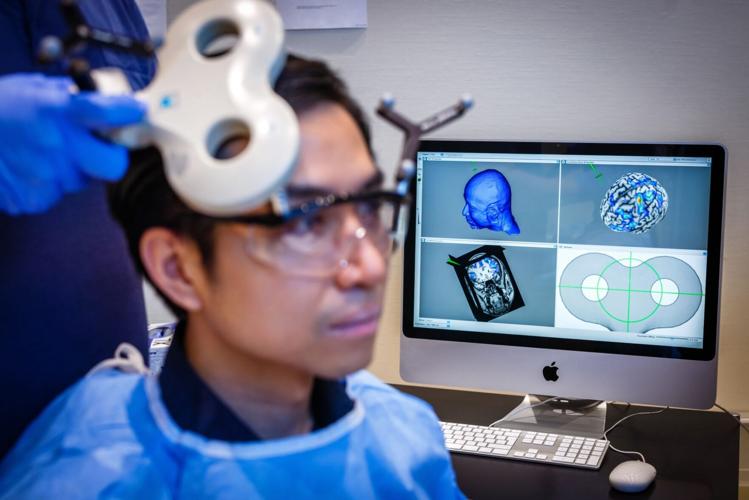
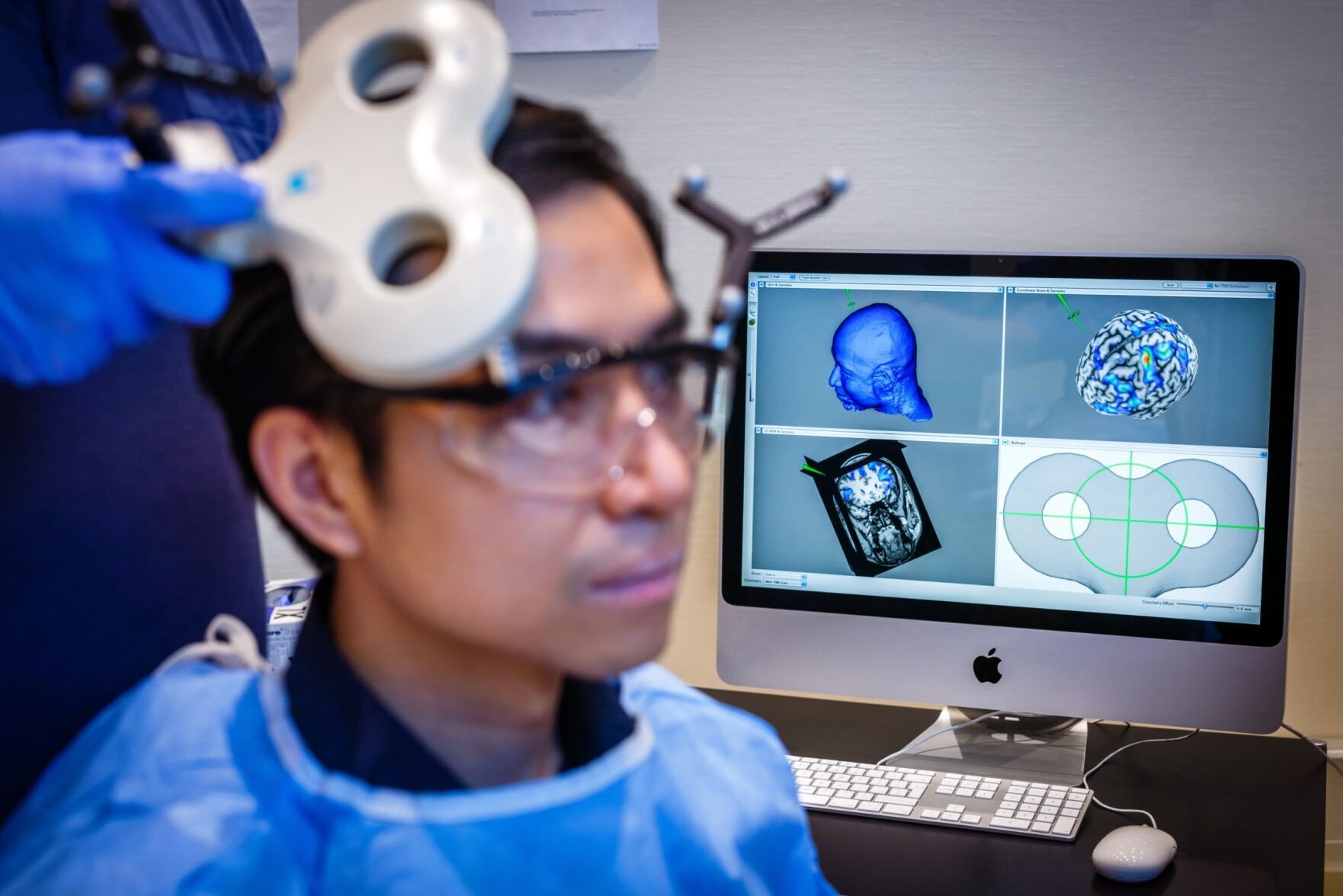
A participant receiving non-invasive brain stimulation during an experiment in a laboratory setting. (Nicolas Zonvi via SWNS)
By Stephen Beech
Brain stimulation can get people to behave less selfishly, according to a new study.
Stimulating two areas of the brain - "nudging" them to collectively fire in the same way - increased a person’s ability to behave altruistically, say scientists.
The ground-breaking study, published in the journal PLOS Biology, was conducted by Chinese and Swiss researchers.
Co-author Professor Christian Ruff said: "We identified a pattern of communication between brain regions that is tied to altruistic choices."
Ruff, of the University of Zurich, added: "This improves our basic understanding of how the brain supports social decisions, and it sets the stage for future research on cooperation - especially in situations where success depends on people working together."

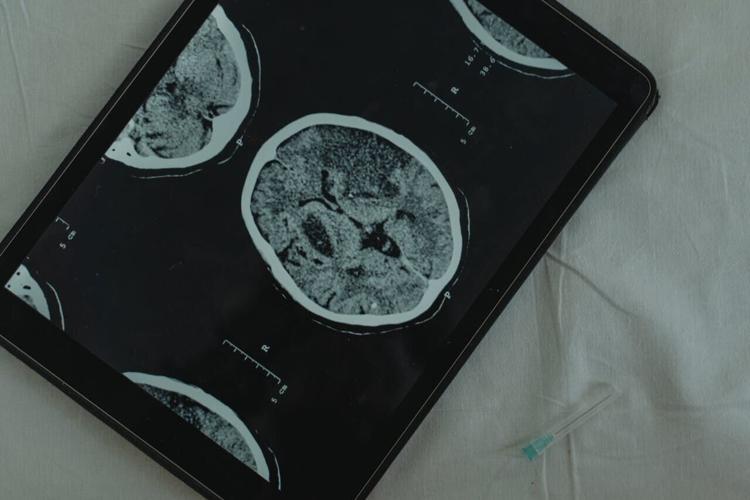
(Photo by Tima Miroshnichenko via Pexels)
Co-author Dr. Jie Hu, of East China Normal University in Shanghai, said: “What’s new here is evidence of cause and effect.
"When we altered communication in a specific brain network using targeted, non-invasive stimulation, people’s sharing decisions changed in a consistent way- shifting how they balanced their own interests against others’.”
The research team explained that as parents raise their children, they often work to teach them to be kind and to share, to think about other people and their needs - in other words, to be altruistic.
Dr. Hu said: "This unselfish attitude is critical if a society is going to function.


"And yet, while some people grow up to devote themselves to others, other people still manage to grow up selfish."
To understand what brain areas and connections might underlie individual differences in altruism, the research team asked 44 participants to complete 540 decisions in a "Dictator Game" - offering to split an amount of money with someone else, which they then got to keep.
Each time, the participant could make more or less money than their partner, but the amounts varied.
As the participants played the game, the researchers stimulated their brains with transcranial alternating current stimulation over the frontal and parietal lobes of the brain.

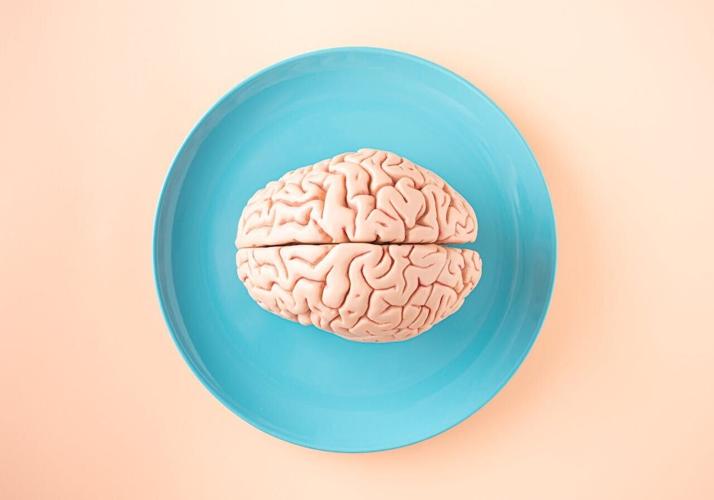
(Photo by Amel Uzunovic via Pexels)
The researchers explained that the stimulation was set up to make the brain cells in those areas fire together in repetitive patterns, training them all to either gamma or alpha oscillation rhythms.
The team found that during the alternating current stimulation designed to enhance the synchrony of gamma oscillations in the frontal and parietal lobes, the participants were slightly more likely to make an altruistic choice and offer more money to someone else - even when they stood to make less money than their partner.
Using a computational model, the researchers showed that the stimulation "nudged" the participants’ unselfish preferences, making them consider their partner more when they weighed each monetary offer.
The research team noted that they did not directly record brain activity during the trials, so future studies should combine brain stimulation with scans to show the direct effect of the stimulation on neural activity.
But they said the results suggest that altruistic choices could have a basis in the synchronised activity of the frontal and parietal lobes of the brain.
Co-author Dr. Marius Moisa, also of the University of Zurich, said: “We were struck by how boosting coordination between two brain areas led to more altruistic choices."
He added: "When we increased synchrony between frontal and parietal regions, participants were more likely to help others, even when it came at a personal cost.”


(0) comments
Welcome to the discussion.
Log In
Keep it Clean. Please avoid obscene, vulgar, lewd, racist or sexually-oriented language.
PLEASE TURN OFF YOUR CAPS LOCK.
Don't Threaten. Threats of harming another person will not be tolerated.
Be Truthful. Don't knowingly lie about anyone or anything.
Be Nice. No racism, sexism or any sort of -ism that is degrading to another person.
Be Proactive. Use the 'Report' link on each comment to let us know of abusive posts.
Share with Us. We'd love to hear eyewitness accounts, the history behind an article.