


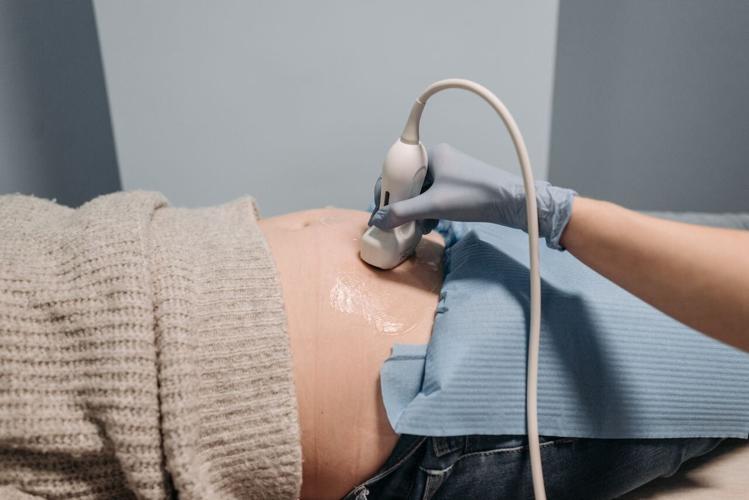
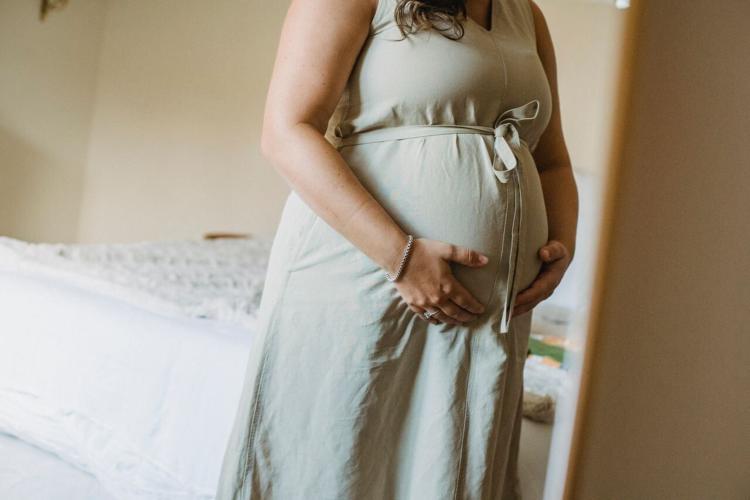

(Photo by Pavel Danilyuk via Pexels)
By Stephen Beech
A potentially deadly pregnancy condition could be detected early thanks to a major breakthrough.
Preeclampsia threatens the lives of mothers and their babies and affects up to one in 14 pregnant women — including celebrity moms Beyoncé, Kim Kardashian, Mariah Carey and Sophie Ellis Bextor.
Found in about 42,000 pregnancies a year in the U.K. (6%), it reduces the flow of blood through the placenta, and can lead to stillbirth or even the death of the mother.
While in many women the symptoms are mild, in some cases the condition becomes so severe the baby needs to be delivered prematurely.
Now, a breakthrough by Cambridge University scientists could lead to new tests and treatments for at-risk pregnancies.

(Photo by Jonathan Borba via Pexels)
They have identified a key protein that could act as a predictor for preeclampsia and fetal growth restriction, two of the major causes of stillbirth and sickness among mothers and newborns.
The discovery helps explain why placental cells fail to properly "invade" the uterus in the two related conditions.
And it could lead to the development of tests to help identify those at greatest risk and new treatments for the conditions, according to a study published in the journal Nature Medicine.
Fetal growth restriction, where a baby does not reach its biological growth potential in the womb, affects up to 10% of pregnancies in high-income countries and up to one in five pregnancies globally.
It is a leading cause of complications in the womb and in newborns, including stillbirth.
Both of the conditions are known to be linked to problems with the placenta not developing properly early in pregnancy, in particular a failure of specialized placental cells known as the extravillous trophoblast (EVT) to invade the mother's womb and establish a healthy blood supply.

(Photo by Dre Newsome via Pexels)
Study leader Dr. Gordon Smith said: "As part of normal development, the placenta invades into the tissues of the mother's womb.
"Of all mammals, humans have the deepest placental invasion, which reflects the massive demands of oxygen and nutrients required to manufacture the most complex machine ever known, the human brain.
"When this process goes wrong and specialist placental cells fail to adequately invade the uterus, it results in a placenta and fetus that are deprived of nutrients and oxygen, leading to preeclampsia and fetal growth restriction. But until now, the reason for this failed invasion has been obscure."
To better understand the process, Smith and his Cambridge colleagues analyzed serum samples taken from pregnant women at about week 12 of their pregnancies who had been recruited to the Pregnancy Outcome Prediction Study (POPS) in Cambridge.


The researchers identified the protein by studying a sample of more than 200 women who subsequently experienced preeclampsia or fetal growth restriction and more than 200 women with normal pregnancies.
The findings were validated by studying samples from Swedish pregnant women, including more than 100 cases and 200 controls.

(Photo by Amina Filkins via Pexels)
The researchers looked retrospectively for "red flags" present in those women whose pregnancies went on to be affected by preeclampsia or fetal growth restriction.
The researchers found that low circulating levels of a protein known as isthmin-2 (ISM2) about three months into the pregnancy was the strongest indicator that the pregnancy would go on to face problems with preeclampsia or fetal growth restriction.
They explained that ISM2 and its associated mRNA — a molecule that carries instructions from DNA to the part of the cell that makes proteins — are produced almost exclusively in the placenta and, within the placenta, ISM2 mRNA is found in greatest abundance in EVTs.
To test whether the association was likely to be a cause of the problems, the team used a lab technique to switch off or greatly reduce production of ISM2 in human trophoblast stem cells.
The trophoblast is the outer layer to the early-stage embryo, and the stem cells can normally develop into the outer layer of the placenta.
But, although the cells still survived and grew normally in the absence of ISM2, they failed to turn into invasive EVT cells.
The research team found that without ISM2, the cells lose their ability to become the type of cells that burrow into the womb and establish blood flow.
But when human kidney cells — which don't normally make the protein — were forced to make ISM2, they became more invasive in cell culture.

(Photo by Amina Filkins via Pexels)
Smith, head of Cambridge's Department of Obstetrics and Gynaecology, said: "This has major implications for care in pregnancy.
"Early pregnancy maternal levels of isthmin-2 are much better at predicting complications than existing tests, so it could enable us to develop better ways of identifying those pregnancies at greatest risk.
"It also gives us a potential way to prevent these conditions from happening, if we can find a way to stimulate production of IMS2 in the placenta.
"Not only that, but blocking it might prevent the need for surgery for complications where the placenta has implanted in the wrong place, such as ectopic and cesarean scar pregnancies."
Steve Charnock-Jones, also from the Department of Obstetrics and Gynaecology, added: "Every pregnancy carries with it a risk of preeclampsia and fetal restricted growth, and this is even more so the case in low- and middle-income countries.
"Now that we know what goes wrong, we may be in a better position to make a major difference to pregnancy outcomes, protecting the health and lives of millions of mothers and their babies every year."


(0) comments
Welcome to the discussion.
Log In
Keep it Clean. Please avoid obscene, vulgar, lewd, racist or sexually-oriented language.
PLEASE TURN OFF YOUR CAPS LOCK.
Don't Threaten. Threats of harming another person will not be tolerated.
Be Truthful. Don't knowingly lie about anyone or anything.
Be Nice. No racism, sexism or any sort of -ism that is degrading to another person.
Be Proactive. Use the 'Report' link on each comment to let us know of abusive posts.
Share with Us. We'd love to hear eyewitness accounts, the history behind an article.