


MOULTONBOROUGH – When Rawson Wood declared to a room of fellow New Hampshire Audubon trustees he was going to create a program to help save the loon population in the Granite State, he may not have known what he was starting.
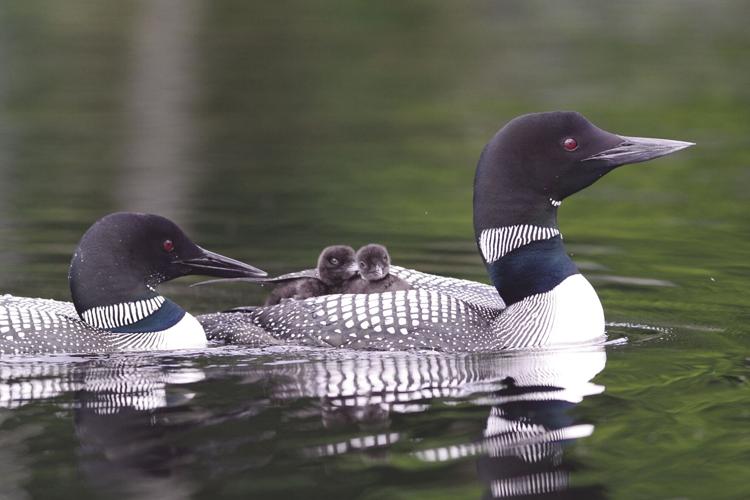
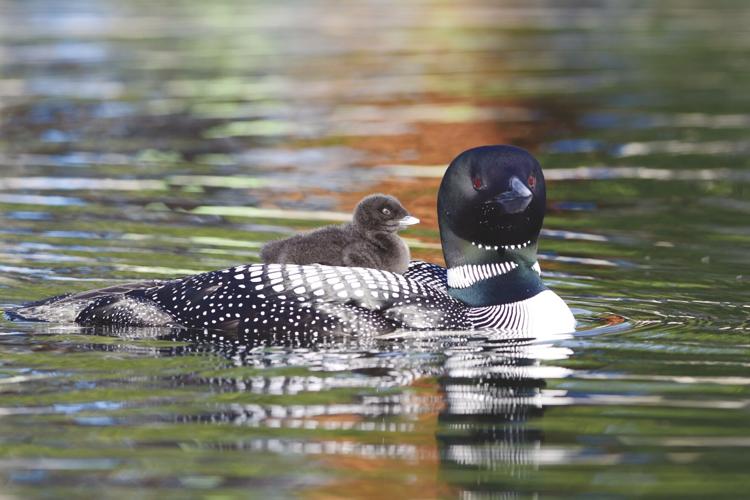
The year was 1975, a time when people were becoming aware of the human impact on the environment. One group of creatures suffering the consequences was the beloved loons that grace New Hampshire’s lakes. Helping recover their dwindling population has been the work of the Loon Preservation Committee, with headquarters on Lees Mill Road in Moultonborough.
Loon Committee Senior Biologist Harry Vogel said, “This is the 50th anniversary of working to help recover the threatened loon population in New Hampshire. Loons have been in decline for over 100 years. Rawson Wood, as a Squam Lake resident, saw the need to save the loons.”
Vogel stresses that everyone can help in a number of ways to keep the loon population growing. Whether you work full time and can only give a few hours a week or month or are perhaps retired with more time or a student planning a career in biology or working with animals, anyone can volunteer to help.
“We appreciate our many volunteers (who number about 1,000 in the state) and we could not do all we do without their contributions,” said Vogel. “We always need help, for example, to build our loon rafts, to make signs we put in the water to alert boaters where loon nests are so they can stay back, to working in our visitor center and gift shop, keeping track of loons and volunteering to help with our yearly loon census.”
Residents can do two big things to help loons: Don’t put lead in the lake and give loons space.
Fishers should not use lead sinkers when fishing and should turn in old fishing tackle boxes that may have lead items. Also, when residents are on the lake, they should give loons space. Do not take up-close photos or drive a boat near a nest to get a better look. These things are vital for loons to survive and grow.
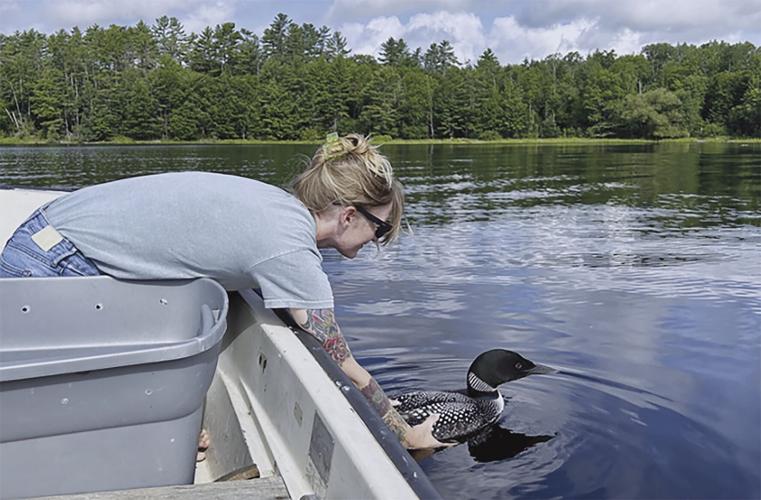
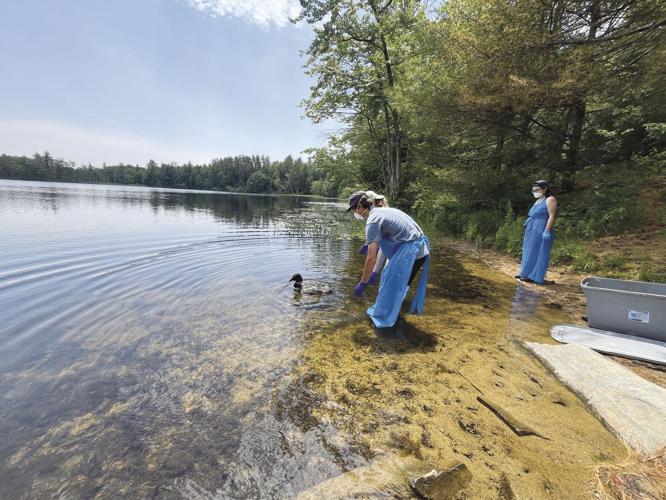
Vogel is passionate about discontinuing the use of lead sinkers and his reasoning is sensible. It is a battle to get fishermen to understand the negative consequences of fishing with lead sinkers, which are sometimes ingested by loons. It kicks off a cycle that ends with lead poisoning – and a painful death – for a loon.
Using lead sinkers or lead headed jigs of one ounce or less in weight is illegal in New Hampshire, but some people continue to do so. For example, there were seven deaths attributed to ingested lead in the state this year and three of them were on Merrymeeting Lake.
“That is a concern because people seem to still be using small lead tackle and it is illegal,” Vogel said.
Keeping track of the state’s loon population is a vital part of the work done by the Loon Preservation Committee. Each year, Vogel and his team go out on the water on the third Saturday in July, 8-9 a.m., to do a loon count. It’s a big job, but they count as many loons as possible with the help of about 425 people. This year’s total population was counted at 525 loons, and these numbers are rolled into a season-long total of loons. At the end of the summer, Vogel gives a presentation on the state of the loons, which is of interest to many people.
“We gained a few pairs of loons this year and we topped 350 pairs. While the growth of loons is slow, we continue our efforts,” said Vogel.
The work would not be possible without the aid of volunteers and average citizens who love the loons and help any way they can.
“Our volunteers could be doing other things, but they choose to help us,” Vogel said.
Volunteers can help during the winter. Although loons typically spend winters on the seacoast — coming back to places such as the Lakes Region to breed and raise chicks in the spring/summer — with ice-in coming later each year, loons are sometimes in trouble.
Vogel said winter is when loons begin to lose their feathers as part of their natural cycle. If the lakes are not totally frozen over, loons can get trapped in open water that is surrounded by ice. Because of feather loss, they cannot fly out of the dangerous predicament they may find themselves in.
“If you see a loon in a small patch of open water, call the Loon Center immediately and we will come out and assess the situation and rescue the loon if possible,” Vogel said.
Last winter, he said, 30 loons were trapped on the broads of Lake Winnipesaukee. Because lakes are having later ice-ins, some loons appear to be staying on the lakes longer. Unfortunately, ice-in can coincide with the winter wing feather molt for loons.
“Global warming is definitely hurting the loons,” Vogel said.
For more information, visit loon.org or call 603-476-5666.


(0) comments
Welcome to the discussion.
Log In
Keep it Clean. Please avoid obscene, vulgar, lewd, racist or sexually-oriented language.
PLEASE TURN OFF YOUR CAPS LOCK.
Don't Threaten. Threats of harming another person will not be tolerated.
Be Truthful. Don't knowingly lie about anyone or anything.
Be Nice. No racism, sexism or any sort of -ism that is degrading to another person.
Be Proactive. Use the 'Report' link on each comment to let us know of abusive posts.
Share with Us. We'd love to hear eyewitness accounts, the history behind an article.