


ALTON — The donation of a kidney can save a life, but it requires a selfless person to give the organ to a sick relative, friend, or even an unknown person waiting on a donor list.
Once a kidney is donated, there is inevitably a recovery time for the recipient of the new organ and the donor. However, the lion’s share of the attention often goes to the recipient, while one assumes the donor returns easily to their normal life.
However, it is not always so easy, as Kelly Dyer of Alton can attest to after donating a kidney to a co-worker.
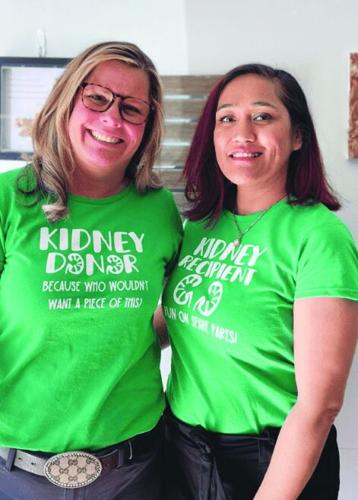
“I work as an independent agent with New York Life Insurance,” she said. “On April 13, 2022, I donated a kidney to a fellow New York Life agent. She needed a kidney, and I was happy to help her.”
Dyer was laid up for a few months after the kidney donation surgery, but she was unprepared for the recovery time. Luckily, her mother was able to travel from Florida to take care of Dyer as she healed. At that time, Dyer began to think about the need for change. “People need kidneys, but I don’t think there is as much attention given to the donor. What happens to them?” she wondered.
Local business owners were helpful, making Dyer’s three-month recovery easier, but it was still a long process. She was curious about other donors and how they coped financially and with the needs of their families when getting up and going to work and carrying on with daily life was important.
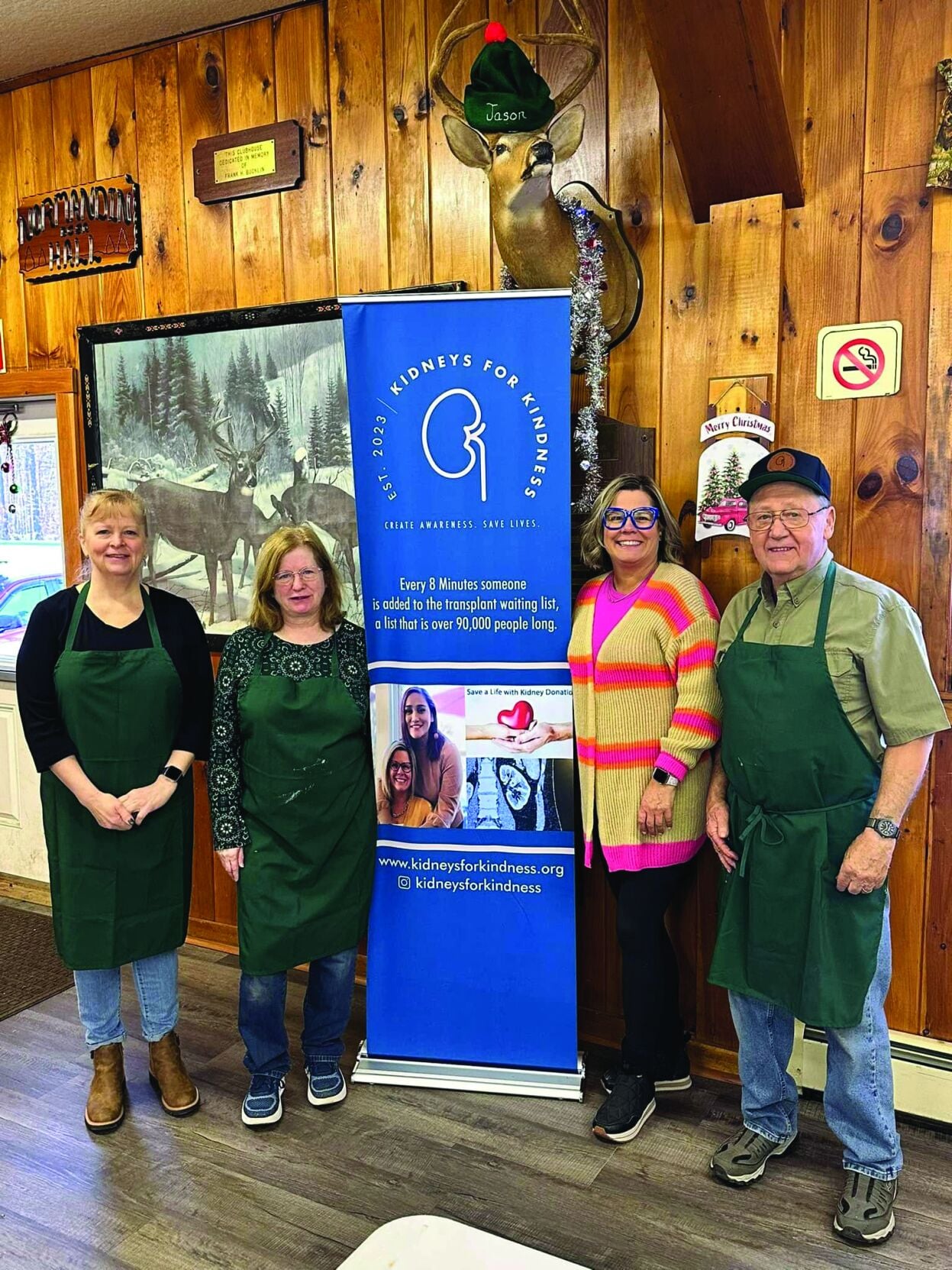
“I founded Kidneys for Kindness in July of 2023. It is a non-profit 501C3, and we financially support kidney donations,” she said. “We do things for donors such as paying the mortgage, sending the donor’s children to a kid’s camp, buying food, or even getting an LNA to help as the donor recovers. The organization’s mission is to support kidney donors, raise awareness about kidney disease, and promote organ donation through community engagement.”
Dyer laughs as she recalls starting Kidneys for Kindness with just $10 in the bank account. Luckily, interest has blown up since then.
“I am so grateful for how far we have come in just two years. We want to help with the financial burden the donors face,” she said.
An active board of directors at Kidneys for Kindness works with Dyer as the organization expands. Each member is community active. She is a believer in helping others, also serving as a board member of Best Buddies International, NH chapter, which champions inclusion and friendship for those with intellectual and developmental disabilities, and volunteering as a “Big” for Big Brothers Big Sisters of New Hampshire.
Other board members are Jon Morton, a U.S. Air Force veteran who acts as meeting organizer and moderator for Kidneys for Kindness; Stephen DePalma, who has volunteered with the Boys and Girls Club, Best Buddies of New Hampshire; Kerri Dexter, a lifelong friend of Dyer’s who helped through the journey when Dyer donated a kidney; and Cassandra Farley, treasurer. All board members have a personal connection to Dyer or have someone in their life who has faced kidney disease.
Dyer grew up in Concord and raised her son in Laconia. She moved to Alton over seven years ago and is now engaged to Stephen DePalma. Dyer and DePalma see the need for donor support and help and are dedicated to doing so.
The need for donors is great, as Dyer is well aware.
“Kidney donations are prevalent right now, from infants to adults. One hundred thousand people are on the waiting list right now. Potential donors are often afraid of donating because they are uneducated about the process,” she said. A few criteria for a donor is to be taking only limited medications, have had limited surgeries and have an excellent BMI.
If a person is interested in being a donor, they can start by going to their local hospital and asking them to suggest an organ donation center. The first step is to know your blood type at the beginning.
Dyer said it is a lengthy process to be screened and matched; a lot of emphasis is placed on the mental and financial health aspects of donation. She suggests Massachusetts General Hospital in Boston and Dartmouth Hitchcock Medical Center in Lebanon, both have good facilities for kidney donation. Dyer’s donation surgery took place at Dartmouth Hitchcock.
As Dyer and the board of directors for Kidneys for Kindness work, fundraising events and awareness are all-important. Board members are happy to attend an event if the occasion arises such as being offered a table at a craft fair or community gathering.
“We will go anywhere we are invited so we can tell our story,” Dyer said. “We always want to get out into the community.”
A major fundraiser is coming up on Monday, Sept. 8, at Owl’s Nest Golf Club in Thornton. The 2nd Annual Golf Tournament offers participants a chance to help Kidneys for Kindness. There will be prizes, swag, and an opportunity to play golf and support a worthy cause.
“Last year, we raised $65,000 in one day at the tournament,” Dyer said.
Looking back on her own experience donating a kidney, Dyer is certain she did the right thing. She recalls Radha Thapa, a co-worker, approaching her at a company function and asking if Dyer could help her. Having no idea of what the request would be, Dyer, always compassionate, said she would be happy to help.
Many people would back away once they knew the content of the request, but not Dyer. Her co-worker was quite ill and ready to give up, having been on a kidney donation waiting list for quite some time.
“She has a little daughter, and I knew that child deserves her mommy,” said Dyer. “We are the same blood type, and everything fit into place. So, we went forward with the kidney donation, and I am glad I did it. My co-worker just had her three-year check-up, and her new kidney is fine. It has been a long journey but well worth it.”
Part of that journey is recovery, which can mean being laid up before the donor can return to work and a normal life. Kidney donations are vital to saving lives, but something must be done to offer financial support to donors whose lives don’t get put on hold. There are mortgages to be paid, expenses for family, groceries, and everything that comes with daily life. Kidneys for Kindness is helping with that and will continue to do so.
Dyer envisions a bright future for the organization and laughs as she shares, “If you know me, you know I live big, and I have big dreams. In 10 years, my goal is to have $1 million to give away. We always need donations. It is my hope that by 2033, that $1 million dream will be realized. We try to help everyone, and we do that by educating potential donors and others to make sure they know they can do this and still live a healthy life.”
To learn more, visit kidneysforkindness.org.


(0) comments
Welcome to the discussion.
Log In
Keep it Clean. Please avoid obscene, vulgar, lewd, racist or sexually-oriented language.
PLEASE TURN OFF YOUR CAPS LOCK.
Don't Threaten. Threats of harming another person will not be tolerated.
Be Truthful. Don't knowingly lie about anyone or anything.
Be Nice. No racism, sexism or any sort of -ism that is degrading to another person.
Be Proactive. Use the 'Report' link on each comment to let us know of abusive posts.
Share with Us. We'd love to hear eyewitness accounts, the history behind an article.