


Oscar Micheaux's pioneering drama 'Within Our Gates' to screen with live music at Flying Monkey on Thursday, Feb. 11
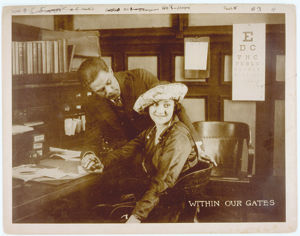
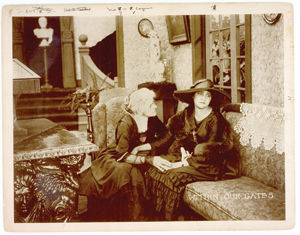
A scene from "Within Our Gates" (1920), a silent film to be screened with live music as part of a program saluting Black History Month at the Flying Monkey. The program, which includes special presentations and speakers, is on Thursday, Feb. 11, at 6:30 p.m., at the Flying Monkey Moviehouse and Performance Center, 39 S. Main St., Plymouth. Admission is $10 per person. For details, call the box office at 536-2551 or visitwww.flyingmonkeynh.com. (Courtesy Photo)
PLYMOUTH — A movie regarded as the earliest surviving feature film directed by an African-American will be the centerpiece of a salute to Black History Month at the Flying Monkey Moviehouse and Performance Center.
The film, Oscar Micheaux's "Within Our Gates" (1920), will be shown as part of a special program on Thursday, Feb. 11, at 6:30 p.m.
Live music for the silent drama will be provided by Jeff Rapsis, a New Hampshire-based silent film musician who frequently accompanies programs at the Flying Monkey.
Admission to the program, which is part of the Flying Monkey's monthly silent film series, is $10 per person.
The program also will include remarks by speakers about the film, the legacy of Dr. Martin Luther King Jr., and the Black experience in America.
Featured will be a presentation by Michael Fischler, an author and educator who will reflect on the life and legacy of Dr. Martin Luther King Jr. and the impact of his assassination in 1968.
On the day following King's death in 1968, Fischler was a social studies and English teacher in an all-black middle school in the Miami, Florida, area. Seizing the moment, Fischler redirected his planned learning experiences for the day to facilitate a powerful lesson in honor of MLK Jr.
Fischler published recollections of the event, as well as excerpts from a letter he composed to Coretta Scott King, widow of the slain Civil Rights leader. The letter, published in "Annual Editions in Multicultural Education," retells the lesson and the influences on the author's life.
Also on the program: An overview of Micheaux's career and the minority movie-going experience by Metasebia Woldemariam, PhD, Associate Professor in the Department of Communication and Media Studies, Plymouth State University.
The Flying Monkey had originally scheduled a Valentine's Day program for its February silent film screening, but recently opted to change the focus to a program honoring Black History Month.
"We felt this was an appropriate way to pay tribute to an important part of America's multi-cultural community," said Alex Ray, the Flying Monkey's owner.
"Showing 'Within Our Gates' for Black History Month is an excellent way for today's audiences to understand how pervasive racism was at the time, and perhaps get us to think how much work we still need to do to achieve Dr. King's vision," Ray said.
"We're especially glad to work with people in the community, including members of the Black Student Union at Plymouth State University, who were among those who suggested this program," Ray said.
"Within Our Gates" was produced at a time when the mainstream Hollywood film industry was shut off to Black Americans.
Micheaux, however, was able to self-produce 'Within Our Gates' on a shoestring budget and outside the studio system.
'Within Our Gates' portrays the contemporary racial situation in the U.S. during the early 20th century — the years of Jim Crow, the revival of the Ku Klux Klan, and the great migration of blacks to cities of the North and Midwest. It was part of a genre called race films.
The plot features an African-American woman who goes North in an effort to raise money for a rural school in the Deep South for poor black children. Her romance with a black doctor eventually leads to revelations about her family's past and her own ancestry. The film portrays racial violence under white supremacy. It was produced, written and directed by Micheaux.
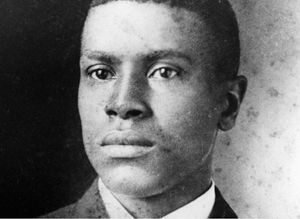
Oscar Micheaux
"Within Our Gates" stirred up considerable controversy during its original release because it contained a scene in which a black man is lynched by a white mob.
At first the film, which eventually had its premiere in Chicago, was rejected by the Chicago Board of Movie Censors who were afraid the movie could possibly inspire a race riot. However, a second screening of the film by the press, Chicago politicians, and prominent members of the black community convinced the Censors to grant the film a permit since it addressed horrendous conditions that needed reform.
Not everyone agreed with this assessment, however, and some of the most vigorous protesters against the film were black activists.
Not surprisingly, white theater owners in the south who catered to black patronage were also offended by "Within Our Gates" and refused to book it. One theater owner in Shreveport, Louisiana, admitted "It was a very dangerous picture to show in the South," and his comment was typical for the region.
Micheaux, no stranger to controversy, refused to compromise his material despite being locked out of numerous distribution channels and went on to tackle other unpopular but equally topical problems in films like "God's Stepchildren" (1938), in which a light-skinned African-American tries to pass for caucasian, and "Birthright" (1939), the story of a black Harvard graduate who encounters opposition from both whites and members of his own race.
While Micheaux was well aware that audiences wanted to be entertained, he also felt it was his duty to confront challenging issues that would, in his words, "leave an impression" on audiences.
Michaeux died in 1951 at age 67, having independently produced a total of 44 films and earned a reputation as the most successful African-American filmmaker of the first half of the 20th century.
For many years, "Within Our Gates" was regarded as a lost film. However, a single copy turned up in Spain in the 1970s. The version to be screened at the Flying Monkey descends from this single surviving copy.
The precursor to Black History Month was Black History Week, established in 1926 to coincide with the birthday of Abraham Lincoln on Feb. 12 and Frederick Douglass on Feb. 14. Primary emphasis was placed on encouraging the coordinated teaching of the history of American blacks in the nation's public schools.
In 1976, the expansion to Black History Month was officially recognized by the U.S. government. At the time, President Gerald Ford urged Americans to "seize the opportunity to honor the too-often neglected accomplishments of black Americans in every area of endeavor throughout our history."
All movies in Flying Monkey's silent film series are screened in a way that allows them to be seen at their best. To revive them, organizers aim to show the films as they were intended—in top quality restored prints, on a large screen, with live music, and with an audience.
"Within Our Gates" will be shown with live music on Thursday, Feb. 11, at 6:30 p.m., at the Flying Monkey Moviehouse and Performance Center, 39 S. Main St., Plymouth. The film is part of a program to salute Black History Month and honor the legacy of Dr. Martin Luther King Jr.
Admission is $10 per person. For details, call the box office at 536-2551 or visit www.flyingmonkeynh.com. For more on the music, visit www.jeffrapsis.com.
A scene from 'Within Our Gates' (1920), a silent film to be screened with live music as part of a program saluting Black History Month at the Flying Monkey. (Courtesy Photo)


(0) comments
Welcome to the discussion.
Log In
Keep it Clean. Please avoid obscene, vulgar, lewd, racist or sexually-oriented language.
PLEASE TURN OFF YOUR CAPS LOCK.
Don't Threaten. Threats of harming another person will not be tolerated.
Be Truthful. Don't knowingly lie about anyone or anything.
Be Nice. No racism, sexism or any sort of -ism that is degrading to another person.
Be Proactive. Use the 'Report' link on each comment to let us know of abusive posts.
Share with Us. We'd love to hear eyewitness accounts, the history behind an article.