


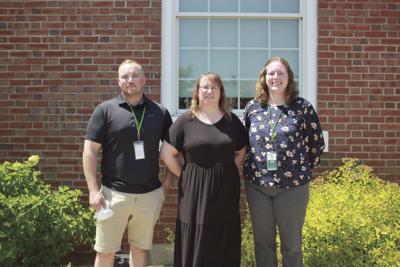
LACONIA — Lakes Region Mental Health Center employees had an exciting day at the University of New Hampshire Franklin Pierce School of Law on Thursday, Aug. 4. They joined multiple New Hampshire mental health centers for the “NH Critical Time Intervention Kickoff,” where questions were answered, patient success stories were shared and a panel discussion with CTI experts was held.
LRMHC officially began accepting referrals into the CTI Program last month and they are one of 10 community mental health centers in New Hampshire participating in the program. CTI is an evidence-based, time-limited practice that provides invaluable social supports and services for those leaving psychiatric hospitalization and transitioning back into the community. The purpose of the practice is harm reduction — to make the transition during this critical time period as smooth as possible and to provide patients with a sense of security and stability so there is a decreased chance of them being re-hospitalized in the future.
Someone participating in CTI will typically go through three different phases during the nine-month program. Pre-CTI begins before a patient’s discharge from the hospital; this is where they have the opportunity to enroll in the program and will meet their CTI coach for the first time. Once a patient leaves the hospital, CTI officially begins. Each phase lasts three months.
During phase one, the CTI coach makes home visits and introduces the patient to community supports, building rapport and trust. “You’re setting them [the patient] up to be as independent as possible, so trust is an important part of keeping them engaged during the program,” said Brandan Abel, CTI coach at LRMHC. The coach will work with the patient to establish a phase plan, where they will establish goals they’d like to accomplish during the nine months, which can change at any time according to each individual’s wants and needs. In phase two, the patient is encouraged to take more responsibility. The CTI coach meets with the patient less during this time; they are there to help mediate any conflicts or concerns that arise, but will mostly observe and take a less active role in managing the patient’s community supports. The last part of the program, phase three, is where the CTI coach begins to transition the patient into fully independent living. They will help the patient set up long term goals, then will step back and ensure that the patient and their supports can function independently.
LRMHC’s CTI team consists of Alison O’Neill, director of Neurological Treatment & Service Access, Sara Bresslin, Care Transition team lead, and Brandan Abel, CTI coach.
Participants must be 18 years or older to enter the CTI program and are exempt if they are already participating in LRMHC’s ACT program.
For more information on CTI, go to: criticaltime.org/
For more information or to schedule an appointment, call 603-524-1100 or visit the website at www.lrmhc.org.


(0) comments
Welcome to the discussion.
Log In
Keep it Clean. Please avoid obscene, vulgar, lewd, racist or sexually-oriented language.
PLEASE TURN OFF YOUR CAPS LOCK.
Don't Threaten. Threats of harming another person will not be tolerated.
Be Truthful. Don't knowingly lie about anyone or anything.
Be Nice. No racism, sexism or any sort of -ism that is degrading to another person.
Be Proactive. Use the 'Report' link on each comment to let us know of abusive posts.
Share with Us. We'd love to hear eyewitness accounts, the history behind an article.