


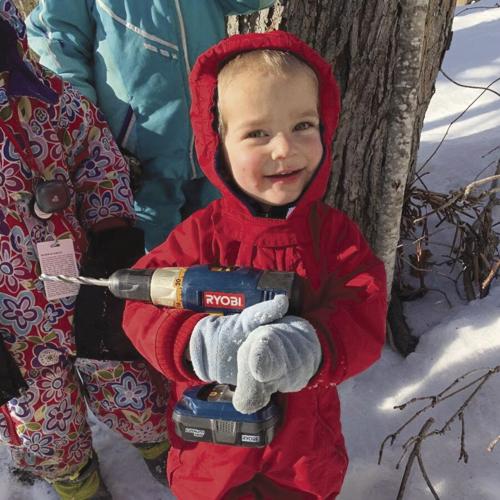
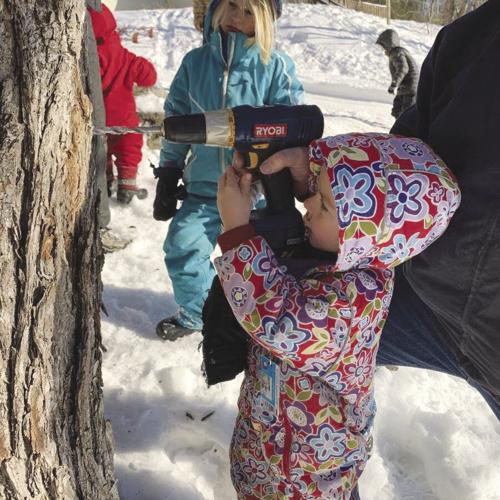
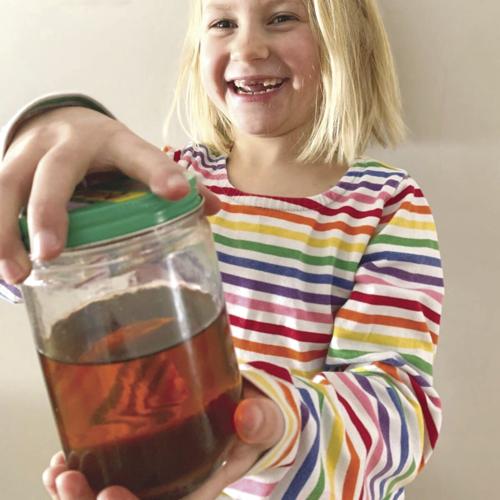

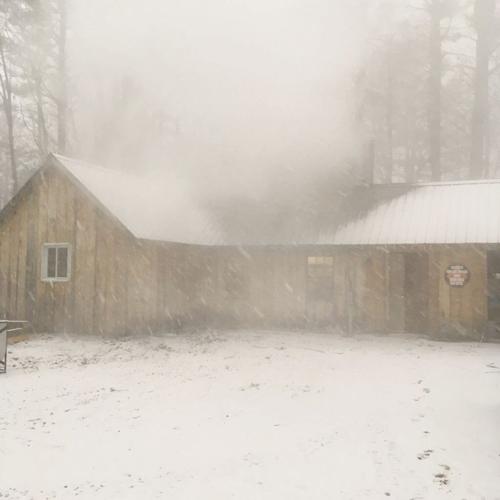
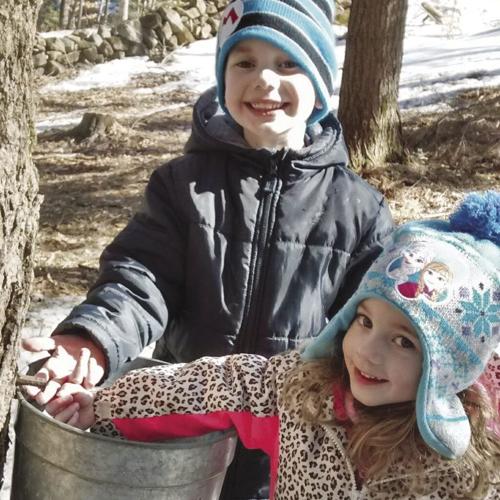
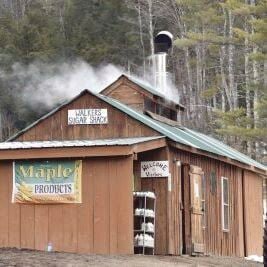
March is Maple Sugaring Month. To celebrate, let's take a look at the sweet side of conservation.
Large, healthy forests bring innumerable benefits to the communities around them. Lower taxes, clean air and water, and healthier people are some of the big ones, but there's even more that sweetens the deal—maple syrup. All that amber-colored goodness is made possible when healthy forests are maintained and conserved, and along with the delicious product itself, maple products support sustainable agritourism for small-town economies.
Fast Facts
• Maple syrup is a specialty forest product, like Christmas trees, that both supports and benefits from the protection of forests and working lands.
• In New Hampshire, over 475 farms and more than 400,000 taps produce over 71,000 gallons of maple syrup each year.
• Agritourism from activities like sugaring generates over $4 million of income for New Hampshire farmers.
• When managed responsibly, the same trees can be tapped for decades with no ill effects on the trees' health.
• Timber harvesting and sugaring are compatible industries that can coexist on the same land, increasing the benefits of conserved working lands.
• Indigenous peoples have been sugaring in North America from time immemorial. To read an Abenaki story of the origin of maple syrup, visit abenakitribe.org/maple-syrup.
To get a taste and for more information about NH Sugar Houses, visit nhmapleproducers.com/directory/NH.


(0) comments
Welcome to the discussion.
Log In
Keep it Clean. Please avoid obscene, vulgar, lewd, racist or sexually-oriented language.
PLEASE TURN OFF YOUR CAPS LOCK.
Don't Threaten. Threats of harming another person will not be tolerated.
Be Truthful. Don't knowingly lie about anyone or anything.
Be Nice. No racism, sexism or any sort of -ism that is degrading to another person.
Be Proactive. Use the 'Report' link on each comment to let us know of abusive posts.
Share with Us. We'd love to hear eyewitness accounts, the history behind an article.