



Making energy efficient updates to your home is a great move for the environment. But you might feel the pinch in your household budget. The good news is that there are a couple of tax credits that can help out your wallet.
There are two main credits: Nonbusiness energy property credit (now the energy efficient home improvement credit) and residential energy efficient property credit (now the residential clean energy credit).
With the Inflation Reduction Act of 2022, the nonbusiness energy property credit was extended through 2032 and renamed the energy efficient home improvement credit.
For improvements installed prior to 2023, the nonbusiness energy tax credit is available for energy efficient home improvements that include building envelope components and energy properties (energy efficient home improvements that increased the heating and cooling efficiency of your primary or secondary residence).
This energy tax credit is available for energy efficient home improvements that fall into the following categories:
Building envelope, which includes items such as: Insulation material or systems; exterior windows, skylights, or doors; storm windows and storm doors installed over certain types of windows and doors.
Energy properties, which includes items such as: Advanced main air-circulating fan used in a natural gas, propane, or oil furnace; biomass fuel stoves; central air conditioners; electric heat pump water heaters; electric heat pumps; and natural gas, propane, or oil furnaces, oil water boilers and oil water heaters.
Beginning in 2025, you should include the product ID on tax forms to claim the credit. And taxpayers can also claim home energy audits credit for 30% of costs up to $150. The credit is still claimable on Form 5695.
The same legislation mentioned above changed the residential energy efficient property credit credit to the residential clean energy credit in 2022. The rules below apply to property put in service after Dec. 31, 2021, through December 31, 2034.
However, the value of the credit changes depending on when you’ve installed the property. The credit rates are: 26% for property placed in service during 2021; 30% for property placed in service from 2022-2032; 26% for property placed in service during 2033; and 22% for property placed in service during 2034.
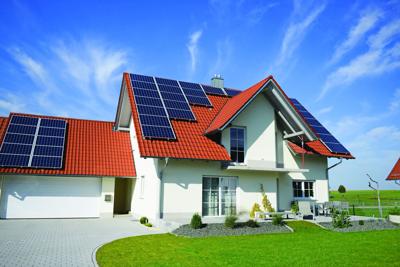
Solar electric, wind, and other alternative energy equipment installed in your home qualifies. Additional credits are available for solar panels.
—H&R Block


(0) comments
Welcome to the discussion.
Log In
Keep it Clean. Please avoid obscene, vulgar, lewd, racist or sexually-oriented language.
PLEASE TURN OFF YOUR CAPS LOCK.
Don't Threaten. Threats of harming another person will not be tolerated.
Be Truthful. Don't knowingly lie about anyone or anything.
Be Nice. No racism, sexism or any sort of -ism that is degrading to another person.
Be Proactive. Use the 'Report' link on each comment to let us know of abusive posts.
Share with Us. We'd love to hear eyewitness accounts, the history behind an article.