


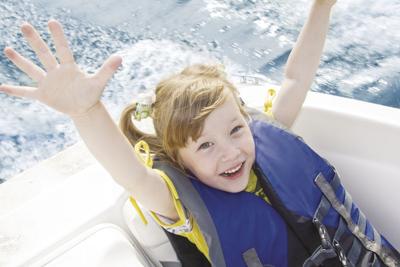
No matter how much experience you have, it’s always a good idea for everyone to review boating safety rules and practices before leaving the dock. Below are a few safety tips to help you boat responsibly and enjoy your time on the water.
Take a boating course
New boaters and experienced experts alike need to be familiar with the boating rules of the road. Boating safety courses are offered locally, inexpensive and often completed in a day, in-person or online.
Get a free vessel safety check
The U.S. Coast Guard Auxiliary and U.S. Power Squadrons offer complimentary boat examinations to verify the presence and condition of certain safety equipment required by state and federal regulations. Free of charge, they also offer virtual vessel exams.
Follow a pre-departure checklist
Utilizing a pre-departure checklist is a helpful way to check the boat and ensure the proper gear is onboard.
Be weather-wise
Always check local, route and destination weather and water conditions before departure and ensure it is safe to go out.
Use common sense
Operate at a safe speed at all times (especially in crowded areas), stay alert and steer clear of large vessels and watercraft that can be restricted in their ability to stop or turn.
Know the Nautical Rules of the 'Road'
Maintain a proper lookout and be respectful of buoys and other navigational aids, all of which have been placed there to ensure your safety and the safety of the boats around you. To learn more, check out the USCG's Navigation Rules information page.
Designate an Assistant Skipper
Make sure more than one person onboard is familiar with all aspects of the boat’s handling, operations and general boating safety, in case the primary operator is incapacitated and someone else needs to get the boat back to shore.
Develop a Float Plan
Whether you choose to inform a family member or staff at your local marina, let someone else know where you’re going and how long you’re going to be gone. A float plan can include the following: name, address and phone number of trip leader and passengers; boat type and registration information; trip itinerary; and types of communication and signal equipment onboard, such as an Emergency Position Indicating Radio Beacon (EPIRB) or Personal Locator Beacon (PLB).
Make Proper Use of Life Jackets
Assign and fit each member of your onboard team with a life jacket prior to departure. State law requires one wearable life preserver for each person in a boat. All children age 12 or under must wear an approved vest or jacket.
Avoid Alcohol
Operating a boat while intoxicated is illegal. Nearly half of all boating accidents involve alcohol. Designate a sober skipper before leaving the dock.
Be Aware of Carbon Monoxide
Maintain fresh air circulation throughout the boat. Educate all passengers about the symptoms of CO poisoning and where CO may accumulate.
Skip Swimming in a Marina
Never swim in a marina or in other areas where boats are connected to shore power. Stray power in the water can create an electric shock hazard.
Stay Clear of the Engine
Drivers should wear the boat’s engine cut-off switch lanyard at all times. Keep watch around the propeller area when people are in the water. Never allow passengers to board or exit your boat from the water when engines are on — or idling. Take extra precautions near boats towing skiers or tubers.


(0) comments
Welcome to the discussion.
Log In
Keep it Clean. Please avoid obscene, vulgar, lewd, racist or sexually-oriented language.
PLEASE TURN OFF YOUR CAPS LOCK.
Don't Threaten. Threats of harming another person will not be tolerated.
Be Truthful. Don't knowingly lie about anyone or anything.
Be Nice. No racism, sexism or any sort of -ism that is degrading to another person.
Be Proactive. Use the 'Report' link on each comment to let us know of abusive posts.
Share with Us. We'd love to hear eyewitness accounts, the history behind an article.