


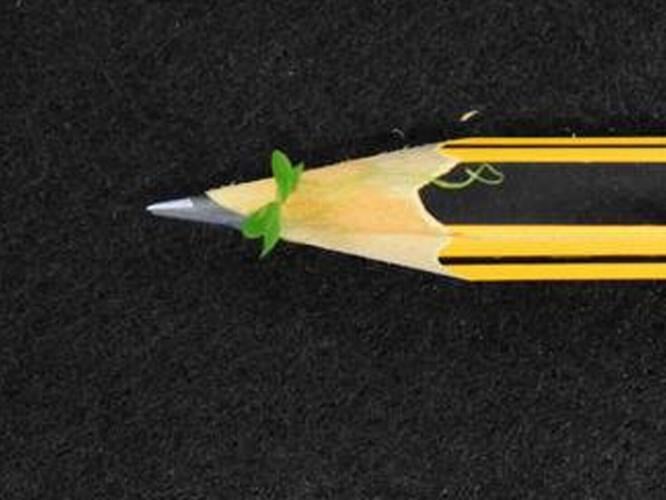
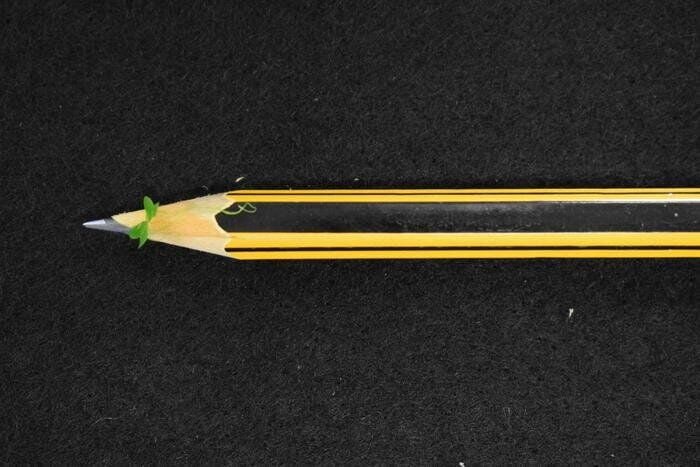
Duckweed on end of pencil. (University of Nottingham via SWNS)
By Stephen Beech
The world’s smallest flowering plant would be an “ideal” food crop for future space missions, according to new research.
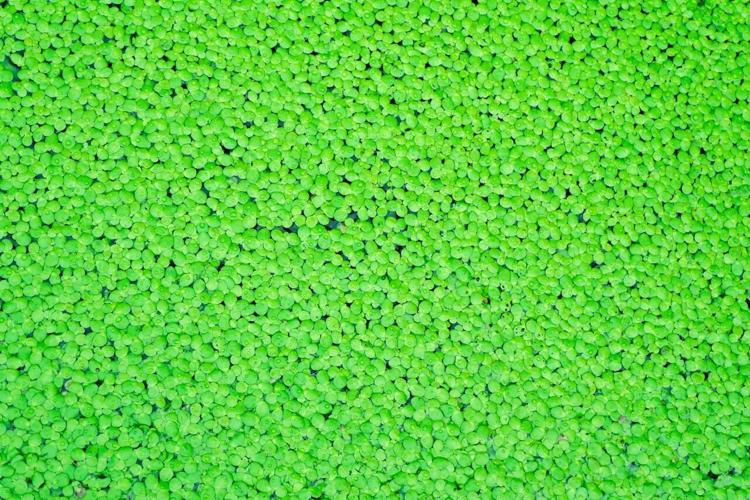
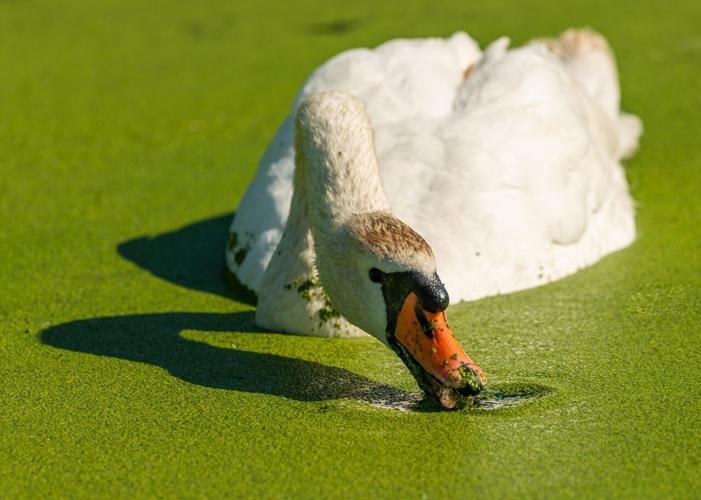
Duckweeds measure just a few millimeters across, but scientists say they could feed astronauts exploring deep space — as well as providing a potential source of food and protein on Earth.
Researchers at the University of Nottingham conducted gene expression analysis and cutting-edge microscopy on duckweeds.
Their findings, published in the journal Current Biology, show that they retain the same basic building blocks found in the shoots of larger plants.
But those structures have been “dramatically compressed” and fused together.

(Photo by Samiran Biswas via Pexels)
Study leader Anthony Bishopp says miniaturization is a “remarkable phenomenon” found throughout the natural world, from tiny animals to miniature plants.
He said: “Duckweeds are extraordinary flowering plants that can measure just a few millimeters across, yet their relatives include some of the largest herbaceous plants.
“We were interested to find out how a complete plant body plan can be packed into such a tiny space.


“While miniaturization in animals is often associated with the loss of organs or body structures, we have revealed that duckweeds have taken a different route.
“What surprised us is that, when we looked closely, the basic organization of the shoot was still there.
“Rather than throwing away parts of the blueprint, duckweed appears to have compressed and fused its components into an incredibly compact plant.

(Photo by Petr Ganaj via Pexels)
“That gives us a new way of thinking about how plants can evolve to become so small.”
Bishopp said duckweed research is advancing rapidly, driven by growing interest in the tiny plants as a potential source of food and novel protein on Earth, as well as a possible crop for future space missions.
He added: “Unlike most of the crops we grow today, which have been shaped by thousands of years of domestication and selective breeding, the potential of duckweed remains largely unexplored.
“Even the basic architecture of the duckweed plant has remained something of a mystery.
“Understanding how its body is organized provides an essential framework for understanding how duckweed grows, develops and functions — and ultimately how its potential might be improved.”
Study co-author Alex Ware said: “Duckweeds are astonishingly small, so it is tempting to think of them as either primitive plants or simply as having lost parts, but this is not the case.”
Ware added: “Our research adds to growing evidence from across the research community about this plant and will help efforts to turn them into a future crop.”


(0) comments
Welcome to the discussion.
Log In
Keep it Clean. Please avoid obscene, vulgar, lewd, racist or sexually-oriented language.
PLEASE TURN OFF YOUR CAPS LOCK.
Don't Threaten. Threats of harming another person will not be tolerated.
Be Truthful. Don't knowingly lie about anyone or anything.
Be Nice. No racism, sexism or any sort of -ism that is degrading to another person.
Be Proactive. Use the 'Report' link on each comment to let us know of abusive posts.
Share with Us. We'd love to hear eyewitness accounts, the history behind an article.