


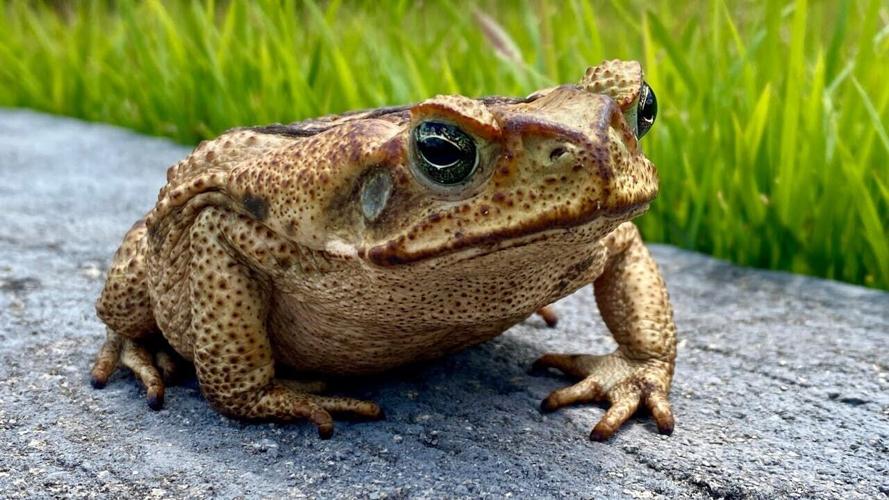

An invasive cane toad (Rhinella marina) is measured in Australia. (Chris Barlow / Macquarie University via SWNS)
By Stephen Beech
Cane toads have leapt ahead of evolution theories by growing bigger and changing more rapidly than expected, according to new research.
The invasive species has bulged in size since being introduced into Japan less than 50 years ago, reveals the study.
Scientists say their findings suggest environmental pressures can drive rapid biological change.
The study comparing invasive cane toads in Japan and Australia found "substantial" changes in body size and shape have developed much more rapidly than suggested by long-held ideas of the pace of evolution.
Researchers measured and weighed wild-caught cane toads on Ishigaki Island in southern Japan and compared them to toads measured in Australia, Hawaii and South America.

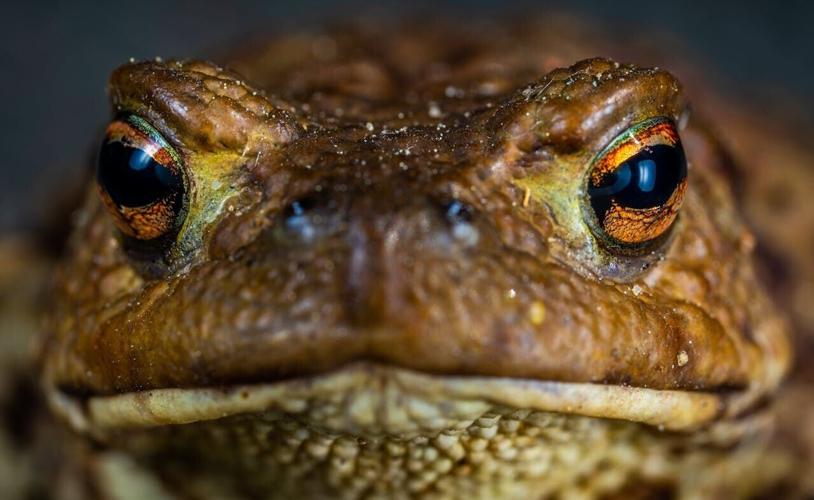
(Photo by Flávio Santos via Pexels)
The most striking difference was in body size with adult toads from Ishigaki weighing an average 190 grams (0.4 lbs) compared to 135g (0.3 lbs) for toads from Australia, while their average length was 122 millimeters (4.8 inches) compared to 111mm (4.3 ins).
The findings, published in the journal Royal Society Open Science, also showed that Ishigaki toads had wider heads, shorter arms and longer legs than toads from other locations.


Cane toads have spread to more than 40 countries worldwide from their ancestral habitat in north-eastern South America.
They first spread to Puerto Rico and then to Hawaii and from there to Australia in the 1930s.
The toads of Ishigaki were introduced from Hawaii, via Taiwan and the Daito Islands, in 1978.
Senior researcher Rick Shine said: "Given these populations of toads in Japan and Australia shared a common history in Hawaii until the 1930s, these differences in size and body shape have developed in less than 100 years.

"The idea that evolutionary change happens at a glacially slow pace is being challenged by recent evidence showing rapid changes in species confronted with novel challenges, like being translocated to a different habitat."
The study didn't collect sufficient data to allow researchers — from Macquarie University and the University of Sydney in Australia plus Kyoto University in Japan — to test alternative theories about what might be driving the changes in body size.
But the research team speculated that the larger body sizes of Ishigaki toads could reflect favorable climatic conditions, particularly year-round rainfall or the impact of lower pressure from predators on the island.
Shine, an evolutionary biologist and ecologist at Macquarie University in Sydney, added: "We don't have a clear idea of the evolutionary forces that might be involved, so we can't say why body mass and shape has changed among the toads in the Japanese system."


(0) comments
Welcome to the discussion.
Log In
Keep it Clean. Please avoid obscene, vulgar, lewd, racist or sexually-oriented language.
PLEASE TURN OFF YOUR CAPS LOCK.
Don't Threaten. Threats of harming another person will not be tolerated.
Be Truthful. Don't knowingly lie about anyone or anything.
Be Nice. No racism, sexism or any sort of -ism that is degrading to another person.
Be Proactive. Use the 'Report' link on each comment to let us know of abusive posts.
Share with Us. We'd love to hear eyewitness accounts, the history behind an article.