



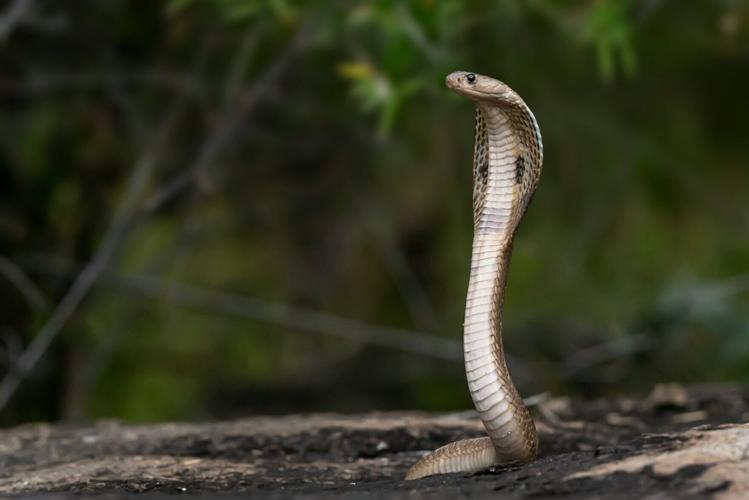
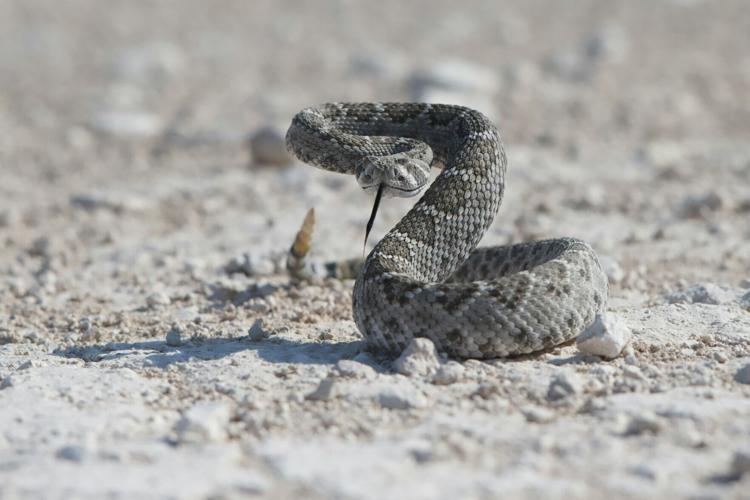

Hidden in plain sight, the Salazar's pit viper melts effortlessly into the vibrant emerald tea bushes of Assam. (Ramiz Ali via SWNS)
By Stephen Beech
Farm workers are the people most likely to be among the 1.4 million who die every year from snakebites, according to a new study.
Researchers in India analyzed decades of data to reveal who's most at risk, and how to try to reduce the deadly toll.
The team synthesized data from 142 studies documenting more than 200,000 snakebites worldwide as far back as the 1800s for the research published in the journal PLOS Neglected Tropical Diseases.
Study co-author Chandrashekar Janakiram said: "The review found that snakebite is strongly related to occupation, with nearly 70% of cases occurring during outdoor work such as farming and construction, and also to timing, with most cases occurring during rainy seasons and during the evening and early night hours.
"Snakebite cases were also found to be correlated with factors related to poverty, such as lack of adequate footwear, poorly secured homes, and limited access to healthcare education."

Nivedh P
Co-author Dr. Jaideep Menon, of Amrita University, TamilNadu,vsaid: "Snakebites aren't random, but instead are predictably correlated with a variety of environmental and socio-economic factors.


"Snakebite is considered a neglected tropical disease, responsible for as many as 1.4 million deaths per year and disproportionately affecting rural populations in low- and middle-income countries."
Janakiram, also of Amrita University, said: "These results highlight areas where targeted policies might significantly reduce the risk of snakebite, including the realms of workplace safety, rural development, housing improvement, and health education."
The research team noted that this data was limited, being mostly focused in South Asia and suffering from inconsistent reporting of variables involved in each snakebite incident.

Duncan Sanchez
They said future studies should focus on filling the gaps to form a more comprehensive global understanding of factors related to snakebites.
Dr. Menon said:: "The scoping review told us something we needed to hear: limiting ourselves to anti-venom will never address the behavioral and environmental factors that put people at risk in the first place."
He added: "The inverse care law is particularly relevant to snakebite.
"The people most exposed to snakes — because of where they live and the work, they do — are also the people furthest from a hospital that can treat them.
"You cannot fix that gap with antivenom alone; antivenom sits at the wrong end of the problem."


(0) comments
Welcome to the discussion.
Log In
Keep it Clean. Please avoid obscene, vulgar, lewd, racist or sexually-oriented language.
PLEASE TURN OFF YOUR CAPS LOCK.
Don't Threaten. Threats of harming another person will not be tolerated.
Be Truthful. Don't knowingly lie about anyone or anything.
Be Nice. No racism, sexism or any sort of -ism that is degrading to another person.
Be Proactive. Use the 'Report' link on each comment to let us know of abusive posts.
Share with Us. We'd love to hear eyewitness accounts, the history behind an article.