



(NASA/Michael DeMocker via SWNS)
By Dean Murray
NASA is prepping its next rocket launch following the successful test flight of the Artemis II mission around the Moon.
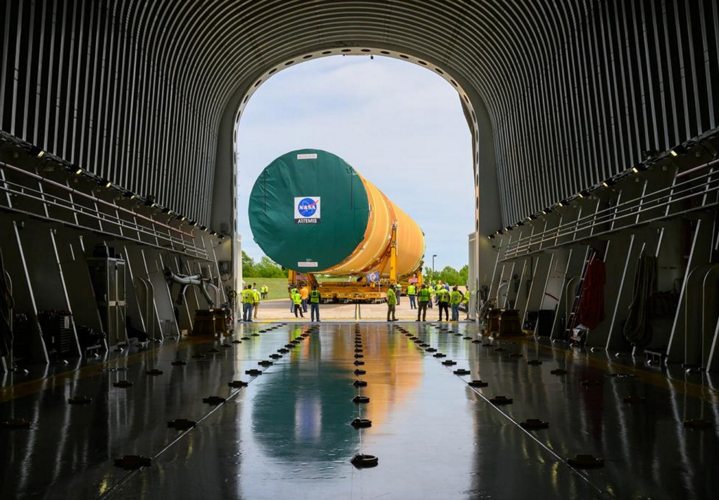
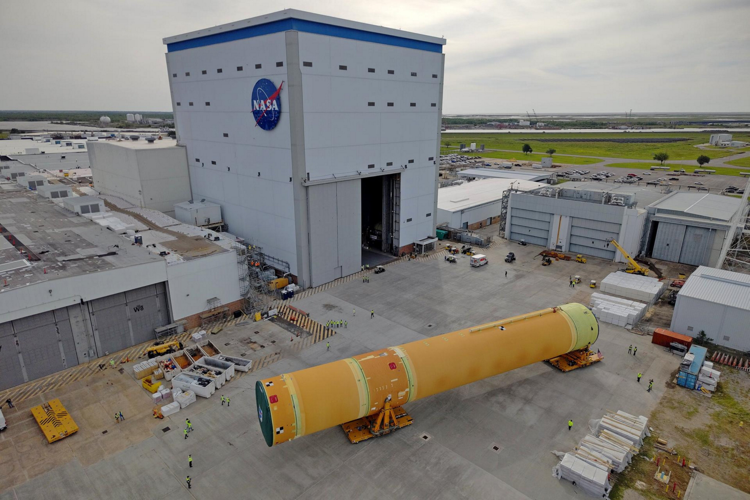
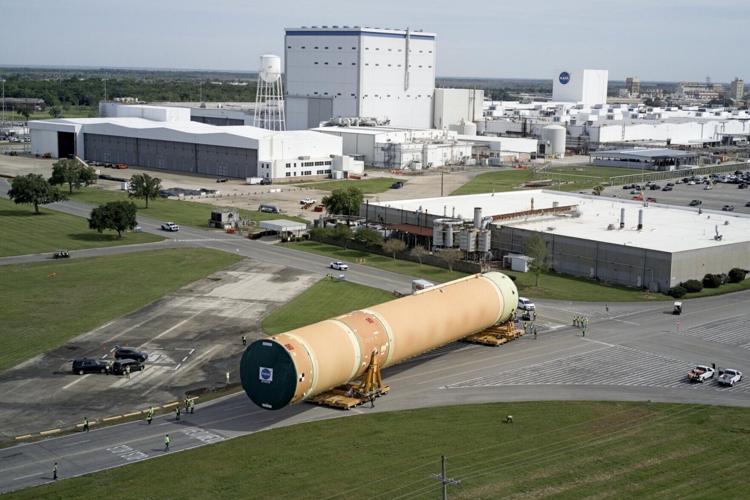
On Monday, April 20, the space agency rolled out the core stage, or the largest section, of the agency’s SLS (Space Launch System) rocket that will launch the crewed Artemis III mission in 2027.
The stage departed from NASA's Michoud Assembly Facility in New Orleans for shipment to Kennedy Space Center in Florida.
It marks key progress on the path to the agency’s first crewed lunar landing mission under the Artemis program in two years.

(NASA/Michael DeMocker via SWNS)


Next year’s Artemis III mission will launch astronauts to Earth’s orbit aboard the Orion spacecraft on top of SLS to test rendezvous and docking capabilities between Orion and commercial spacecraft needed to land Artemis IV astronauts on the Moon in 2028.
NASA’s SLS is the only rocket capable of sending Orion, astronauts, and supplies to the Moon in a single launch.
“Seeing this SLS rocket hardware roll out is a powerful reminder of our progress toward returning humans to the lunar surface,” said Lori Glaze, acting associate administrator, Exploration Systems Development Mission Directorate at NASA Headquarters in Washington. “This is the backbone of Artemis III. As it heads to Florida for final integration, we are one step closer to testing the critical capabilities needed to land Americans on the Moon, and ultimately, paving the way for our first crewed missions to Mars.”

(NASA/Michael DeMocker via SWNS)
At 212 feet tall, the completed core stage will consist of the top four-fifths of the rocket combined with its engine section. The top four-fifths include the two propellant tanks that collectively hold more than 733,000 gallons of super-chilled liquid propellant to fuel four RS-25 engines.
During launch and flight, the fully integrated stage will operate for more than eight minutes, producing more than 2 million pounds of thrust to propel astronauts inside NASA’s Orion spacecraft into orbit.
NASA said: "As part of the Golden Age of innovation and exploration, NASA will send Artemis astronauts on increasingly difficult missions to explore more of the Moon for scientific discovery, economic benefits, establish an enduring human presence on the lunar surface, and to build on our foundation for the first crewed missions to Mars."


(0) comments
Welcome to the discussion.
Log In
Keep it Clean. Please avoid obscene, vulgar, lewd, racist or sexually-oriented language.
PLEASE TURN OFF YOUR CAPS LOCK.
Don't Threaten. Threats of harming another person will not be tolerated.
Be Truthful. Don't knowingly lie about anyone or anything.
Be Nice. No racism, sexism or any sort of -ism that is degrading to another person.
Be Proactive. Use the 'Report' link on each comment to let us know of abusive posts.
Share with Us. We'd love to hear eyewitness accounts, the history behind an article.