



By Michael Lee Simpson
An injured butterfly can now fly after a wing transplant from a dead insect.
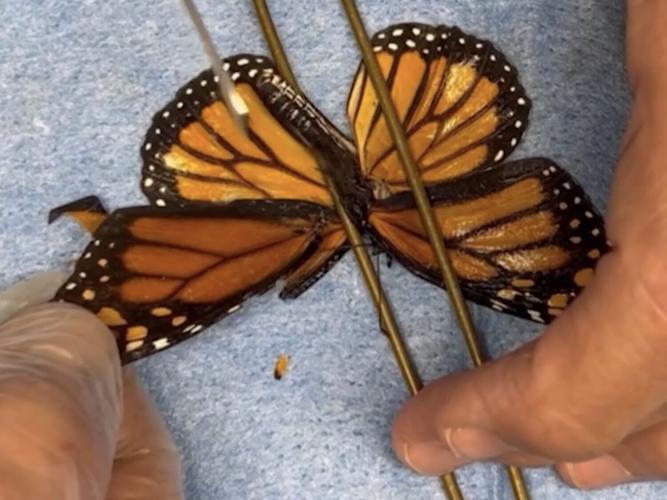
The monarch butterfly was brought to Sweetbriar Nature Center in Long Island, New York, with its wing bent and torn, unable to fly.
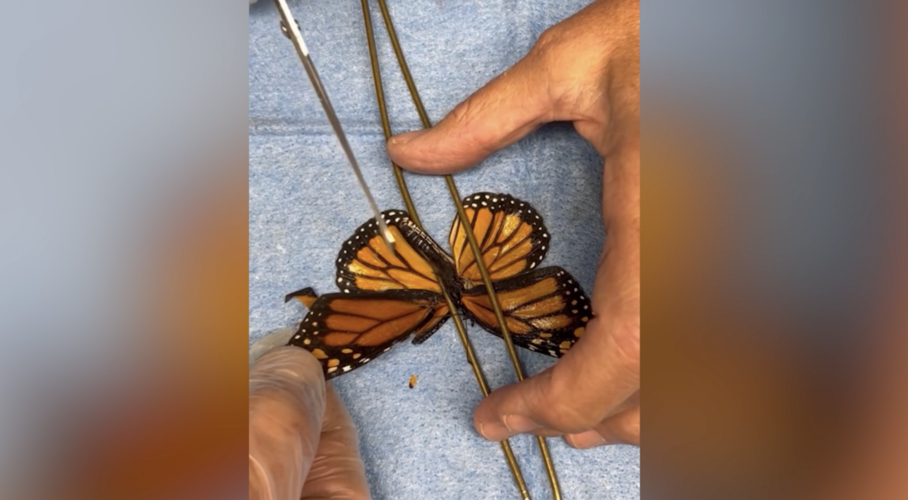
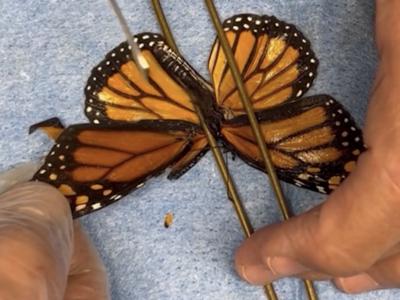
Director of wildlife rehabilitation, Janine Bendicksen, 63, performed the intricate five-minute procedure in October 2025.
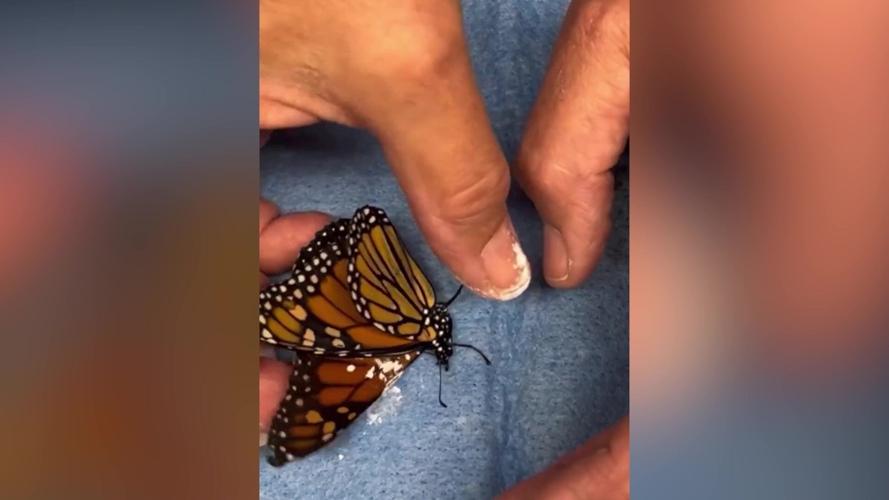
She used donor wings from deceased butterflies, sticking them to the creature, and a simple cooling method to keep the insect still.
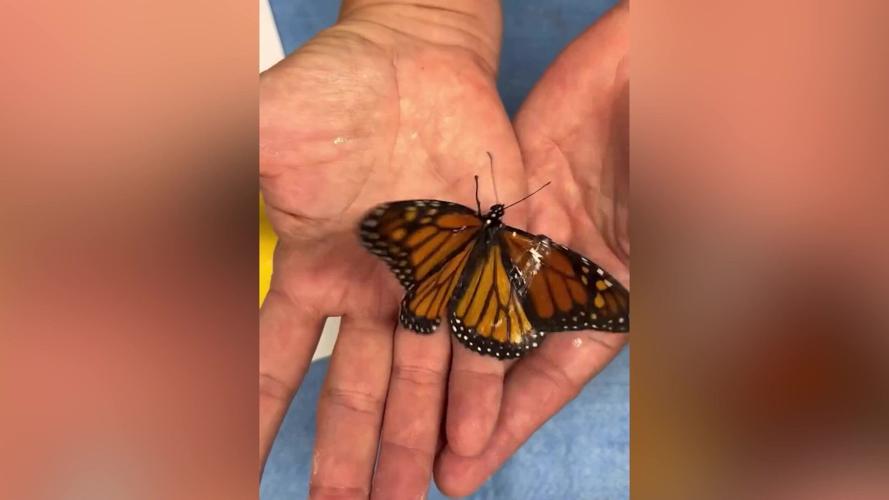
The butterfly successfully flew immediately after surgery and was released the next day, to migrate thousands of miles.

(Janine Bendicksen via SWNS)
Bendicksen said the rescue represents hope for endangered monarchs, whose epic journey and survival are crucial for the species.
This was Bendicksen's first butterfly wing transplant - something she'd dreamed of attempting for years.
"It was just always something I wanted to try, but you have to be a very specific candidate in order for it to work," she said.
The procedure can only be performed on butterflies without wing deformities caused by disease.
The damage can't affect an entire wing, since there must be something for the replacement to attach to.
When a Good Samaritan brought in the injured monarch, Bendicksen said it was "the perfect candidate" for the experimental procedure.

(Janine Bendicksen via SWNS)
The nature center's butterfly vivarium provided access to deceased butterflies, allowing donor wings to be made available for the transplant.


The surgical process itself was rapid and efficient.
Bendicksen said the entire transplant took just five minutes. To keep the patient still, she relied on a simple cooling technique.
"I put her in the refrigerator," she said. "It's kind of a little anesthesia, being that she's an insect.
"For 10 minutes, it slowed down her movement so we could do the procedure."
The results were immediately apparent.
"The butterfly literally took off right in the room we were in and flew at the window, and I had to go and grab it," she said.
The following day, the monarch was released back into the wild.

(Janine Bendicksen via SWNS)
While some might question the effort invested in saving a single butterfly that typically lives for only a few weeks, Bendicksen said this generation of monarchs is special.
"A lot of people think, why just do it on one butterfly? It's only going to live for a week or two weeks," she said.
"But monarch butterflies — this particular generation — are the ones that fly all the way down to Mexico.
"So they can live for five months, seven months, depending on their journey and how it goes."
The timing makes the rescue even more significant, as monarch butterflies are becoming endangered.
This generation's epic journey to overwintering sites in Mexico spans thousands of miles, guided by instincts scientists still don't fully understand.
Critics might assume the butterfly would quickly fall victim to predators, but Bendicksen pointed out a crucial advantage.


(0) comments
Welcome to the discussion.
Log In
Keep it Clean. Please avoid obscene, vulgar, lewd, racist or sexually-oriented language.
PLEASE TURN OFF YOUR CAPS LOCK.
Don't Threaten. Threats of harming another person will not be tolerated.
Be Truthful. Don't knowingly lie about anyone or anything.
Be Nice. No racism, sexism or any sort of -ism that is degrading to another person.
Be Proactive. Use the 'Report' link on each comment to let us know of abusive posts.
Share with Us. We'd love to hear eyewitness accounts, the history behind an article.