


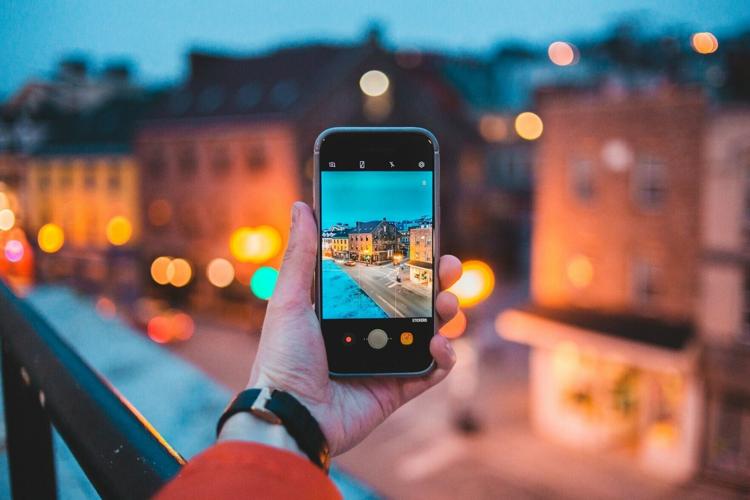

(Photo by Erik Mclean via Unsplash)
Only 5% of American travelers can correctly identify real destination photos in a side-by-side test with AI-generated images — yet 74% say they wouldn't book a trip without seeing photos first.
A new survey of 2,000 American adults, who have recently traveled or are currently planning a trip, found that when shown three pairs of real and AI-generated destination photographs, just one in four correctly identified the authentic image on any given test.
Just one in 20 (5%) were able to identify all three real destination photos successfully.
The results land against a backdrop of near-total visual dependence: photos and videos were the second most influential factor in destination choice, cited by 47% of respondents, behind only price at 62%.
For those taking six or more trips a year, that reliance on imagery runs even deeper with 48% saying photos and videos are extremely influential in their decision-making, compared to just 17% of those who travel once a year or less.
Commissioned by the Tennessee Department of Tourism Development (TDTD) and conducted by Talker Research, the survey found that more than half (52%) of respondents said they felt extremely or very confident in their ability to spot AI-generated imagery — but the test results tell a different story.
When shown two photos of a lake, just 22% identified the real one, essentially the same share (23%) that mistakenly selected the AI image as the authentic photo. A pairing of Grand Canyon images had the highest share of correct answers among the three tests, with 38% selecting the real image.
Of those who got at least one test wrong, nearly four in 10 (39%) said they were genuinely surprised — they had been certain of their answer.
“We want travelers to feel confident when they plan a trip,” said Commissioner Mark Ezell, TDTD. “Making travel plans is an investment in your time, with your money and with your trust. As a tourism entity, it’s important to us that visitors can trust that what they see from us online is as real and authentic as when they arrive to see it for themselves.”

(Talker Research)


When it comes to past AI exposure, 30% said they're aware AI-generated images exist but aren't sure they've ever seen one, and just 21% say they regularly encounter them. Thirty-three percent believe they have encountered AI imagery specifically when researching travel destinations online.
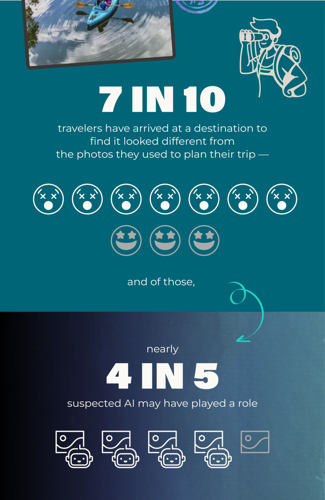
Seven in 10 respondents said they have arrived at a destination that looked noticeably different from the photos they'd seen while planning and of those travelers, more than 80% believed or suspected the imagery may have been AI-generated.
The experience has changed how many plan their next trip.
Among those who have felt misled, more than a third (38%) now ask people they know rather than relying on images. Thirty-seven percent now seek out recent photos over polished campaign imagery, 35% look for user-generated content specifically and 34% say they now rely more on official visitor bureau or destination sources.
Nearly a third of respondents cited being concerned that AI imagery is already influencing their travel decisions without their awareness — and 44% of respondents who got at least one of the comparison tests wrong reported feeling even more skeptical of travel photos going forward, with a third (33%) actively questioning images they previously trusted.
Seventy percent said they would be more likely to trust imagery from a destination that confirms it is real, with 52% saying a formal AI-free certification could sway or convince them to visit.
“Tennessee is home to some of the world’s most beautiful landscapes, and we want people to know we’re the real deal,” Ezell said. “In tourism, real photography is increasingly more important than ever, and destinations have the opportunity to lead on this. That’s why Tennessee Tourism is launching an industry-first photo certification program pledging to use only real photography. We hope it’s a standard others will follow.”
Research methodology:
Talker Research surveyed 2,000 general population Americans who have recently traveled or are currently planning a trip, who have access to the internet; the survey was commissioned by Tennessee Department of Tourist Development and administered and conducted online by Talker Research between June 2 - June 3, 2026. A link to the questionnaire can be found here.
To view the complete methodology as part of AAPOR’s Transparency Initiative, please visit the Talker Research Process and Methodology page.




(0) comments
Welcome to the discussion.
Log In
Keep it Clean. Please avoid obscene, vulgar, lewd, racist or sexually-oriented language.
PLEASE TURN OFF YOUR CAPS LOCK.
Don't Threaten. Threats of harming another person will not be tolerated.
Be Truthful. Don't knowingly lie about anyone or anything.
Be Nice. No racism, sexism or any sort of -ism that is degrading to another person.
Be Proactive. Use the 'Report' link on each comment to let us know of abusive posts.
Share with Us. We'd love to hear eyewitness accounts, the history behind an article.