


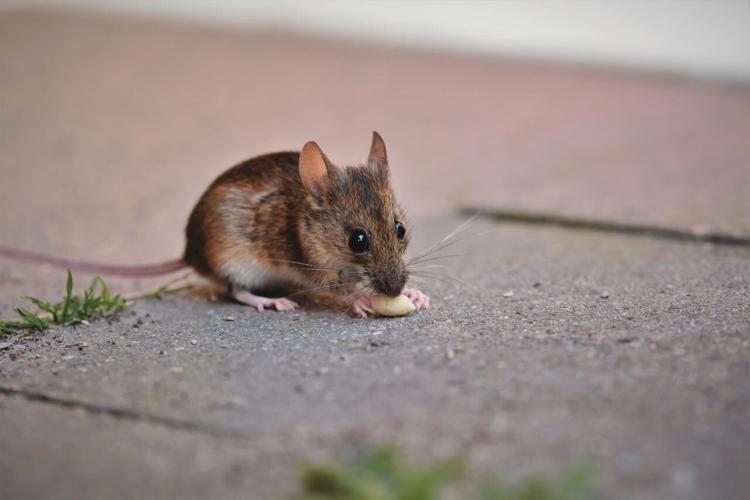


Photo by Ralph via Pexels
After reports from rodent control specialists that mice and rats seemed to be becoming more "stubborn," a study was launched to investigate what was happening.
Now, researchers from Rutgers University have revealed that a huge 70% of mice and rats have "mutated" to become more resistant to poison.
This means their DNA and genes have changed to adapt and survive even the strongest poisons available.
The study, published in the journal Pest Management Science, analyzed 147 house mice and 143 Norway rats (commonly referred to as sewer rats) in urban areas, including New York City, New Jersey and Pennsylvania.
Researchers looked at their DNA and the genes they carried.
If they contained a gene mutation called Vkorc1, then they could be resistant to the effects of one of the most popular poisons in the US: anticoagulant rodenticides.
These poisons work by blocking an enzyme that the body needs to clot blood. Without the enzyme, mice and rats die from internal bleeding.
From the sample size, a huge 84% of the rodents carried at least one mutation.

Photo by ClickerHappy via Pexels


Of this, at least 69% of mice carried the mutation that made them resistant to poison.
It was also found that mice carrying two of these gene mutations were common across five cities, including New York City.
However, only 35% of rats carried the mutation.
The mice and rats with the mutation are able to survive common poisons used to control infestations.
It is thought that a much larger percentage of mice carry the gene mutation because they're more 'curious' — eating bait readily that often contains poison.
Over time, small amounts of exposure could lead to the mice evolving to survive.
But rats are far more cautious, meaning they haven't necessarily had as much pressure to adapt to the poisons being used.
Researchers have commented on how alarming these results are, saying that if we aren't able to control rodent populations in busy areas, it's a real public health concern.
“Studies like this help us understand how rodent populations are changing and how our management strategies need to evolve with them,” Changlu Wang, co-author of the study, said.
Advice now to tackle the problem is for pest control agencies to regularly alternate the type of poisons they are using to prevent rodents from developing resistance.





(0) comments
Welcome to the discussion.
Log In
Keep it Clean. Please avoid obscene, vulgar, lewd, racist or sexually-oriented language.
PLEASE TURN OFF YOUR CAPS LOCK.
Don't Threaten. Threats of harming another person will not be tolerated.
Be Truthful. Don't knowingly lie about anyone or anything.
Be Nice. No racism, sexism or any sort of -ism that is degrading to another person.
Be Proactive. Use the 'Report' link on each comment to let us know of abusive posts.
Share with Us. We'd love to hear eyewitness accounts, the history behind an article.