


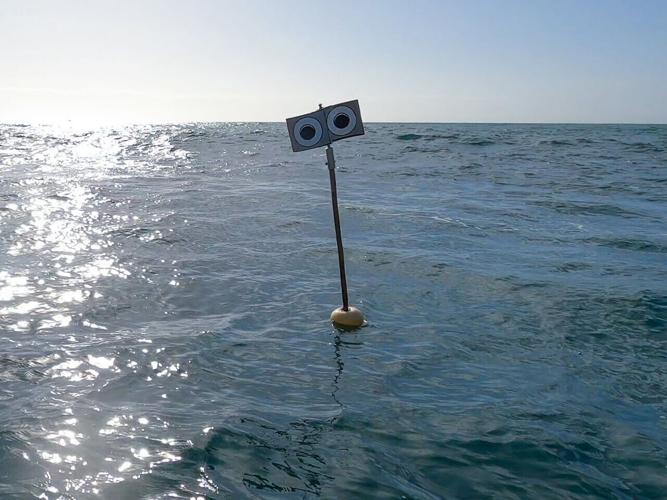
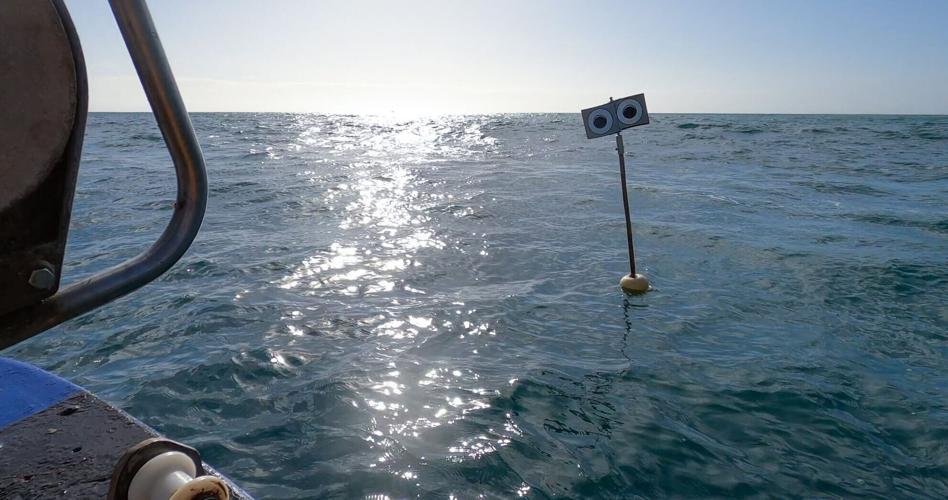
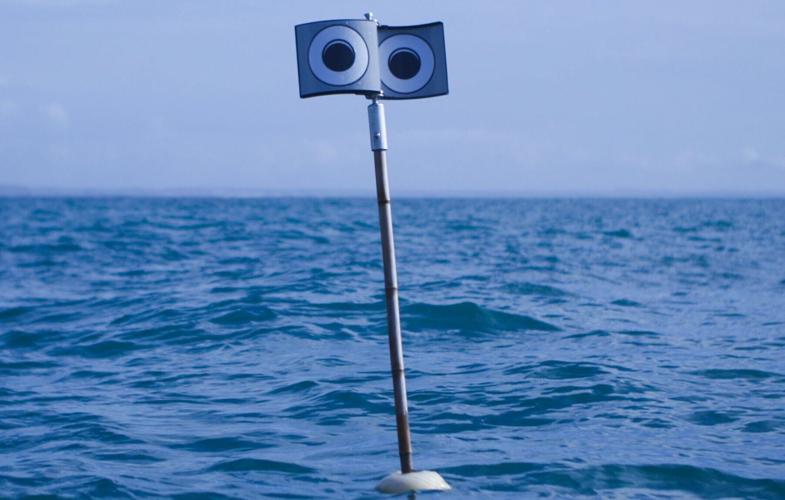
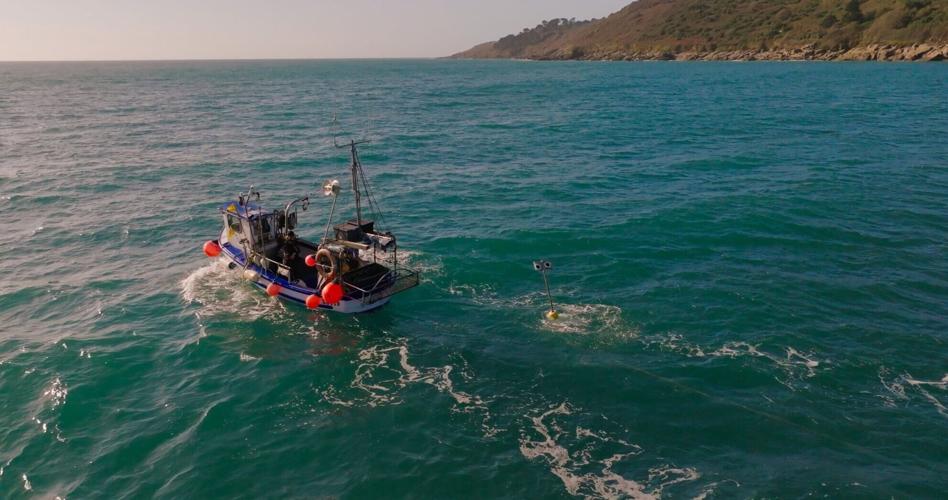

The Fishtek Looming Eye Buoyin opperation. (Exeter University via SWNS)
By Lauren Wilkin
A new floating scarecrow has been used by fishermen to save seabirds from drowning in fishing nets off the coast of Cornwall.
The device — as well as a "scarybird kite" — was developed by scientists and tested by Cornish fisherman for two years.
Data showed both the scarecrow and kite reduced the risk of seabirds becoming caught in fishing nets by a 61%.

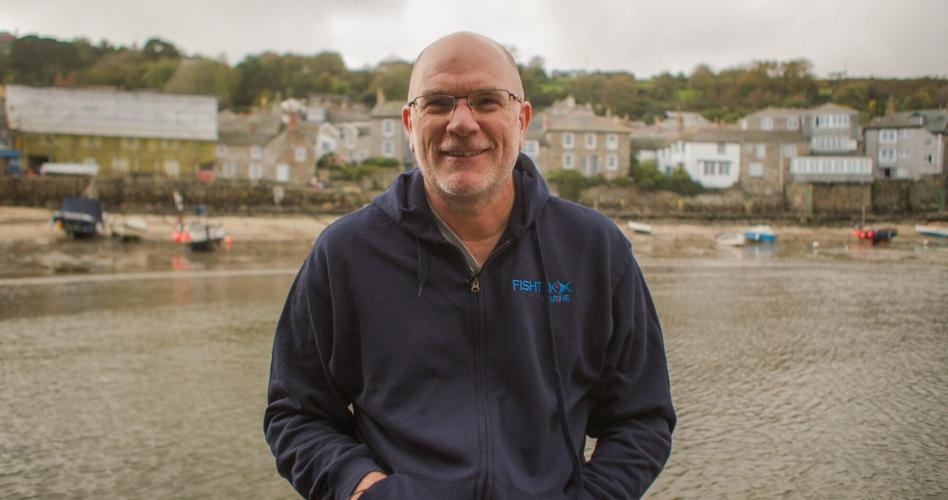
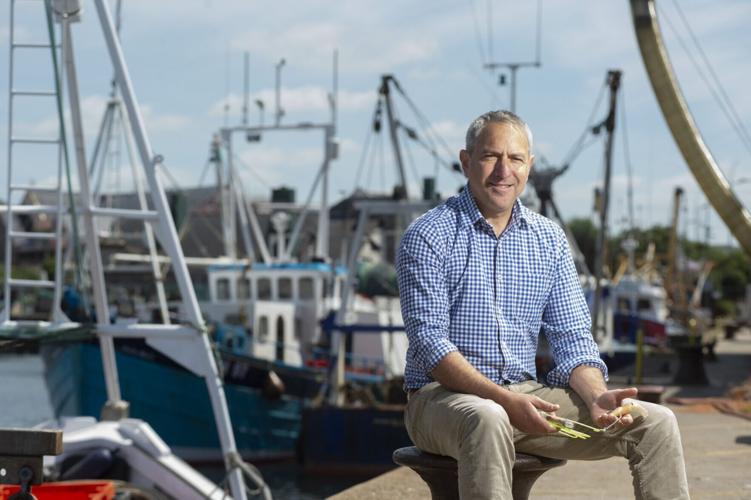
Tom Hooper, senior fisheries scientist at Fishtek Marine. (Exeter University via SWNS)
Following the success of the trial, the devices will be developed further to continue saving seabirds around the globe.
Exeter University, which was behind the research, says every year an estimated 95,000 diving seabirds such as guillemots and razorbills are incidentally caught in fishing nets and subsequently drown around the coast of Europe.
This is known as "bycatch," and researchers say it's a global problem for seabirds around the world.
As part of an eight-year collaboration between scientists at Fishtek Marine and nature conservation charity the RSPB, a deterrent to stop birds from dying has been developed.
Working with Cornish fishermen, scientists developed a floating scarecrow called a Looming Eye Buoy (LEB).
The LEB buoy has a spinning head that uses an animated eye effect to scare birds away from diving into the nets.
The LEB, along with a "scarybird" kite — in the shape of a bird of prey — was trialed off the coast of Cornwall.


Peter Kibel, co-founder and director of Fishtek Marine. (Exeter University via SWNS)
As part of the two-year trial, 10 Cornish fishermen had cameras fitted to their boats to collect data on how effective these devices were on reducing seabird bycatch levels.
The results of this study, published in the journal Conservation Letters, found that both devices were extremely successful.
Together, they decreased the risk of guillemots and razorbills being caught in nets by about two-thirds.

Trials ith fishermen were vital. //New research has shown that a 'floating scarecrow' and a 'scarybird' kite could stop seabirds from getting caught in fishing nets. Exeter University says that every year an estimated 95,000 diving seabirds such as guillemots and razorbills are incidentally caught in fishing nets and subsequently drown around the coast of Europe. This is known as 'bycatch,' and researchers say it's a global problem for seabirds around the world. Now, as part of an eight-year collaboration between scientists at Fishtek Marine and nature conservation charity the RSPB, a deterrent has been developed.
The chances of birds being caught were reduced by 59% using LEBs and by 71% using kites.
Exeter University says that the partnership with fishermen has been critical in helping to improve designs and gain insights into how the devices can be used most effectively.
Tom Hooper, senior fisheries scientist at Fishtek Marine, said: "This technology means that fishing can continue while reducing the effects on seabirds.

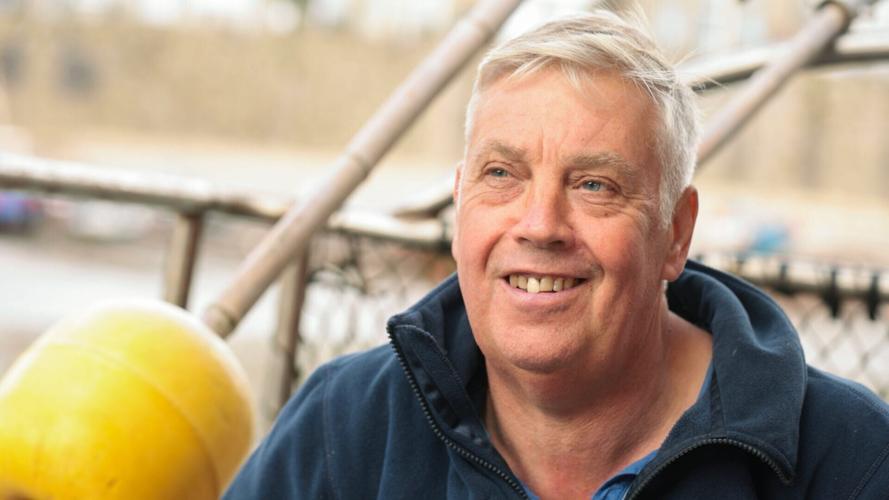
Mousehole fisherman Micky Bacon who took part in the trials. //New research has shown that a 'floating scarecrow' and a 'scarybird' kite could stop seabirds from getting caught in fishing nets. Exeter University says that every year an estimated 95,000 diving seabirds such as guillemots and razorbills are incidentally caught in fishing nets and subsequently drown around the coast of Europe. This is known as 'bycatch,' and researchers say it's a global problem for seabirds around the world. Now, as part of an eight-year collaboration between scientists at Fishtek Marine and nature conservation charity the RSPB, a deterrent has been developed.
"However, any technology used at sea must be simple and robust, so working with fishermen means that we learned a great deal about how the devices were used and as a result we can refine and improve so that it fits their operational needs."
Micky Bacon, a fisherman from Mousehole, Cornwall, England, who took part in the trials, said: "I got involved with the seabird bycatch trial because the sea is my workplace and I think it's important that we're involved in projects that can potentially affect how we work and can help improve the environment.
"It is also a good opportunity to publicize to people outside the industry that fishermen don't just want to go and catch fish, we also want to be part and parcel of improving the environment."


(0) comments
Welcome to the discussion.
Log In
Keep it Clean. Please avoid obscene, vulgar, lewd, racist or sexually-oriented language.
PLEASE TURN OFF YOUR CAPS LOCK.
Don't Threaten. Threats of harming another person will not be tolerated.
Be Truthful. Don't knowingly lie about anyone or anything.
Be Nice. No racism, sexism or any sort of -ism that is degrading to another person.
Be Proactive. Use the 'Report' link on each comment to let us know of abusive posts.
Share with Us. We'd love to hear eyewitness accounts, the history behind an article.