




(NASA/NOAO/ESA/Hubble/STScI/NRAO via SWNS)
By Dean Murray
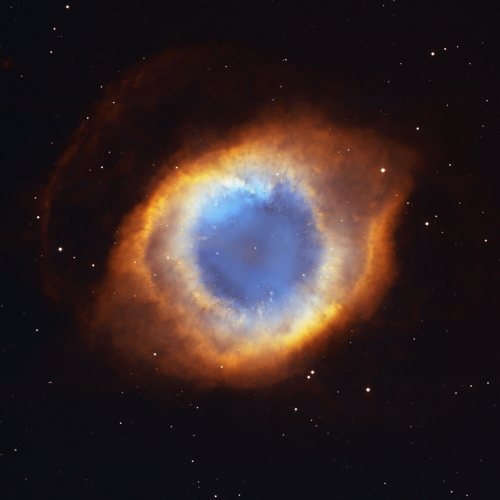
A jaw-dropping new view of the "Eye of Sauron" nebula may give us a glimpse of the fate of our sun.
NASA’s James Webb Space Telescope has zoomed into the Helix Nebula to give an up-close view of the final moments of a dying star in the greatest detail.
First spotted in the early 1800s, the celestial object has become one of the most iconic planetary nebulae in the sky, often referred to as the “Eye of God” or the Lord of the Rings-referencing “Eye of Sauron” for its striking, ring-like shape.


(NASA/ESA/CSA/STSCI/A. Pagan via SWNS)
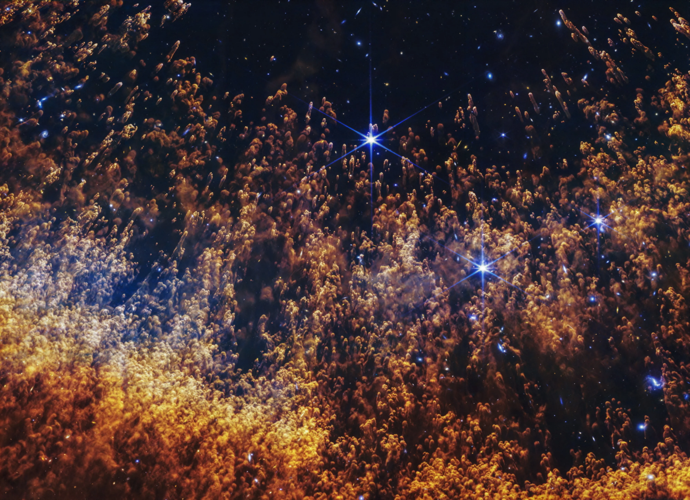
In the image from Webb’s NIRCam (Near-Infrared Camera), pillars that look like comets with extended tails trace the circumference of the inner region of an expanding shell of gas.
Here, blistering winds of hot gas from the dying star crash into colder shells of dust and gas shed earlier in its life, sculpting the nebula’s remarkable structure.
ESA adds: "This happens when a lighter, faster-moving material pushes into a heavier, slower-moving one, like oil trying to push through water."
NASA Webb Mission Team said: "In Webb’s high-resolution look, the structure of the gas being shed off by a dying star comes into full focus. The image reveals how stars recycle their material back into the cosmos, seeding future generations of stars and planets, as NASA explores the secrets of the universe and our place in it."


(0) comments
Welcome to the discussion.
Log In
Keep it Clean. Please avoid obscene, vulgar, lewd, racist or sexually-oriented language.
PLEASE TURN OFF YOUR CAPS LOCK.
Don't Threaten. Threats of harming another person will not be tolerated.
Be Truthful. Don't knowingly lie about anyone or anything.
Be Nice. No racism, sexism or any sort of -ism that is degrading to another person.
Be Proactive. Use the 'Report' link on each comment to let us know of abusive posts.
Share with Us. We'd love to hear eyewitness accounts, the history behind an article.