


Cloud streets are elongated rows of cumulus clouds aligned parallel to the prevailing wind direction.
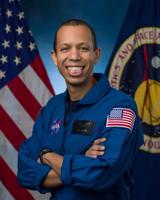
NASA astronaut Chris Williams captured the spectacle from the International Space Station orbiting our planet.

First spotted in the early 1800s, the celestial object has become one of the most iconic planetary nebulae in the sky, often referred to as the “Eye of God.”

Scientists say the storm, driven by heightened solar activity, could cause temporary effects on technology and communications on Earth.

Officials said geomagnetic activity is likely to increase with the arrival of an Earth-directed coronal mass ejection.

The scenes track the furious expansion of Kepler’s Supernova Remnant, the glowing remains of a star first spotted in 1604 by the German astronomer Johannes Kepler.

For decades, astronomers have tracked changes in its brightness and surface features in hopes of figuring out why the star behaves the way it does.

Nicknamed “Cloudâ9,” this is the first confirmed detection of such an object in the Universe.

The disk spans nearly 400 billion miles – around 40 times the diameter of our solar system.

The European Space Agency (ESA) have put together highlights of exciting images and discoveries.