


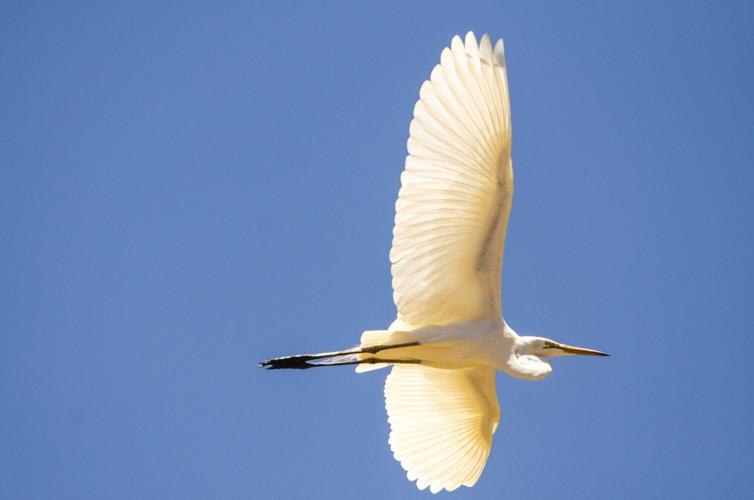
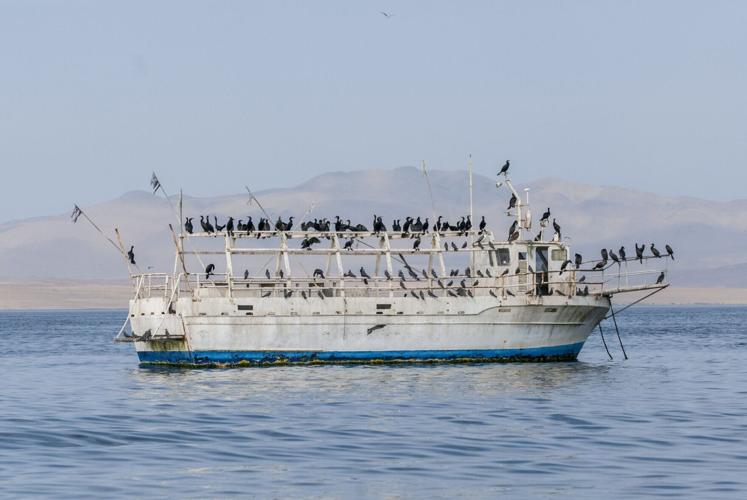

Ardea alba flying. (Joan de la Malla via SWNS)
By Stephen Beech
Birds are getting smaller all around the world, suggests a new study.
Indigenous people and local communities on three continents reported a "drastic" decline in the body mass of several species.
Birds currently inhabiting many territories across Africa, Asia and Latin America are, on average, considerably smaller than those that predominated in 1940, according to the findings of the international study.
The research, led by the Institute of Environmental Science and Technology at the Autonomous University of Barcelona in Spain (ICTA-UAB), draw on the collective ecological memory of 10 indigenous peoples and local communities.

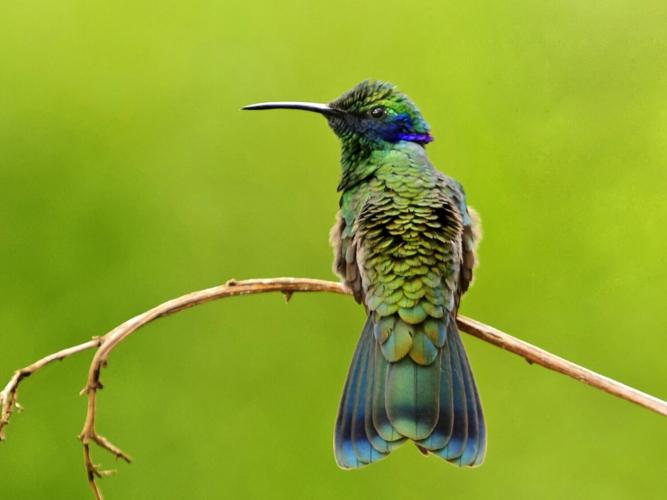
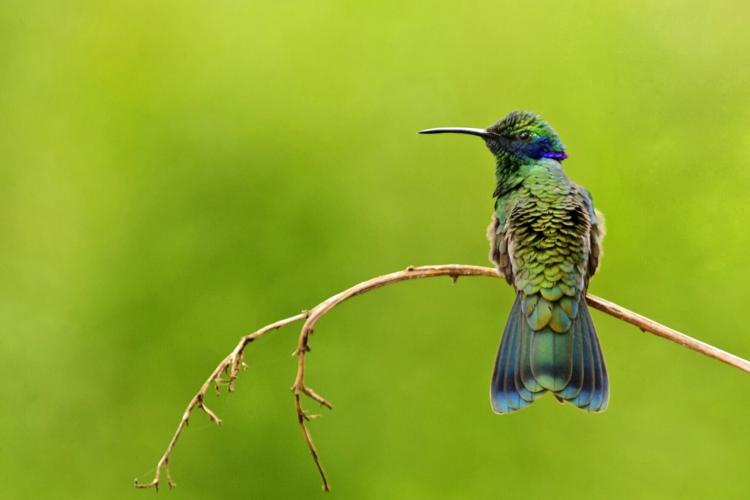
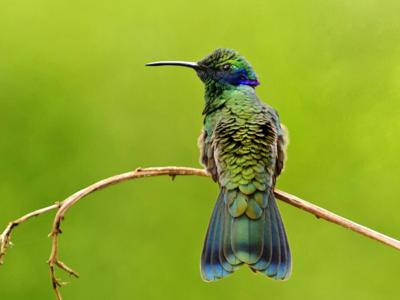
Colibri coruscans in the wild. (Joan de la Malla via SWNS)
The findings, published in the journal Oryx, showed a reduction of up to 72% in the average body mass of the bird species present in their territories between 1940 and 2020.
The research is based on a globally coordinated survey involving 1,434 adult participants from 10 communities across the three continents.
In total, the research team compiled 6,914 unique bird reports corresponding to 283 bird species, comparing the bird species most commonly reported during participants’ childhood with those currently reported in their territories.


The analysis revealed a consistent pattern: large-bodied bird species have progressively disappeared from local environments, being replaced by smaller-bodied species.

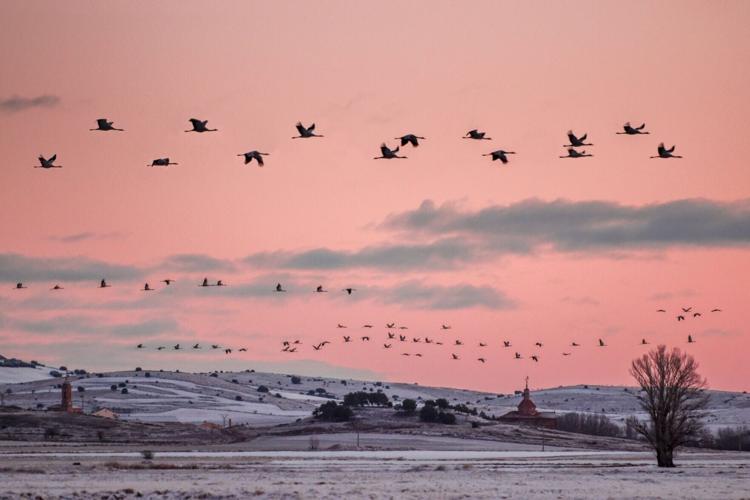
Grus grus. (Joan de la Malla via SWNS)
Whereas in the 1940s the mean body mass of reported bird species exceeded 1,500 grams (52.9 ounces), by the 2020s the average stands at around 535 grams (18.8 oz).
Overall, statistical models point to a decline of around 72% in the average body mass of the birds observed by the communities over eight decades.
Study lead author Dr. Álvaro Fernández-Llamazares says the shift may reflect both the local extinction of large-bodied species - more vulnerable to hunting, habitat loss and infrastructure development - and profound social transformations that have altered the relationships between communities and their local ecologies.
Dr. Fernández-Llamazares said: "The study also underscores that the global avian extinction crisis, widely documented in scientific literature, is equally perceptible in the collective memory of communities with long-term, place-based connections to their territories.
"Rather than treating Indigenous and local knowledge as merely complementary data, we advocate for a respectful and equitable dialogue between scientific and indigenous knowledge systems, recognising their inherent value and their potential to strengthen biodiversity policy and conservation practice."

Phalacrocorax brasilianus. (Joan de la Malla via SWNS)
He says the loss of large-bodied birds has not only ecological implications - many play key functional roles in ecosystems—but also cultural ones, as the species form part of the identity, memory and traditional practices of numerous communities worldwide.
Dr. Álvaro Fernández-Llamazares, senior researcher at ICTA-UAB, added: "The study demonstrates that biodiversity change is recorded not only in scientific datasets, but also in the lived experience of people who have maintained close relationships with the nature in their territories across generations."


(0) comments
Welcome to the discussion.
Log In
Keep it Clean. Please avoid obscene, vulgar, lewd, racist or sexually-oriented language.
PLEASE TURN OFF YOUR CAPS LOCK.
Don't Threaten. Threats of harming another person will not be tolerated.
Be Truthful. Don't knowingly lie about anyone or anything.
Be Nice. No racism, sexism or any sort of -ism that is degrading to another person.
Be Proactive. Use the 'Report' link on each comment to let us know of abusive posts.
Share with Us. We'd love to hear eyewitness accounts, the history behind an article.