




The Artemis II crew poses in front of an Orion simulator Jan. 23, 2026 at NASA's Johnson Space Center in Houston. (NASA/Robert Markowitz via SWNS)
By Dean Murray
See you on the other side.
The next astronauts to fly around the Moon went into quarantine late on Friday. (Jan 23).
The procedure indicates that take-off could occur in mid-February, as this period, called the health stabilization program, typically starts about 14 days before launch.
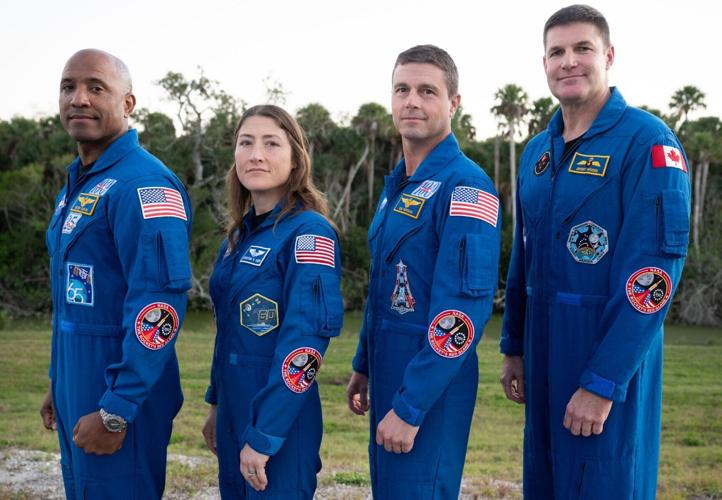
NASA astronauts Reid Wiseman, Victor Glover, and Christina Koch, along with CSA (Canadian Space Agency) astronaut Jeremy Hansen, will ensure that they don’t pick up any illness that could delay their mission by limiting their exposure to others in the days before they lift off.

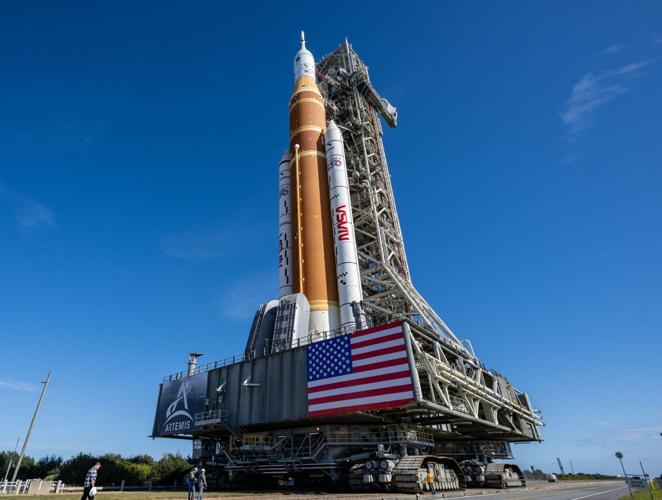
File photo shows NASA's Space Launch System (SLS) rocket and Orion spacecraft, secured to the mobile launcher. (NASA/Keegan Barber via SWNS)
The crew will begin quarantine in Houston, and if testing continues to go well and activities progress toward a possible launch next month, they will fly to NASA’s Kennedy Space Center in Florida about six days ahead of launch.


There, the Artemis II crew will live in the astronaut crew quarters inside the Neil A. Armstrong Operations and Checkout Building before launch day.
During quarantine, the crew can continue regular contact with friends, family, and colleagues who are able to observe quarantine guidelines, and will avoid public places, wear masks, and maintain distance from others they come into contact with as they continue their final training activities.
Those training activities will continue in the days ahead with mission simulations and medical check-outs.

NASA astronauts Victor Glover, Artemis II pilot, left, Christina Koch, Artemis II mission specialist, Reid Wiseman, Artemis II commander, and CSA (Canadian Space Agency) astronaut Jeremy Hansen, Artemis II mission specialist. (NASA/Joel Kowsky via SWNS)
Meanwhile, teams at Kennedy continue to prepare the SLS (Space Launch System) rocket and Orion spacecraft, along with associated ground systems, ahead of launch.
The approximately 10-day Artemis II mission around the Moon is the first crewed flight under NASA’s Artemis campaign.
It will help test the systems and hardware needed to continue sending astronauts on increasingly difficult missions to explore more of the Moon for scientific discovery, economic benefits, and to continue building toward the first crewed missions to Mars.


(0) comments
Welcome to the discussion.
Log In
Keep it Clean. Please avoid obscene, vulgar, lewd, racist or sexually-oriented language.
PLEASE TURN OFF YOUR CAPS LOCK.
Don't Threaten. Threats of harming another person will not be tolerated.
Be Truthful. Don't knowingly lie about anyone or anything.
Be Nice. No racism, sexism or any sort of -ism that is degrading to another person.
Be Proactive. Use the 'Report' link on each comment to let us know of abusive posts.
Share with Us. We'd love to hear eyewitness accounts, the history behind an article.