


National Water Quality Month, established in August 2005 by the Environmental Protection Agency and supported by the United Nations, encourages communities to discuss how to protect our water sources.
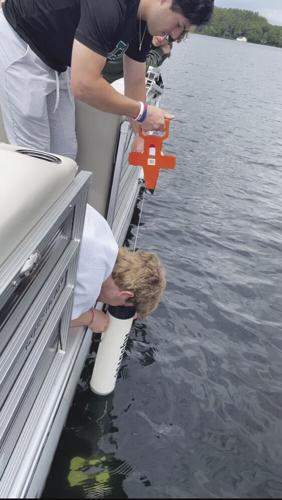
The Lake Winnipesaukee Association has been involved in water quality monitoring on Lake Winnipesaukee for over 40 years, through the University of New Hampshire’s Lakes Lay Monitoring Program. There are over 60 sites monitored, with 35 volunteers collecting water samples monthly from May to September. Monitoring the lake's water quality is important for many reasons. The data helps to track long-term trends in lake health, detect early warning signs of potential problems, and helps inform and calibrate the scientific models used to guide our lake management efforts.
What do we monitor?
There are three important parameters measured; total phosphorus, chlorophyll a, and water clarity. Phosphorus is one of the major nutrients needed for plant growth. For example, it is the middle number on a bag of fertilizer. As it is not naturally abundant in freshwater, higher levels of phosphorus in the lake mean we might expect more plant and algal growth.
Chlorophyll-a is a measure of the microscopic plant life within the lake, and is directly related to the levels of total phosphorus. Water clarity is a measure of how far down light can penetrate into the water column. Clear water allows light to penetrate the water column, and can provide the light needed for photosynthesis by plants, which produce oxygen for the aquatic life in the lake.
Water clarity is measured using a secchi disk, an 8-inch disc with alternating black and white quarters. The disc is lowered into the lake until it is no longer
visible. The depth at which it disappears is the water clarity depth measurement.
The water quality monitoring program on Winnipesaukee is a citizen-science based program, relying on dedicated volunteers to go out on a regular basis to collect, process, and record their measurements. The LWA facilitates the program by recruiting and training the water quality monitors, coordinating transportation of the samples to the lab, seeking funding opportunities to support the program, and compiling and analyzing the data annually.
For the communities surrounding Lake Winnipesaukee, this summer has been especially difficult with respect to water quality, with an unprecedented number of cyanobacteria blooms happening in June and now again in August. LWA has been at the forefront of efforts to ensure that the lake, a vital natural resource and recreational hub, remains clean and safe for everyone. We all have a stake in the health of the lake.
Five ways to help
protect water quality
Properly dispose of waste: Never dump waste, chemicals, or hazardous materials into the lake or nearby storm drains.
Limit fertilizer use: Avoid using fertilizers and pesticides on lawns and gardens. If you must, choose phosphorus-free options to prevent nutrient runoff that can lead to harmful algal blooms.
Maintain septic systems: Regularly inspect and maintain septic systems to prevent leaks or failures that can release harmful bacteria and nutrients into the lake.
Use lake-friendly boating practices: Avoid spilling fuel, oil, or other chemicals into the water while boating. Clean boats on land rather than in the lake to prevent contaminants from entering the water. Use clean, drain, dry practices to stop the spread of aquatic invasive species.
Maintain shoreline vegetation: Preserve or plant native vegetation along shorelines to reduce erosion and filter pollutants before they reach the lake.
For more information on how to get involved or to learn about upcoming events, visit the Lake Winnipesaukee Association’s website at winnipesaukee.org. Although Water Quality Month may have come to an end, our collective responsibility to preserve the lake’s health continues. Together, we can ensure that Lake Winnipesaukee remains a valuable natural resource — because a healthy lake means a healthy community.
•••
Bree Rossiter is the conservation program manager for the Lake Winnipesaukee Association. She manages the water quality monitoring program, cyanobacteria monitoring initiatives, the Winni Blue/LakeSmart program, and assists with watershed management planning efforts. Bree can be reached at brossiter@winnipesaukee.org. The Lake Winnipesaukee Association is a nonprofit dedicated to protecting the water quality and natural resources of the lake and its watershed. To learn more, visit winnipesaukee.org.


(0) comments
Welcome to the discussion.
Log In
Keep it Clean. Please avoid obscene, vulgar, lewd, racist or sexually-oriented language.
PLEASE TURN OFF YOUR CAPS LOCK.
Don't Threaten. Threats of harming another person will not be tolerated.
Be Truthful. Don't knowingly lie about anyone or anything.
Be Nice. No racism, sexism or any sort of -ism that is degrading to another person.
Be Proactive. Use the 'Report' link on each comment to let us know of abusive posts.
Share with Us. We'd love to hear eyewitness accounts, the history behind an article.