


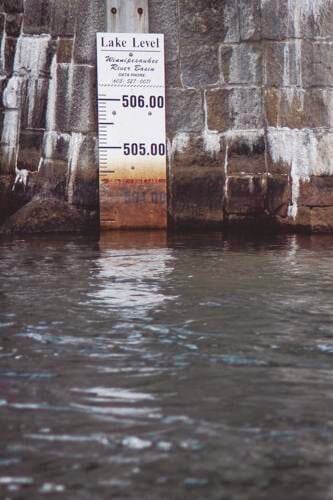
The sun is shining, the water is warm, and all around the lake, locals and visitors are enjoying a classic New England summer. Lake Winnipesaukee is a hub of activity, offering endless opportunities for boating, swimming, and relaxation. Lake levels are carefully managed by the New Hampshire Department of Environmental Services to ensure everyone can enjoy these opportunities to the fullest.
However, maintaining this balance can be tricky. The entirety of Lake Winnipesaukee flows into Paugus Bay, through the Lakeport Dam into Opechee Bay, into Lake Winnisquam and the Winnipesaukee River. During the summer recreation season, lake levels are typically managed between 502.80 and 504.32 feet to facilitate recreational use. NHDES considers factors like water inflow, soil moisture, vegetation, and rain forecasts to decide when to release water from the Lakeport Dam and how much.
Sometimes the 250 cubic feet per second minimum outflow at Lakeport Dam far exceeds the inflow during the summer recreation season. The timing and extent of drawdown is complicated. Under deeded water rights that date back to the 1800s, hydropower dams on the Winnipesaukee River are entitled to a minimum release of 250 cubic feet per second which is equal to 112,208 gallons per minute. In addition, if the Lakeport Dam release rate drops under 250 cubic feet per second, water levels in Silver Lake in Belmont can drop too low for residents to use.
In the fall, unlike a majority of other lakes across the state, Lake Winnipesaukee is not purposely drawn down. Releases from the Lakeport Dam are reduced from a normal minimum of 250 cubic feet per second to 30-to-40 cubic feet per second for up to two weeks to allow for maintenance of the hydropower facilities and dams downstream on the Winnipesaukee River.
As of Wednesday, this week, the lake level was about 503.45 feet, approximately 10.5 inches below full lake level. Combined with normal summer evaporation, limited inflow can result in the lake level dropping 12-to-15 inches over the course of the summer.
When water levels approach 504.5 feet or higher, issues begin to occur. Shoreline structures can suffer damage, usability can decrease, and public complaints increase. For some marinas, high water levels mean problems with bridge access due to low clearance.
Conversely, maintaining levels at the lower end of the summer recreation range presents its own challenges. Lower water levels for boaters can lead to hull and motor damage and affect the usability of docks or moorings. Many property owners are accustomed to a certain range of water levels during the summer season, and access limitations can really put a damper on those summer plans.
Understanding the delicate balance that NHDES maintains to keep the lake at its best helps us appreciate the efforts that go into managing this beautiful resource. So, whether you're navigating through high waters or adjusting to lower levels, remember that it's all part of ensuring Lake Winnipesaukee remains a prime destination for summer fun.


(0) comments
Welcome to the discussion.
Log In
Keep it Clean. Please avoid obscene, vulgar, lewd, racist or sexually-oriented language.
PLEASE TURN OFF YOUR CAPS LOCK.
Don't Threaten. Threats of harming another person will not be tolerated.
Be Truthful. Don't knowingly lie about anyone or anything.
Be Nice. No racism, sexism or any sort of -ism that is degrading to another person.
Be Proactive. Use the 'Report' link on each comment to let us know of abusive posts.
Share with Us. We'd love to hear eyewitness accounts, the history behind an article.