


The invasion of spiny water fleas (Bythotrephes longimanus) began in the early 1980s when tiny, barbed, one-eyed aquatic fleas were introduced to the U.S. via ballast water discharged from cargo ships in the St. Lawrence River. It was found in Lake Ontario in 1982, in Lake Huron in 1984, and by 1988, all five of the Great Lakes were infested. In 2008, it was detected in Great Sacandaga Lake within the Adirondack Park and in Lake George in 2012. By 2014, it had crossed the New York border and was identified in Lake Champlain, Vermont.
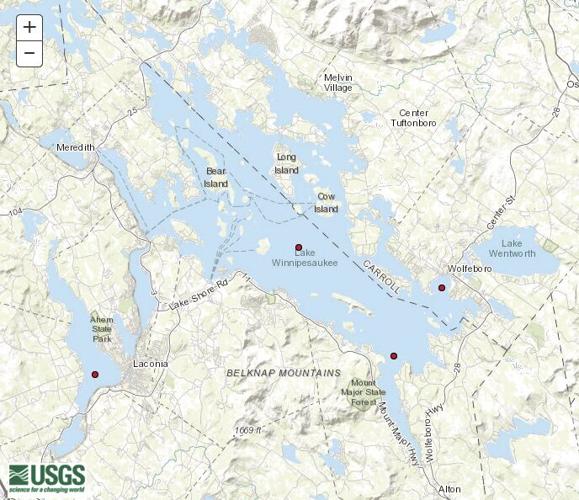
Given its heavy usage and the presence of many transient boaters, the New Hampshire Department of Environmental Services began monitoring Lake Winnipesaukee for the invasive species in 2016. Seven years later, in 2023, the NHDES confirmed the presence of spiny water fleas in three areas of Lake Winnipesaukee as well as in Lake Winnisquam. This was the first detection of this invasive species in the state, and only the second recorded waterbody in New England. Spiny water fleas have not yet been detected in Maine, Massachusetts, Rhode Island or Connecticut.
While posing no threat to people, these spiny crustaceans reign as top predators in their underwater world, measuring about 1/4 to 5/8 inches in length, roughly the size of a large grain of rice. In contrast, Daphnia, our native water fleas, range from 1 to 5 millimeters in length and are similar in size to the head of a pin. Spiny water fleas can upset the delicate balance of aquatic ecosystems by feeding on these native water fleas. Species like trout, bass, and yellow perch rely on Daphnia as a primary food source for their fry. Spiny water fleas pose a direct threat to fish, their barbed spines can irritate and damage their mouth and gills, making it difficult for them to eat and breathe. Additionally, spiny water fleas reduce populations of zooplankton, microscopic animals that are essential to a healthy water body. Zooplankton help control algae growth, including harmful blue-green algae (cyanobacteria).
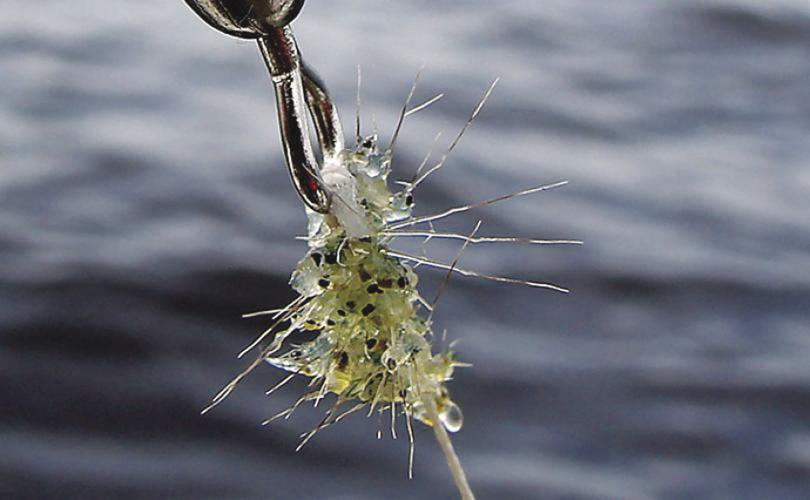
Spiny water fleas, although tiny, are able to be seen by the naked eye. They can be identified by their elongated body with a prominent spiked tail, often translucent or greenish, with one large black eye spot. Anglers might notice gelatinous blobs tangled on fishing lines, looking like clumps of wet cotton. This invasive species can be found throughout the water column, often moving up towards the surface at night to feed and to deeper depths during the day to avoid predators. When water temperatures reach between 68 degrees fahrenheit to 77 degrees fahrenheit, this accelerates their ability to reproduce. During the summer, each spiny water flea is able to produce up to 10 offspring in just two weeks.
Unfortunately, there's no treatment once this invasive species is established. However, we can prevent their spread by using clean, drain, dry practices. Thoroughly clean your boat, trailer, and fishing gear with high-pressure hot water (at least 140 degrees fahrenheit). Completely drain all water from your boat, bait buckets, bilges, live wells, and other equipment before transporting it to a different waterbody, and leave drains open during transport. Dry all equipment for at least five days between uses.
Report suspected spiny water flea sightings to Kirsten Hugger at kirsten.a.hugger@des.nh.gov or John Magee at john.a.magee@wildlife.nh.gov. In addition to keeping your eyes out for this pesky new invasive species, please spread the word by talking to your neighbors, friends and family about the impact aquatic invasive species can have on our waterbodies. As boaters and lake lovers, it is our responsibility to do what we can to stop the spread and fight the flea, for the health of our lakes!
•••
Bree Rossiter is the conservation program manager for the Lake Winnipesaukee Association. She manages the water quality monitoring program, cyanobacteria monitoring initiatives, the Winni Blue/LakeSmart program, and assists with watershed management planning efforts. Bree can be reached at brossiter@winnipesaukee.org. The Lake Winnipesaukee Association is a nonprofit dedicated to protecting the water quality and natural resources of the lake and its watershed. To learn more, visit winnipesaukee.org.


(0) comments
Welcome to the discussion.
Log In
Keep it Clean. Please avoid obscene, vulgar, lewd, racist or sexually-oriented language.
PLEASE TURN OFF YOUR CAPS LOCK.
Don't Threaten. Threats of harming another person will not be tolerated.
Be Truthful. Don't knowingly lie about anyone or anything.
Be Nice. No racism, sexism or any sort of -ism that is degrading to another person.
Be Proactive. Use the 'Report' link on each comment to let us know of abusive posts.
Share with Us. We'd love to hear eyewitness accounts, the history behind an article.