


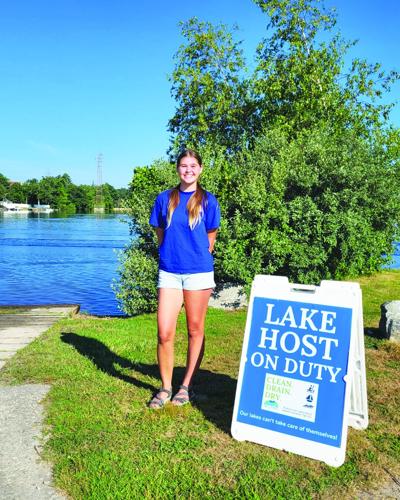
CONCORD — NH LAKES’ Lake Hosts are helping protect the state’s lakes from aquatic invasive species, with 15 confirmed saves so far in 2026. During routine boat inspections, Lake Hosts have found invasive plants and animals hitching rides on boats and recreational equipment and stopped them from potentially spreading to new waterbodies.
NH LAKES’ Lake Hosts are trained volunteers and paid staff who inspect boats and trailers at approximately 100 public access sites across New Hampshire. They look for aquatic hitchhikers — including plants, animals, and fragments — that can be transported from one waterbody to another on boats, trailers, fishing equipment, and other gear.
This year’s saves include variable milfoil, Eurasian watermilfoil, curly-leaf pondweed, European naiad, fanwort, and spiny water flea. Some of these species were found on boats leaving lakes where they are already established, while others were discovered before reaching a new waterbody.
“These saves show just how important a few minutes at the boat ramp can be,” said Andrea LaMoreaux, president and policy advocate of NH LAKES. “Once an invasive species reaches a new lake, it can be extremely difficult and costly to control. Every boat inspection is an opportunity to stop that from happening.”
Aquatic invasive species can spread quickly once introduced to a new waterbody. They can interfere with boating, swimming, fishing, and other recreational activities, alter aquatic ecosystems, and harm the health of lakes and the experiences people enjoy on them. Once established, invasive species can be extremely difficult or impossible to remove and costly to manage.
Prevention is the best defense, and everyone who enjoys New Hampshire’s lakes can help.
Before leaving a waterbody, boaters and anglers should:
- Clean — Remove all plants, mud, and debris from boats, trailers, fishing gear, and other equipment. Wipe down fishing line and gear before leaving the waterbody
- Drain — Empty all water from boats, motors, live wells, bait buckets, and other gear
- Dry — Allow boats and equipment to dry completely before visiting another waterbody
Lake Hosts will continue inspecting boats at participating public access sites through the fall boating season. Boaters and anglers can help make every trip lake-friendly by arriving clean and leaving clean, drained, and dry.
For more information, visit nhlakes.org, email info@nhlakes.org, or call 603-226-0299.


(0) comments
Welcome to the discussion.
Log In
Keep it Clean. Please avoid obscene, vulgar, lewd, racist or sexually-oriented language.
PLEASE TURN OFF YOUR CAPS LOCK.
Don't Threaten. Threats of harming another person will not be tolerated.
Be Truthful. Don't knowingly lie about anyone or anything.
Be Nice. No racism, sexism or any sort of -ism that is degrading to another person.
Be Proactive. Use the 'Report' link on each comment to let us know of abusive posts.
Share with Us. We'd love to hear eyewitness accounts, the history behind an article.