


Lake Winnipesaukee has an abundance of different species, from pipewort and yellow water lily to pickerel and lake trout. These species are all part of the Lake Winnipesaukee ecosystem, which relies on balanced relationships between different species to keep our waters clear and safe for humans, animals, and plants. Unfortunately, invasive species have been introduced to Lake Winnipesaukee and continue to be a growing problem for the ecosystem, homeowners, and tourists throughout the Lakes Region. Invasive species are organisms that cause environmental or ecological harm to a new environment that they are not native to.
But did you know that recreational boaters play one of the largest roles in the spread of aquatic invasive species? Individuals that bring their boats and trailers from another body of water can transmit invasive species such as mystery snail, water chestnut, and variable milfoil. Once these invasive species are introduced to a non-native habitat, like Lake Winnipesaukee, it is incredibly difficult to manage and eradicate — completely destroy — them. Variable Milfoil is the only confirmed exotic or nuisance plant found in Lake Winnipesaukee, first discovered in the lake in 1965.
There are methods that organizations can use to decrease the spread and abundance of invasive plants, such as Diver Assisted Suction Harvesting or hand-pulling. Unfortunately, there are few success stories of permanently eradicating invasive aquatic species without using chemicals and herbicides – something that the Lake Winnipesaukee Association hopes to avoid. But you can help prevent the spread of invasive species.
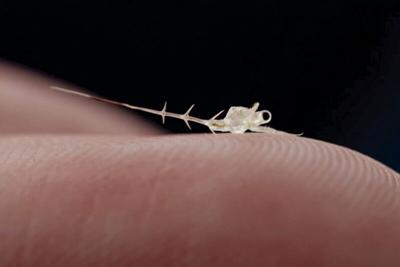
Last summer, state biologists from the New Hampshire Department of Environmental Services documented the presence of a new aquatic invasive species in New Hampshire. The spiny water flea was documented on Sept. 13 in the deepest location of Lake Winnipesaukee — the Broads in Gilford. Additional sampling also confirmed spiny water flea presence in the Alton and Wolfeboro areas of the lake.
The spiny water flea is a microscopic animal, also known as zooplankton, that is native to Europe and Asia. Spiny water fleas were first introduced to the United States in the Great Lakes in the 1980s. The nearest locations of other spiny water flea infestations include Lake Champlain in Vermont, Lake George and a few other waterbodies in New York. The tiny animal was likely introduced by transient boaters who visited a waterbody with an existing infestation. Live organisms or eggs were probably transported to Lake Winnipesaukee on recreational or fishing gear or in the live well or bilge of a boat.
There are no treatments available to control this species once it is established, therefore the best, and only management option is preventing introduction into uninfected waterbodies by cleaning, draining, and drying all vessels and recreational gear after leaving a waterbody, as required by state law.
The spiny water flea is not harmful to humans; however, it can be a nuisance when it builds up on fishing lines. It can also negatively impact aquatic food webs by changing the plankton community, which can, in turn, influence fish populations.
When transferring a boat hull and trailer from one body of water to another, you should use clean, drain, dry practices. Visually inspect your equipment and remove all large stowaways by hand. Fragments of invasive species attached to your boat may be too small to see, so pressure-washing should be used in addition to visual inspection. A paper from the Center for Aquatic Conservation recommends draining all water from the boat, motor, and bilge, allowing the boat to dry in the sun for five days or washing with very hot water, and disposing of leftover bait in the trash. Invasive species may seem tedious, but together we can slow and stop the spread of them into our lake and continue to Keep Winni Blue!
Get involved in protecting our lakes by participating in the Lake Host Program at your local lake, or by starting a program if one doesn’t exist. Contact NH LAKES to learn more. Additionally, you can become a Weed Watcher and report any suspected invasive species infestations you find in the lake to the New Hampshire Department of Environmental Services at 603-271-2248. Your efforts can make a significant difference in preserving the health and beauty of our waterbodies.
For more lake-friendly tips and information, contact the Lake Winnipesaukee Association at 603-581-6632 or brossiter@winnipesaukee.org.





(0) comments
Welcome to the discussion.
Log In
Keep it Clean. Please avoid obscene, vulgar, lewd, racist or sexually-oriented language.
PLEASE TURN OFF YOUR CAPS LOCK.
Don't Threaten. Threats of harming another person will not be tolerated.
Be Truthful. Don't knowingly lie about anyone or anything.
Be Nice. No racism, sexism or any sort of -ism that is degrading to another person.
Be Proactive. Use the 'Report' link on each comment to let us know of abusive posts.
Share with Us. We'd love to hear eyewitness accounts, the history behind an article.