


The telescope revealed a new observation of a star-formation region called the Trifid Nebula.

Researchers found the jets produce energy equivalent to 10,000 suns.

The findings will help scientists refine theoretical models of magnetic reconnection to better understand how solar storms are powered.

Researchers hail the achievement as a major milestone in cosmology, with the data now available for global scientific analysis.

The nebula lies 6,500 light-years away in Taurus and was first seen in 1054.

The observatory captured NGC 5134, a spiral galaxy 65 million lightâyears away in Virgo.
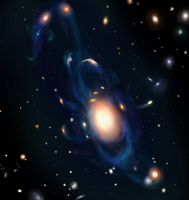
Researchers said this event, called GRB 230906A, is likely in a stream of gas located about 4.7 billion light-years from Earth.

Turbulent plasma near distant stars could blur ultra-narrow signals before they leave their home star systems - making them difficult to detect.
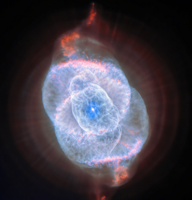
The image features one of the most visually intricate remnants of a dying star: the Cat’s Eye Nebula, also known as NGC 6543.
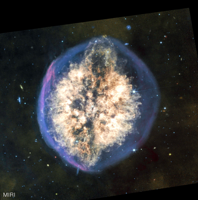
"Nebula PMR 1 is a cloud of gas and dust that bears an uncanny resemblance to a brain in a transparent skull."