


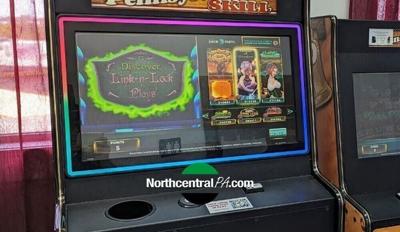
Harrisburg, Pa. — The PSP launched a informational webpage on skill games, which provides businesses and establishments with resources and contact information regarding the Pa. Supreme Court’s skill games decision and compliance requirements.
Businesses with a liquor license should contact their local Bureau of Liquor Control Enforcement office with questions.
Businesses without a liquor license should contact their local police department or state police station.
On June 15, the Supreme Court of Pa. ruled that skill games, often found in taverns, restaurants, social clubs, mini-marts, gas stations, grocery stores, laundromats, pizza parlors, and other businesses, are in fact “slot machines” as defined in the Gaming Act. Slot machines are considered gambling devices under the Crimes Code, and a person commits a criminal offense by owning, operating, or maintaining slot machines without a license issued by the Pa. Gaming Control Board (PGCB). Only licensed casinos and qualifying licensed “truck stop establishments” may legally possess and operate slot machines or video gaming terminals that have been inspected and approved for operation by the PGCB.
Distributors and manufacturers of such machines are cautioned that it is a criminal offense to maintain, assemble, set up, make, sell, or lease slot machines unless they are licensed and authorized to do so by the PGCB.
All “skill games” devices/slot machines located outside of PGCB-licensed businesses are unlawful and all establishments possessing, operating and/or maintaining such machines are subject to criminal prosecution and immediate seizure of the machines as of Oct. 14.


The PSP and other law enforcement agencies may take enforcement action against businesses which continue to possess, operate, and/or maintain such machines after Oct. 13.
Enforcement actions may include seizing and forfeiting the machines, associated equipment, and proceeds associated with the operation of the machines and/or filing criminal charges when deemed appropriate.
The PSP strongly recommends that businesses currently hosting such machines discuss their immediate removal with any distributors or vendors who may own the machines and associated equipment, including ticket redemption terminals. Distributors, vendors, and manufacturers refusing to remove their slot machines from businesses may be subject to criminal charges should they continue to maintain their slot machines at unlicensed locations.
Powering off or unplugging an otherwise operable machine is not sufficient. According to the PSP, a slot machine is still a slot machine even if it is turned off, unplugged, or temporarily disabled.
If a distributor or vendor is unwilling to remove its machines after the deadline, the establishment is encouraged to tell PSP.


(0) comments
Welcome to the discussion.
Log In
Keep it Clean. Please avoid obscene, vulgar, lewd, racist or sexually-oriented language.
PLEASE TURN OFF YOUR CAPS LOCK.
Don't Threaten. Threats of harming another person will not be tolerated.
Be Truthful. Don't knowingly lie about anyone or anything.
Be Nice. No racism, sexism or any sort of -ism that is degrading to another person.
Be Proactive. Use the 'Report' link on each comment to let us know of abusive posts.
Share with Us. We'd love to hear eyewitness accounts, the history behind an article.