


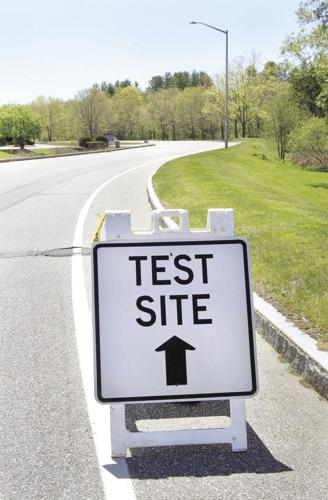

Since March, when New Hampshire began feeling the repercussions of the COVID-19 outbreak, state officials have largely prioritized diagnostic tests for high-risk groups to conserve the limited supply.
But during a news conference Friday, Gov. Chris Sununu said the state now has enough tests to allow anyone to be tested.
“We really want to encourage folks, even if you don’t have any symptoms at all, to go get that test,” he said.
But what is the tangible benefit to the individual of being tested? For many people, it’s limited, according to two local experts.
Although being tested adds to the state’s pool of data — helping it to better understand the virus and the disease it causes — a person who tests positive for COVID-19 will likely be directed to continue protocols they should already be following: isolating themselves from others when possible, properly washing their hands and donning a face mask in public, according to Dr. Michael Lindberg, chief medical officer at Monadnock Community Hospital in Peterborough.
And while some people may find relief in getting a negative test, he said, there’s still a chance it could be a false negative.
“Testing does not replace the need for maintaining common courtesies such as wearing a mask, social distancing, etc.,” Lindberg said in an email.
Dr. Aalok Khole, an infectious disease specialist at Cheshire Medical Center in Keene, echoed Lindberg. He said one concern is that receiving a negative test could give someone a false sense of security, even though they are still at risk of infection.
“It is important to understand that a [COVID-19] test is a ‘snapshot in time’,” Khole said in an email. “A negative test today should not mean people can let go of conservative measures.”
Lindberg added that it’s “perfectly appropriate” not to get tested if you don’t have symptoms, unless you are at high risk of contracting or suffering severely from COVID-19 or are working on the front lines — whether as a health-care worker, grocery store employee or in another job that involves interacting with the public.
However — while both doctors said there may be little direct benefit for the asymptomatic person being tested — they agreed the push from the state health department for all to get tested is well advised, as more tests will lead to a clearer understanding of COVID-19 and aid the state’s response to it.
“We continue to encourage residents to get tested in order to rapidly identify and isolate new cases and potential close contacts,” Jake Leon, spokesman for the N.H. Department of Health and Human Services, said in an email. “This is critical during this phased re-opening and particularly true when people are asymptomatic.”
New Hampshire has significantly ramped up its testing abilities to accommodate this, currently providing more than 1,800 tests per day to people with and without health insurance.
The state now has enough nose swabs for every Granite Stater to be tested, according to a spokesperson for the state’s Joint Information Center, which is fielding all coronavirus-related questions.
Asked if New Hampshire has enough swabs for each resident to be tested more than once, the spokesperson said the state continues to restock supplies to meet the anticipated demand.
But state officials say that while many testing sites are seeing a steady turnout, it’s not an overwhelming one. Testing sites are hovering around 70 percent capacity, N.H. Health and Human Services Commissioner Lori Shibinette said during a news conference last month.
Those diagnostic tests, meant to show if someone currently has the disease, are just one of two kinds of tests being done.


The other is an antibody test, which determines if someone has ever had the disease and has developed antibodies in response.
The diagnostic test — performed most commonly with a six-inch nose swab, which can be taken at testing sites across the state — checks samples from someone’s respiratory system. Some of these test results are available in less than an hour, while other tests may take one to two days to verify in a laboratory.
The test is about 95 to 97 percent accurate, a spokesperson from the Joint Information Center said, with 3 percent false negatives and no false positives.
And though Lindberg and Khole said the diagnostic testing is generally encouraged, whether everyone should line up for an antibody test is unclear.
The best use for antibody testing currently, according to Khole and Lindberg, is for seroprevalence studies — to understand what percentage of the population is or was truly afflicted with the illness.
“Unless the population is being tested under the umbrella of such studies, or until we have more information on better analyzing the results,” Khole said, “I would find it difficult to recommend antibody testing for all.”
Lindberg added that antibody tests can identify antibody-rich plasma to donate. Some research shows this plasma assists in the treatment of severely ill COVID-19 patients.
A sensitive and specific antibody test will also be crucial in testing whether a vaccine works, Lindberg noted.
But Khole explained researchers aren’t sure yet what to do with antibody test results or what the ramifications of the results are.
If the antibody test is positive, it could indicate past or present infection, depending on when the test was performed. But Khole said a positive test isn’t an “immunity passport,” as it’s not yet known if antibodies give a person immunity from COVID-19, and if so, how long it lasts.
And regardless of the result for either type of test, everyone should continue taking precautionary measures to prevent the spread.
“A safe rule of thumb,” Lindberg said in an email, “is to think of this as ‘I either have the virus or I do not know my status and should behave as if I have the virus’.”
Test appointments can be made by visiting nh.gov/covid19.
•••
Olivia Belanger can be reached at 603-352-1234, ext. 1439, or obelanger@keenesentinel.com. Follow her on Twitter @OBelangerKS.
These articles are being shared by partners in The Granite State News Collaborative. For more information visit collaborativenh.org.


(0) comments
Welcome to the discussion.
Log In
Keep it Clean. Please avoid obscene, vulgar, lewd, racist or sexually-oriented language.
PLEASE TURN OFF YOUR CAPS LOCK.
Don't Threaten. Threats of harming another person will not be tolerated.
Be Truthful. Don't knowingly lie about anyone or anything.
Be Nice. No racism, sexism or any sort of -ism that is degrading to another person.
Be Proactive. Use the 'Report' link on each comment to let us know of abusive posts.
Share with Us. We'd love to hear eyewitness accounts, the history behind an article.