


Potato salad with foreign plastic. Mixed greens with listeria exposure. Ice cream with metal fragments. Cookies with undeclared nut allergens. Dried pasta with mold contamination.
These are just a few examples of recent food recalls issued by the U.S. federal government.
Food recalls frequently generate headlines and public concern because of their associated safety risks and health hazards. To help protect consumers, government officials have developed a system of regulation and oversight that identifies potentially unsafe products and issues recalls that get those products off of store shelves and out of consumers’ homes.
This system of oversight is a shared responsibility of the U.S. Food and Drug Administration and the U.S. Department of Agriculture. Each agency is authorized by law to oversee certain types of farms and food production facilities, with sometimes overlapping jurisdiction. As the agencies identify hazardous products, they can issue recalls to minimize risks to consumers.
Both the USDA and the FDA distinguish between Class I, Class II, and Class III food recalls to signify the level of risk associated with each. While the two agencies’ systems are slightly different, the general classifications used are similar. Class I recalls are for the most hazardous products, which have higher risks of causing serious adverse health consequences or death, while Class II recalls have more moderate risks and Class III recalls have minimal risks.
Trends in U.S. Food Recalls
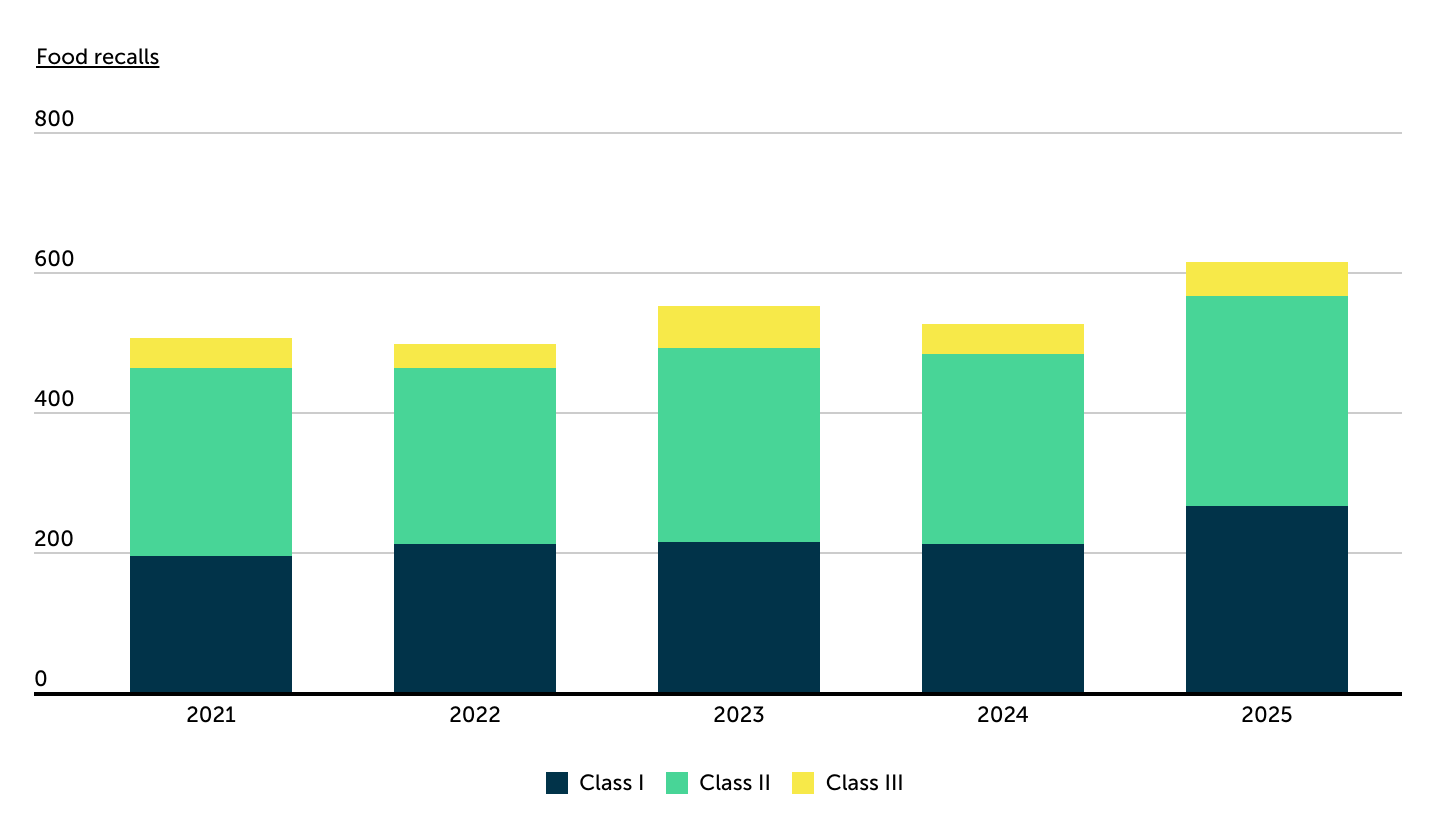
The total number of food recalls increased by 21.4% between 2021 and 2025
Source: Trace One analysis of 2021–2025 FDA and USDA data
Over the past few years, the number of food recalls issued by the two agencies has increased. From 2021 to 2025, the total number of recalls grew from 505 to 613, an increase of 21.4%. This growth took place across all classes of recall, but this increase was primarily driven by growth in Class I recalls. During that same time period, Class I recalls increased by 36.4% while Class II (+11.2%) and Class III (+17.1%) recalls saw more modest growth.
Common Causes of Food Recalls
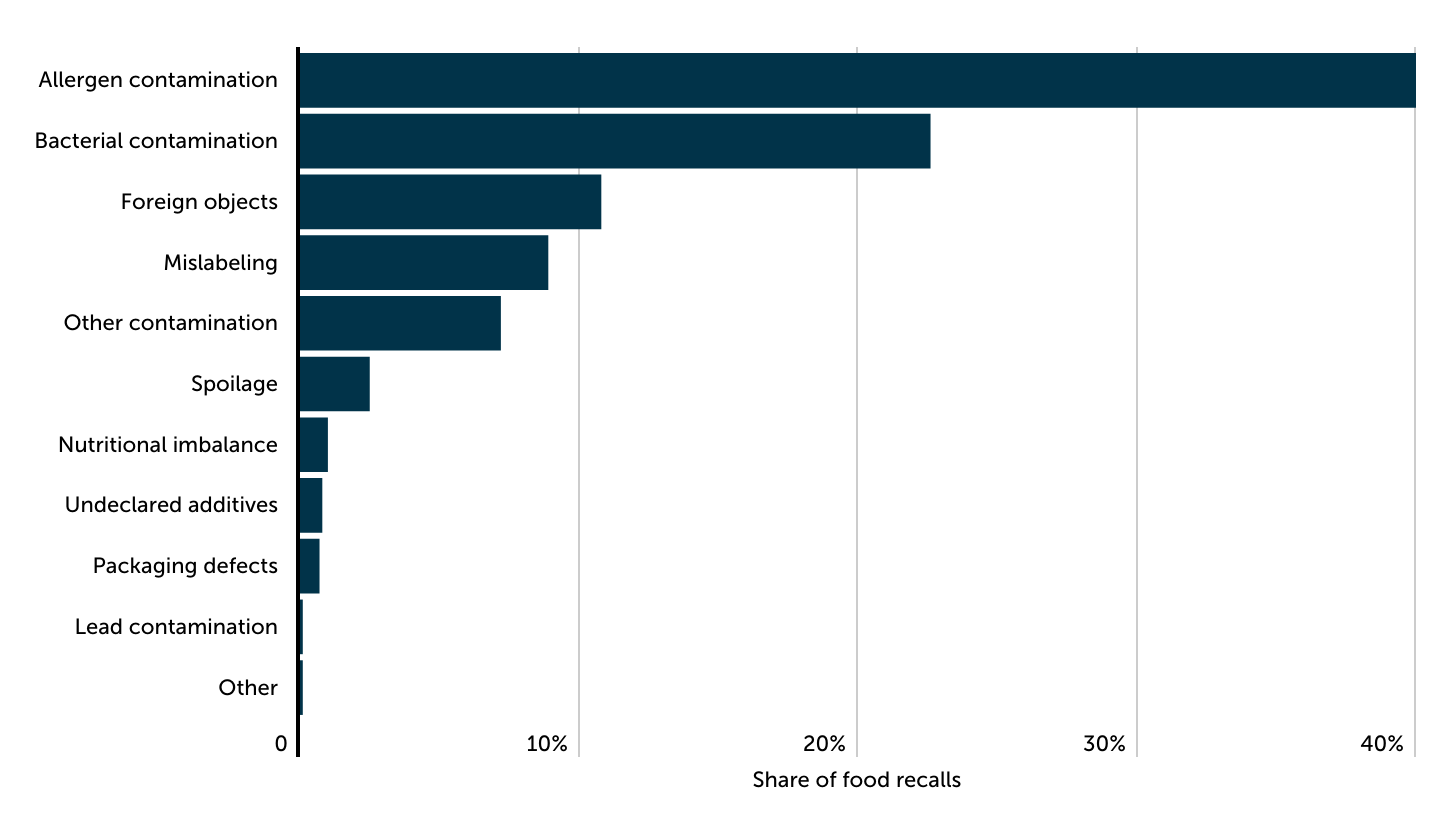
Allergen contamination is responsible for the largest share of recalls
Source: Trace One analysis of 2021–2025 FDA data
The leading causes of food recalls are allergen, bacterial, and foreign object contamination. Allergen contamination, responsible for 45.2% of all cases, occurs when products are exposed to allergens like wheat, dairy, and nuts, often due to cross-contamination during manufacturing. Even trace amounts can trigger severe allergic reactions in sensitive individuals, making prevention and accurate labeling crucial.
Bacterial contamination follows at 22.6%, with recalls for pathogens like salmonella, E. coli, and listeria. These bacteria can cause serious illness, particularly in vulnerable populations such as young children, the elderly, and those with weakened immune systems. Infections can lead to severe gastrointestinal distress, long-term health complications, and even death.
Foreign object contamination accounts for 10.8% of recalls and includes materials such as rocks, insects, plastic, or metal. These contaminants can cause physical harm, such as choking, dental damage, or internal injuries if ingested.

The least common but highly concerning are lead contamination recalls, comprising just 0.1% of the total between 2021–2025, yet attracting significant public attention due to their severe health risks. Recent high-profile lead recalls include contaminated applesauce pouches, which garnered extensive media coverage due to the potential harm to vulnerable populations.
What Should Consumers Do When They Learn About a Food Recall?
Photo Credit: Kristen Prahl / Shutterstock
What you should do after learning about a food recall depends on the severity and reason for the recall. Some recalls, like those for undeclared allergens, may not pose a risk to you if you don’t have an allergy, while others—such as bacterial contamination or lead exposure—require immediate action.
The first priority is to confirm whether you have the recalled item by checking details like the brand, product name, geographic distribution, and expiration date, which are usually provided in the official press release. If you have the recalled product, the FDA recommends checking the recall notice for specific instructions. In many cases, you can return the item for a refund, but if the product is contaminated, it’s best to seal it in a bag and dispose of it properly. Never donate recalled food or feed it to pets, as it may still pose a risk to others.
If the recalled item was stored in your kitchen, clean any surfaces it may have touched, including countertops, utensils, and refrigerator shelves, with a proper sanitizing solution. If you or anyone in your household has consumed the product, watch for symptoms such as nausea, vomiting, diarrhea, or fever, especially if the recall involves bacteria or toxins. Seek medical attention if symptoms appear, particularly for those who are pregnant or have weakened immune systems. If you believe a food product has made you sick, reporting it to the FDA or USDA can help prevent further harm to others.
Food Recalls by State (2021–2025)
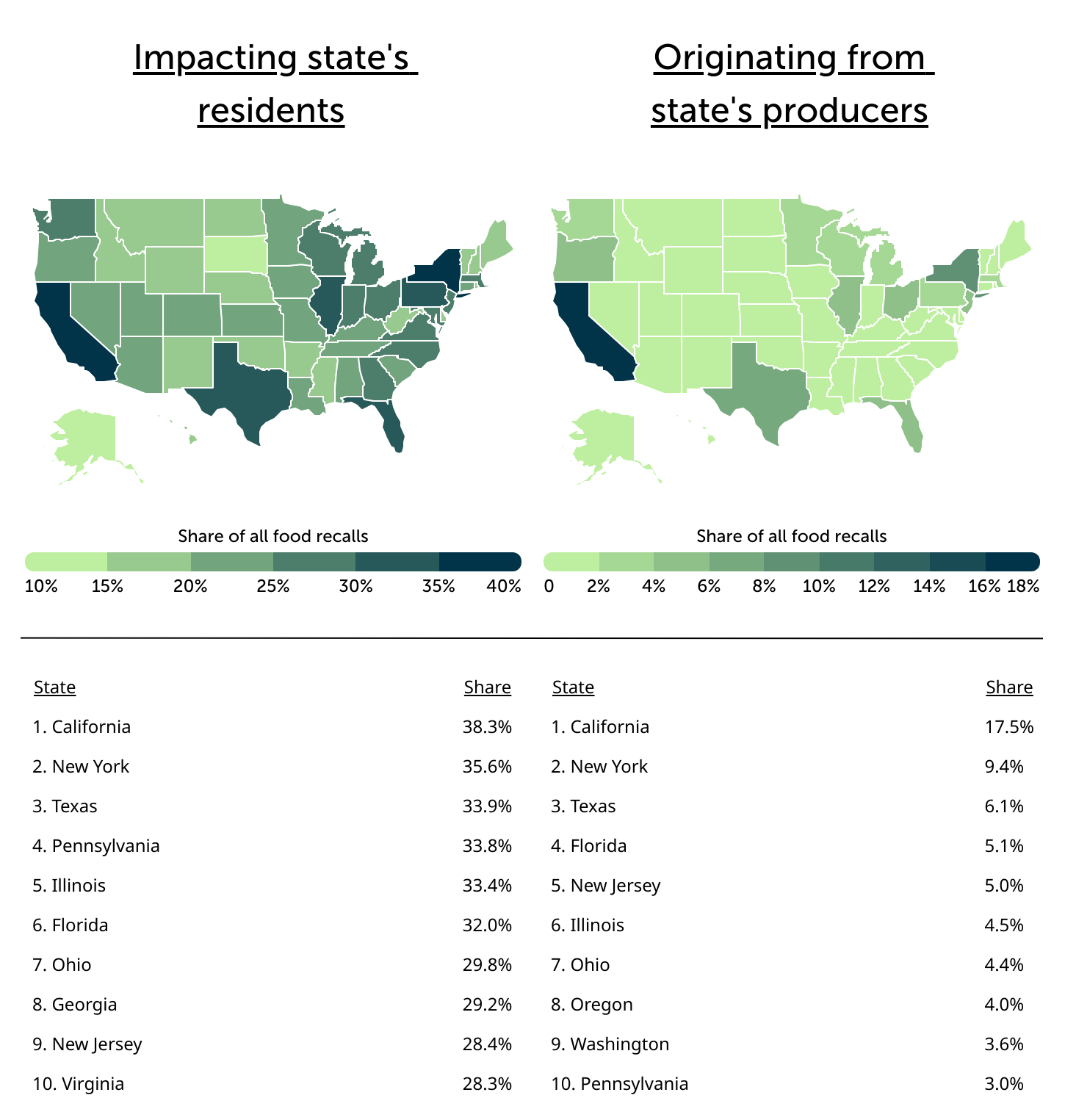
38.3% of all recalls impact customers in California & 17.5% originate from its producers
Source: Trace One analysis of 2021–2025 FDA and USDA data
Food recalls are a nationwide concern, but some states have been disproportionately affected in recent years. California is the nation’s largest producer of food, and as such, the state is also responsible for the largest share of all recalls. Between 2021 and 2025, 17.5% of food recalls originated from California products, nearly double the share of the next-closest state. And as the nation’s most populous state and a large market for food, California customers are also most frequently affected by recalls. Over the same time period, 38.3% of all recalls nationally impacted residents in California, with residents in other large states like New York, Texas, Pennsylvania, and Illinois following close behind.
For more context on the scale of the food & beverage manufacturing industry—including the sectors and states that dominate production—see our Food & Beverage Manufacturing Industry Statistics.
The analysis was conducted by Trace One, a company specializing in PLM and regulatory compliance for the food and beverage industry, using data from the USDA and FDA.
Here is a summary of the data for New Hampshire:
- Share of all recalls impacting state's residents: 18.6%
- Total recalls impacting state's residents: 490
- Share of Class I recalls impacting state's residents: 18.0%
- Total Class I recalls impacting state's residents: 198
- Share of all recalls originating from state's producers: 0.2%
- Total recalls originating from state's producers: 5
For more information, a detailed methodology, and complete results, see States Most Impacted by Food Recalls in Recent Years on Trace One.


(0) comments
Welcome to the discussion.
Log In
Keep it Clean. Please avoid obscene, vulgar, lewd, racist or sexually-oriented language.
PLEASE TURN OFF YOUR CAPS LOCK.
Don't Threaten. Threats of harming another person will not be tolerated.
Be Truthful. Don't knowingly lie about anyone or anything.
Be Nice. No racism, sexism or any sort of -ism that is degrading to another person.
Be Proactive. Use the 'Report' link on each comment to let us know of abusive posts.
Share with Us. We'd love to hear eyewitness accounts, the history behind an article.